In ancient Roman religion and mythology, Janus is the god of beginnings and transitions, and, as such,the God of gates, doors, doorways, endings and time. He is usually portrayed as a two-faced god since he looks to the future and the past. The Romans dedicated the month of January to Janus.
Janus symbolizes change and transitions such as the progression of past to future, of one condition to another, of one vision to another, and of one universe to another. This is why Janus was honored at the beginnings of the harvest and planting times, as well as marriages, births and other beginnings. He also represents the middle ground between barbarity and civilization, rural country and urban cities, and youth and adulthood.
In one of his temples, the hands of his statue were positioned to signify the number 355 (the number of days in a year), later 365, symbolically expressing his mastership over time. He presides over the concrete and abstract beginnings of the world, such as religion and the gods themselves, he too holds the access to Heaven and other gods: this is the reason why it is believed that men must invoke him first, regardless of the god they want to pray to or placate. He is the initiator of human life, of new historical ages, and financial enterprises: according to myth he was the first to mint coins and the as, first coin of the libral series, bears his effigy on one face.
Temples
Numa built the Ianus geminus, a passage ritually opened at times of war, and shut again when Roman arms rested. It formed a walled enclosure with gates at each end, situated between the old Roman Forum and that of Julius Caesar.
In wartime the gates of the Janus were opened and it was within the temples that the outcome of the war would be predicted. The doors were closed only during peacetime, an extremely rare event. The function of the Ianus Geminus was supposed to be a sort of good omen: in time of peace it was said to close the wars within or to keep peace inside; in times of war it was said to be open to allow the return of the people on duty.
The gates were shut only once between the reign of Numa Pompilius (who reigned 715–673 BC) and Emperor Augustus who reigned until 14 AD.
Janus also had a temple on the Forum Olitorium constructed in 260 by C. Duilius for the naval victory of the Punic War and another one on his hill, the Janiculum.
Rites
Most often, practices in Janus’ name were conducted between March and October; the war season.
Although Janus had no flamen (priests), he was closely associated with the rex sacrorum who performed his sacrifices and took part in most of his rites: the rex was the first in the ordo sacerdotum hierarchy of priests.The flamen of Portunus performed the ritual greasing of the spear of the god Quirinus on August 17, day of the Portunalia, on the same date that the temple of Janus in the Forum Holitorium had been consecrated (by consul Caius Duilius in 260 BC). Portunus seems to be a god closely related to Janus, if with a specifically restricted area of competence, in that he presides over doorways and harbours and shares with Janus his two symbols, the key and the stick.
Beginning of the Year
The Winter solstice was thought to occur on December 25. January 1 was new year day: the day was consecrated to Janus since it was the first of the new year and of the month (kalends) of Janus.
It was during this time that devotees exchanged dates, figs and honey as a token of well wishing and made gifts of coins called strenae. Cakes made of spelt (far) and salt were offered to the god and burnt on the altar. Ovid states that in most ancient times there were no animal sacrifices and gods were propitiated with offerings of spelt and pure salt.
Shortly afterwards, on January 9, on the feria of the Agonium of January the rex sacrorum offered the sacrifice of a ram to Janus.
History
In Roman mythology, Janus was a king of Latium (a region of central Italy), who had his palace on the Janiculum hill, on the western bank of the River Tiber. According to the Roman intellectual Macrobius, Janus was given divine honours on account of his own religious devotion, as he set a pious example for all his people.
Janus was proudly venerated as a uniquely Roman god, rather than one adopted from the Greek pantheon. The name Janus (Ianus in Latin, as the alphabet had no j) is etymologically related to ianua, the Latin word for door. Janus himself was the ianitor, or doorkeeper, of the heavens.
The cult statue of Janus depicted the god bearded with two heads. This meant that he could see forwards and backwards and inside and outside simultaneously without turning around. Janus held a staff in his right hand, in order to guide travellers along the correct route, and a key in his left to open gates.
The origins on Janus vary and unlike other Roman and Greek gods, Janus may have been a mortal who came from Thessaly and was welcomed into Latium by Camise. They got married, shared the kingdom and had many children together.
As the ruler of Latium, Janus presided the Golden age, introducing money, laws, and agriculture. When Camise died Janus became the sole ruler and peacefully ruled Latium for many years.
In the second myth he is present in Rome at the time when the city founder, Romulus, and his men kidnapped the women of Sabine, and the men of Sabine attacked Rome in retaliation. When they attempted to climb the Capitoline Hill, Janus launched a powerful jet spray of hot water, forcing them to retreat. As a result, Numa (the second king of Rome 715-673 BC) erected the Ianus geminus in Janus’ honor.
This is a good time to work on magic related to protection, both physical and spiritual. Use this time to develop your inner self, and advance spiritually, becoming closer to the higher aspects of your deities. Take the time in your busy schedule to meditate and think about what it is you really want out of life, and whether you’re showing people your true self.
January is also a great time to work on full moon magic – after all, the nights are long and dark, and in some areas the moon itself is the only source of light. Put aside your lethargy, and focus some energy on developing your intuition and wisdom.
Finally, for many people, winter is a season of simplification. Set aside everything you don’t need, and try a minimalist approach instead. On a mundane level, try doing a thorough cleaning of your physical space – get rid of the clutter. On a spiritual and emotional level, try to do the same thing – teach your mind to let go of the things that are creating excess baggage for your spirit and soul.
Protection oil Blends
20 drops clove essential oil.
18 drops lemon essential oil.
10 drops cinnamon bark essential oil.
8 drops eucalyptus essential oil.
5 drops rosemary essential oil.
OR
4 drops basil
3 drops geranium
2 drops pine
1 drop vetivert
Purification Oil
4 drops frankincense
3 drops myrrh
1 drop sandalwood
Rain water is also a powerful cleansing agent
Cleansing Spell (To be said while smudging)
Smoke of Air,
Thickness of Earth,
Cleanse and Bless,
This home and Hearth.
Water cool and clear,
Fire bright and dear,
Drive away all fear,
Only good
May enter here!
A prayer for Self-Cleansing
I fill my heart with love and light,
As I smudge myself to release pain, anger, and hurt.
I give gratitude for my peace.
Home Protection Spell
Bless this house,
May peace dwell within.
Protect all that enter,
Whether friend or kin.
Bless every door, window, ceiling, and wall,
Bless each room, closet, basement, bless it all.
Bless the roof and ground surrounding with your protective love and light
Witches Bells
What you need:
Twinr, cord, or string
Small bells (However many you want)
Any beads, talismans, flowers, etc. that you would like to add
Thread the bells onto the twine, knotting securely. Do the same for any of the other objects you wish to add. You can buy pre-made witches bells, but it is always highly recommended to make your own. Chant the following spell three times.
“Guard my home,
Bells on the Door,
Let only blessings walk on this Floor,
Block all evil and the Dark Arts,
May only Good approach our hearts. “
“Guard our home,
bell on the door
Let evil spirits come no more
Evil spells shall not be cast,
And good fortune shall everlast
Apples
The seeds of an apple form a five pointed star so, with the remainder of the apple surrounding it, apples hold a pentagram in their core. Slice an apple in half and bury one half of the apple in front of your home to ward of negativity and to attract prosperity.
Earth Grounding
On this earth is where I stand
Digging my roots deep in the land
Fill me with the Energy so Bright
And fill me with your strength of might
(Repeat 3 times)
(Feel your energy go down into the ground and bring back up the earth’s energy)
The craft is often enticing and mysterious and has risen drastically as a major religion for the first time in centuries. Many are drawn to the prospect of an other-natural power, a way to feel empowered or special. Few stop to consider the dangers.
For those who find themselves within the craft, it is important to do as much research as you can. Find a mentor if you’re able. Never use your power to harm others. Above all, carefully consider ANY decision that involves or affects your power or energy. You wouldn’t give your wallet to a stranger, so why would you allow a stranger to access your energy and power?
Below are some basic warnings and advice to protect yourself. Please read carefully and take these warnings seriously.
Mind the Shadows They exist, in the invisible world that parallels our own, living creatures. Unlike creatures from our world, they lack physical form, and feed on energy instead of matter. They are as varied as the animal life on our world. They range in size (power) from the equivalent of insects and rodents to the equivalent of magically trained humans, and beyond to the Great Old Ones. Most are content to graze on the random energy fields that leak from humans and other creatures in our world. Others, however, are a little more sinister.
Shadows come in three basic varieties. First are the little ones that feed off the energy in negative emotions. If you are emitting strong negativity, they will be drawn to you like flies to rotten meat. If you aren’t magically protected, they will happily latch onto your energy field (aura) and snack on it. They are usually not much more troublesome than leeches or mosquitoes; however, a thousand leeches could weaken a person severely.
Next come the more dangerous variety, more like rats or vultures than mosquitoes. These are attracted both by negative emotions and the energy of magical workings. They are stronger, and can push past weak or flawed defenses to get to you. And they are much harder to peel loose once they have their teeth into you.
Last are the intelligent variety. Their favorite meal is human life energy, the ‘heart-fire’ that burns in each of us. They are relatively rare even in their own realm, but they exist. The terms ‘Imp’ , ‘Evil Spirit’ and ‘Demon’ are fairly accurate. They are very strong. The more intelligent ones are capable of working their own Magic to breach your defenses. The most intelligent variety , being as lazy as humans, prefer to talk you into dropping your defenses and linking your energy field to theirs. They also are capable (if someone is helpful enough to open a doorway for them) of entering our world. Once here, if they can get past all your defenses unless you are very strong at warding. They can enter your body and feast at will, even asserting a degree of control over you. Yes, this is exactly like the old stories of Demon possession.
Energy Vampires (yes, they do exist)
There exist in this world evil creatures. They are highly intelligent, capable of working magic, and extremely devious. They are capable of not only psychic magical attacks, but physical ones as well. As a species, they tend to be amoral, murderous animals. I call them ‘humans’. Humans are also capable of ‘feeding’ off the energies of other humans. They do this to gain more magical power, to control others, or to replace the energies they are losing by dealing with the Shadows. Some humans can even do this while traveling astrally. So that Evil Spirit that tried to get into your last circle may not have been from the other side; it could have been your next-door neighbor.
Think before you cast
Magic is an art form. Despite the best efforts of Ritual Magicians and Technopagans, it remains as unpredictable and powerful as the weather unless you are highly skilled and focused. Scientists studying weather prediction in the 1970’s discovered something amazing. Weather, they found, is so unstable as to be impossible to predict more than a day or two in advance. In fact, computer models suggested something they called the Butterfly Theory. It seems that the air disturbed by a butterfly taking off from a cactus in Mexico, if it happened at the right time and place, could in theory cause devastating storms and tornadoes in the U.S. Midwest. Magic is very similar. Each action we take, magical or mundane, has consequences that spread out from it like the ripples in a pond.
They spread out, touching everything- and reflect back to converge on the source. Be very sure, then, before you work magic, exactly what the consequences may be. Ask yourself, “If this spell backfires on me, and affects me instead of the intended target, can I live with the result?”
Some Wiccans counsel about how rain on your fields could cause drought elsewhere. This might be true, if you are trying with your own personal power to ‘squeeze’ the rain clouds as they pass over. But asking the Lady and Lord for the blessing of rain for everybody’s crops is a different thing entirely. Selfish magic has negative consequences: Loving, giving magic only positive ones. For Selfishness is the true root of all evil. “I want it! Destroy the world, let Chaos take the universe, as long as I get what I want!” Be careful of what you ask, you just may get it…
Stay humble
So, you’ve studied hard, learned all about Wiccan magic, and now you find you can really do things. All the power of the Elements is yours to command. Love, money, power, respect- all these are yours. You are special. You are powerful. You are a God! Now, you must convince others to worship you, to lend you their energy so that your power can grow. But that’s OK, because you are a loving God, and you want only what’s best for your worshipers. And you know what’s best for them, for you know all, and see all. For you alone are God of this world you have created.
Do the names Jim Jones, Sun Myung Moon or David Koresh ring a bell? It is important to remember that the gift of magical power is just that- a gift from the Lady and Lord. It must never be abused. And glorifying yourself because of something lent to you is like showing up at your class reunion in a borrowed suit and a rented Jaguar.
Please always remember to protect yourself with properly cast circles, open and honest and clear intentions, and never practice with a heavy heart or a full mind. Be wary of who you have around you. Those who steal your energy don’t always do it on purpose. They may not know that they are doing it. Some, however will make a conscious effort to endanger your energy. Always be wary of those who wish to ‘probe’ your powers and explore your magic or your energy. Most often, their intentions will not be pure.
I have included articles about energy vampires and ways to protect yourself.
The truth is, there are HUNDREDS of sacred places dedicated to paganism and/or Wicca. These places can be an elaborate temple or a simple tree in your yard. The spirituality of a place really depends on you and the way you feel at that location; whether or not you feel a connection to the place.
For Wicca in general, it is important that there are no temples as we think of them. It is mainly about worshiping in places that WE enjoy (I cannot stress that enough). These places could be under the moon, under the sun, in the rain or snow, in a field or forest, near water, with others in a place you all find comfortable, alone in a place that you find comfortable. Churches are not common in the WIccan practice. This doesn’t mean they do not exist, of course, but the true church is much like your craft; it is a place of your own.
Why arent there specific places for Wiccans to flock to for worship? Well, that would be because our places are everywhere and anywhere. Wicca should be ingrained into your everyday practices, therefore, everywhere is a place of worship to you. Wiccan faith is also firmly rooted in the living, thriving nature. Gathering in a wooden box of a building for worship often feels wrong to many Wiccans.
Remember; it is the worship that matters, not the way or place on worships.
This is not to say that there aren’t man-made places that pagans in general (not excluding Wiccans) find to be spiritual or sacred.
Stonehenge-United Kingdom
In about 2500 BC the stones were set up in the centre of the monument. Two types of stone are used at Stonehenge – the larger sarsens and the smaller ‘bluestones’. The sarsens were erected in two concentric arrangements – an inner horseshoe and an outer circle – and the bluestones were set up between them in a double arc.
About 200 or 300 years later the central bluestones were rearranged to form a circle and inner oval (which was again later altered to form a horseshoe). The earthwork Avenue was also built at this time, connecting Stonehenge with the river Avon.
One of the last prehistoric activities at Stonehenge was the digging around the stone settings of two rings of concentric pits, the so-called Y and Z holes, radiocarbon dated by antlers within them to between 1800 and 1500 BC. They may have been intended for a rearrangement of the stones that was never completed.
Four of the sarsens at Stonehenge were adorned with hundreds of carvings depicting axe-heads and a few daggers. They appear to be bronze axes of the Arreton Down type, dating from about 1750–1500 BC. Perhaps these axes were a symbol of power or status within early Bronze Age society, or were related in some way to nearby round barrow burials.
From the middle Bronze Age, less communal effort went into the construction of ceremonial monuments such as Stonehenge and more on activities such as the creation of fields.
In the Iron Age, probably about 700 BC, a major hillfort later known as Vespasian’s Camp was constructed 1¼ miles east of Stonehenge overlooking the river Avon. Stonehenge appears to have been frequently visited in the Roman period (from AD 43), since many Roman objects have been found there. Recent excavations raised the possibility that it was a place of ritual importance to Romano-British people.
The small town of Amesbury is likely to have been established around the 6th century AD at a crossing point over the Avon. A decapitated man, possibly a criminal, was buried at Stonehenge in the Saxon period. The earliest surviving written references to Stonehenge date from the medieval period, and from the 14th century onwards there are increasing references to Stonehenge and drawings and paintings of it.
Meanwhile, the introduction of turnpike roads and the railway to Salisbury brought many more visitors to Stonehenge. From the 1880s, various stones had been propped up with timber poles, but concern for the safety of visitors grew when an outer sarsen upright and its lintel fell in 1900. The then owner, Sir Edmund Antrobus, with the help of the Society of Antiquaries, organised the re-erection of the leaning tallest trilithon in 1901.
This was the start of a sequence of campaigns to conserve and restore Stonehenge – the last stones were consolidated in 1964.
The monument remained in private ownership until 1918 when Cecil Chubb, a local man who had purchased Stonehenge from the Atrobus family at an auction three years previously, gave it to the nation. Thereafter, the duty to conserve the monument fell to the state, today a role performed on its behalf by English Heritage.
From 1927, the National Trust began to acquire the land around Stonehenge to preserve it and restore it to grassland. Large areas of the Stonehenge landscape are now in their ownership. More recent improvements to the landscape – including the removal of the old visitor facilities and the closure of the section of the old A344 that ran close to the stones – have begun the process of returning Stonehenge to an open grassland setting, but there is more that can be done. English Heritage welcomes government plans to invest in a tunnel, which would remove much of the busy A303 and help reconnect the monument to its ancient landscape.
Each year on the 21st June visitors from around the world gather at Stonehenge overnight to mark the summer solstice and to see the sunrise above the stones. At dawn the central Altar stone aligns with the Slaughter stone, Heel stone and the rising sun to the northeast.
The white cloaked and hooded druids gather among the standing stones to celebrate the summer solstice at dawn.
They joyously welcome the first rays of the sunlight
by tapping the heel stone while chanting “ARISES “O” SUN”, amidst the early morning dawn chorus of the birds.
The Stonehenge Summer Solstice is a very popular event to attend and people from all over the world gather at this ancient site to witness and be part of an age-old ritual.
The Winter solstice is also celebrated at the sacred Stonehenge. For pricing ideas for summer solstice, follow this link. For the Winter solstice, check here.
Angkor Wat-Cambodia
The Khmer Empire’s various capitals thrived here from the 9th to 15th centuries, while their rulers presided over an empire that stretched from Myanmar (Burma) to Vietnam. Including forested areas and newly discovered “suburbs” Angkor covers more than 400 square kilometers.
Though just one of hundreds of surviving temples and structures, the massive Angkor Wat is the most famed of all Cambodia’s temples—it appears on the nation’s flag—and it is revered for good reason. The 12th century “temple-mountain” was built as a spiritual home for the Hindu god Vishnu. The temple is an architectural triumph laden with artistic treasures like the bas-relief galleries that line many walls and tell enduring tales of Cambodian history and legend.
One tale Angkor’s artists and scribes did not tell, however, is why the city’s rulers abandoned the site and resettled near modern Phnom Penh. Theories include defeats in battle and shifting religious observances, (because the Khmer’s Hinduism was gradually replaced by Theravada Buddhism during the 13th and 14th centuries), but the mystery has puzzled scientists for centuries.
Angkor is as much about water as it is about stone—the site boasts an enormous system of artificial canals, dikes, and reservoirs, the largest of which (West Baray) is 5 miles (8 kilometers) long and 1.5 miles (2.4 kilometers) wide. These incredible feats of engineering form an integral part of an overall site design that remains faithful to religious symbolism. Moats, for example, simulate the oceans surrounding Mount Meru, the home of Hindu gods.
But these massive works also served a practical purpose by skillfully harnessing river and rainwater to quench the thirst of some 750,000 residents in the world’s largest preindustrial city. That water also irrigated wealth-producing crops like rice, which served the Khmer as currency.
Some scholars speculate that the downfall of this elaborate water system led to the end of Angkor. A series of weak monsoons and/or the collapse of the water works due to environmental issues, like deforestation, which drove destructive floods and choked the system with sediment, might have tipped the movement of power toward Phnom Penh.
Even after its glory days had passed, Angkor remained popular with Buddhist pilgrims who journeyed from across Southeast Asia and beyond. Today the site also draws secular travelers—almost a million a year.
When Angkor was named a World Heritage site in 1992 it was also added to the List of World Heritage in Danger; the incomparable site was threatened by pillaging, plagued by illegal excavations, and even dotted with land mines. In 1993 UNESCO launched a major campaign to restore and safeguard Angkor. Thanks to a textbook case of international cooperation Angkor rebounded so dramatically that it was removed from the List of World Heritage in Danger in 2004.
Newgrange-Ireland
Newgrange is a 5,200 year old passage tomb located in the Boyne Valley in Ireland’s Ancient East.
Newgrange was built by Stone Age farmers, the mound is 85 meters (93 yards) in diameter and 13.5 meters (15 yards) high, an area of about 1 acre.A passage measuring 19 meters (21 yards) leads into a chamber with 3 alcoves. The passage and chamber are aligned with the rising sun at the Winter Solstice.
Newgrange is surrounded by 97 large stones called kerbstones some of which are engraved with megalithic art; the most striking is the entrance stone.
Newgrange is a Stone Age (Neolithic) monument in the Boyne Valley, County Meath, it is the jewel in the crown of Ireland’s Ancient East. Newgrange was constructed about 5,200 years ago (3,200 B.C.) which makes it older than Stonehenge and the Great Pyramids of Giza. Newgrange is a large circular mound 85 meters (93 yards) in diameter and 13.5 meters (15 yards) high with a 19 meter (21 yard) stone passageway and chambers inside. The mound is ringed by 97 large kerbstones, some of which are engraved with symbols called megalithic art.
Newgrange was built by a farming community that prospered on the rich lands of the Boyne Valley. Knowth and Dowth are similar mounds that together with Newgrange have been designated a World Heritage Site by UNESCO.
Archaeologists classified Newgrange as a passage tomb, however Newgrange is now recognised to be much more than a passage tomb. Ancient Temple is a more fitting classification, a place of astrological, spiritual, religious and ceremonial importance, much as present day cathedrals are places of prestige and worship where dignitaries may be laid to rest.
Newgrange is best known for the illumination of its passage and chamber by the winter solstice sun. Above the entrance to the passage at Newgrange there is an opening called a roof-box. This baffling orifice held a great surprise for those who unearthed it. Its purpose is to allow sunlight to penetrate the chamber on the shortest days of the year, around December 21st, the winter solstice. At dawn, from December 19th to 23rd, a narrow beam of light penetrates the roof-box and reaches the floor of the chamber, gradually extending to the rear of the chamber.
As the sun rises higher, the beam widens within the chamber so that the whole room becomes dramatically illuminated. This event lasts for 17 minutes, beginning around 9am. The accuracy of Newgrange as a time-telling device is remarkable when one considers that it was built 500 years before the Great Pyramids and more than 1,000 years before Stonehenge.
The intent of the Stone Age farmers who build Newgrange was undoubtedly to mark the beginning of the new year. In addition, it may have served as a powerful symbol of the victory of life over death.
Each year the winter solstice event attracts much attention at Newgrange. Many gather at the ancient tomb to wait for dawn, as people did 5,000 years ago.
Machu Picchu-Peru
Embedded within a dramatic landscape at the meeting point between the Peruvian Andes and the Amazon Basin, the Historic Sanctuary of Machu Picchu is among the greatest artistic, architectural and land use achievements anywhere and the most significant tangible legacy of the Inca civilization. Recognized for outstanding cultural and natural values, the mixed World Heritage property covers 32,592 hectares of mountain slopes, peaks and valleys surrounding its heart, the spectacular archaeological monument of “La Ciudadela” (the Citadel) at more than 2,400 meters above sea level. Built in the fifteenth century Machu Picchu was abandoned when the Inca Empire was conquered by the Spaniards in the sixteenth century. It was not until 1911 that the archaeological complex was made known to the outside world.
The approximately 200 structures making up this outstanding religious, ceremonial, astronomical and agricultural centre are set on a steep ridge, crisscrossed by stone terraces. Following a rigorous plan the city is divided into a lower and upper part, separating the farming from residential areas, with a large square between the two. To this day, many of Machu Picchu’s mysteries remain unresolved, including the exact role it may have played in the Incas’ sophisticated understanding of astronomy and domestication of wild plant species.
The dwellings at Machu Picchu were probably built and occupied from the mid-15th to the early or mid-16th century. Machu Picchu’s construction style and other evidence suggest that it was a palace complex of the ruler Pachacuti Inca Yupanqui (reigned c. 1438–71). Several dozen skeletons were excavated there in 1912, and, because most of those were initially identified as female, Bingham suggested that Machu Picchu was a sanctuary for the Virgins of the Sun (the Chosen Women), an elite Inca group. Technology at the turn of the 21st-century, however, identified a significant proportion of males and a great diversity in physical types. Both skeletal and material remains now suggest to scholars that Machu Picchu served as a royal retreat. The reason for the site’s abandonment is also unknown, but lack of water may have been a factor.
Few of Machu Picchu’s white granite structures have stonework as highly refined as that found in Cuzco, but several are worthy of note. In the southern part of the ruin is the Sacred Rock, also known as the Temple of the Sun (it was called the Mausoleum by Bingham). It centres on an inclined rock mass with a small grotto; walls of cut stone fill in some of its irregular features. Rising above the rock is the horseshoe-shaped enclosure known as the Military Tower. In the western part of Machu Picchu is the temple district, also known as the Acropolis. The Temple of the Three Windows is a hall 35 feet (10.6 metres) long and 14 feet (4.2 metres) wide with three trapezoidal windows (the largest known in Inca architecture) on one wall, which is built of polygonal stones. It stands near the southwestern corner of the Main Plaza. Also near the Main Plaza is the Intihuatana (Hitching Post of the Sun), a uniquely preserved ceremonial sundial consisting of a wide pillar and pedestal that were carved as a single unit and stand 6 feet (1.8 metres) tall. In 2000 this feature was damaged during the filming of a beer commercial. The Princess’s Palace is a bi-level structure of highly crafted stonework that probably housed a member of the Inca nobility. The Palace of the Inca is a complex of rooms with niched walls and a courtyard. At the other end of Machu Picchu, another path leads to the famous Inca Bridge, a rope structure that crosses the Urubamba River. Many other ruined cities—like that atop the dark peak of Huayna Picchu, which is accessible by a lengthy, precipitous stairway and trail—were built in the region; Machu Picchu is only the most extensively excavated of these.
The Parthenon-Greece
At the approximate position where the Parthenon was built later, the Athenians began the construction of a building that was burned by the Persians while it was still under construction in 480 BCE. It was presumably dedicated to Athena, and after its destruction much of its ruins were utilized in the building of the fortifications at the north end of the Acropolis. Not much is known about this temple, and whether or not it was still under construction when it was destroyed has been disputed. Its massive foundations were made of limestone, and the columns were made of Pentelic marble, a material that was utilized for the first time. The classicalParthenon was constructed between 447-432 BCE to be the focus of the Acropolis building complex. The architects were Iktinos and Kallikrates (Vitruvius also names Karpion as an architect) and it was dedicated to the goddess Athena Pallas or Parthenos (virgin). The temple’s main function was to shelter the monumental statue of Athena that was made by Pheidias out of gold and ivory. The temple and the chryselephantine statue were dedicated in 438, although work on the sculptures of its pediment continued until completion in 432 BCE.
The Parthenon is a temple of the Doric order with eight columns at the façade, and seventeen columns at the flanks, conforming to the established ratio of 9:4. This ratio governed the vertical and horizontal proportions of the temple as well as many other relationships of the building like the spacing between the columns and their height.
The cella was unusually large to accommodate the oversized statue of Athena, confining the front and back porch to a much smaller than usual size. A line of six Doric columns supported the front and back porch, while a colonnade of 23 smaller Doric columns surrounded the statue in a two-storied arrangement. The placement of columns behind the statue was an unusual development since in previous Doric temples they only appeared on the flanks, but the greater width and length of the Parthenon allowed for a dramatic backdrop of double decked columns instead of a wall.
The back room sheltered Athena’s treasure and four columns of the Ionic order supported its roof. The introduction of elements of the Ionic order in a predominately Doric temple was more dramatic in the development of a continuous freeze on the exterior wall of the cella. While the integration of Doric and Ionic elements on the same temple was not a new development in Greek architecture, it was rare, and bestowed on the Parthenon a delicate balance between austere and delicate visual characteristics.
All temples in Greece were designed to be seen only from the outside. The viewers never entered a temple and could only glimpse the interior statues through the open doors. The Parthenon was conceived in a way that the aesthetic elements allow for a smooth transition between the exterior and the interior that housed the chryselephantine statue of Athena. A visitor to the Acropolis who entered from the Propylaia would be confronted by the majestic proportion of the Parthenon in three quarters view, with full view of the west pediment and the north colonnade. As the viewer moved closer, the details of the sculpted metopes would become decipherable, and when in proximity to the base of the columns, parts of the frieze would become evident in tantalizing colorful glimpses peering from the spaces between the columns.
Moving towards the east and looking up towards the exterior of the cella, a visitor would be mesmerized with the masterful depiction of the Panathenaic procession as it appeared in cinematic fashion on the frieze which was visually interrupted by the Doric columns of the exterior. This was certainly a scene that every Athenian could relate to through personal experience, making thus the transition between earth and the divine a smooth one. A visitor moving east would eventually turn the corner to face the entrance of the Parthenon, and there he would be confronted with the birth of Athena high above on the east pediment, and just beyond it, the arrephores folding the peplos among the Olympian gods and the heroes of the frieze. Then, just below, the “peplos” scene, through the immense open doors, any visitor would be enchanted by the glistening gold and ivory hues of the monumental statue of Athena standing at the back of the dim cella. The statue of Athena Pallas reflected its immense stature on the tranquil surface of the water-pool floor, and was framed by yet more Doric columns, this time smaller, in a double-decked arrangement that made the interior space seem as if it were even larger and taller than the exterior.
It seems certain that the master planners of the Parthenon conceived it as a theatrical event. The temple was constructed with the movements of the viewer in mind, and by the arrangement of the temple, the monumental sculptures of the pediment, and the detailed frieze, the emotions of the visitors were choreographed to prepare them for the ultimate glimpse of the majestic Athena Parthenos at the interior of the naos, and to maximize the effect of an awe inspiring visit.
The Great Serpent Mound-United States
Serpent Mound is an internationally known National Historic Landmark built by the ancient American Indian cultures of Ohio. It is an effigy mound (a mound in the shape of an animal) representing a snake with a curled tail. Nearby are three burial mounds—two created by the Adena culture (800 B.C.–A.D. 100), and one by the Fort Ancient culture (A.D. 1000–1650).
Thousands of years ago, Native Ohioans populated the landscape with mounds and massive earthworks. In the late 19th century, Harvard University archaeologist Frederic Ward Putnam excavated Serpent Mound, but he found no artifacts in the Serpent that might allow archaeologists to assign it to a particular culture. Based largely on the nearby presence of Adena burial mounds, later archaeologists attributed the effigy to the Adena culture that flourished from 800 B.C. to A.D. 100. This theory on the site’s origin was accepted until a 1991 site excavation used radiocarbon dating to determine that the mound was approximately 900 years old. This would suggest that the builders of the Serpent belonged to the Fort Ancient culture (A.D. 1000–1500). In 2014, another team of archaeologists presented new radiocarbon dates for the Serpent suggesting that it was built by the Adena culture at around 300 B.C. More work is needed to clarify the age of Serpent Mound.
The significance of Serpent Mound and other ancient Ohio earthworks has garnered international attention. In 2008, Serpent Mound and eight other Ohio American Indian earthworks were selected by the United States Department of the Interior for inclusion on the United States’ Tentative List of sites to be submitted to the United Nations Educational, Scientific, and Cultural Organization (UNESCO) for inscription on the prestigious World Heritage List. If it is eventually inscribed on the World Heritage List later this decade, Serpent Mound will join the ranks of the Pyramids of Egypt, the Great Wall of China, Pompeii, Stonehenge and the Taj Mahal, all of which are World Heritage sites. World Heritage status has the potential to elevate local and international awareness about the site’s value, further encourage communities to protect and invest in its preservation and increase potentially beneficial tourism to the site.
It is believed that this tradition arrived in Scotland with invading VIkings in the early 8th or 9th centuries. There seems to be a lot of symbolic gestures in the traditions resembling traditions for the Winter Solstice, celebrating the shortest day. The holiday is often celebrated long and hard and requires a few days of recovery time. There is strong viking influence in several of the traditions and is primarily noted in Shetland where the New Year is referred to as “Yules” which is the Scandinavian word for Yule, the midwinter celebration.
*Fun Fact: Christmas was actually banned from Scotland for close to 400 years. This happened during the Protestant Reformation when Christmas was deemed a Christian/Catholic Holiday. As a result, Christmas was not celebrated from the end of the 17th century until the 1950’s.*
Traditions/Superstitions
It is believed that before midnight several chores should be completed to ensure a fresh start for the new year: Clean the house, Clean the ashes from the firebrush, and clear all your debts. This will ensure a clean break for the new year.
After midnight it is traditional to sing the ‘newer’ song “Auld Lang Syne” by Robert Burns. Although the song was officially published in 1788, it was circulated to the masses som 80 years previously.
“First Footing”
This tradition is still very common in Scotland. To ensure luck in the upcoming year, the first to step across the threshold of a home should be a dark haired male. He should carry with him several pieces of coal, shortbread, salt, black bun, and a small dram of whiskey. This tradition is reminiscent of the time of the invading vikings where if the first person at your door was a big blonde man with an axe, your new year probably wouldn’t start off very well.
Celebration
Celebrations still take place throughout Scotland with fireworks and torchlight processions; some still holding on to the old ways, others modernized to protect tradition. One of the older traditions was to dress in cattle hides and run through the streets, being beaten by sticks. Cattle hides were then wrapped around the sticks and used as torches whose smoke warded off evil spirits. The cattle hide stick was called a Hogmanay.
On the Isle of Lewis, young men and boys would split into groups. The leaders of these groups would wear a sheepskin while another member carried a bag. They would then proceed through the village, door to door, reciting a Gaelic rhyme and collecting fruit buns, bannocks, in their sacks.
In Stonehaven,giant fireballs are swung on heavy metal poles, requiring many men to carry them as they are paraded up and down High Street. This practice is also believed to be reminiscent of Winter Solstice practices with the fireballs being the equivalent to the sun and purifying the world of evil spirits.
In some Scandinavian traditions, Frau Holle is known as the feminine spirit of the woods and plants, and was honored as the sacred embodiment of the earth and land itself. She is associated with many of the evergreen plants that appear during the Yule season, especially mistletoe and holly, and is sometimes seen as an aspect of Frigga, wife of Odin. In this theme, she is associated with fertility and rebirth. Her feast day is December 25, and typically, she is seen as a goddess of hearth and home, although in different areas she has clearly different purposes.
Frau Holle in Fairy Tales
Interestingly, Frau Holle is mentioned in the story of Goldmary and Pitchmary, as compiled by the Grimm brothers. In this context–that of a Germanic Cinderella-type tale–she appears as an old woman who rewards an industrious girl with gold, and offers the girl’s lazy sister an equally appropriate compensation. Legends in some parts of Germany portray her as a toothless hag who appears in the winter, much like the Cailleach of Scotland. In other stories, she is young, beautiful, and fertile.
In the Norse Eddas, she is described as Hlodyn, and she gives gifts to women at the time of the Winter Solstice, or Jul. She is sometimes associated with winter snowfall as well; it is said that when Frau Holle shakes out her mattresses, white feathers fall to the earth. A feast is held in her honor each winter by many people in the Germanic countries.
A number of scholars have pointed out that Frau Holle evolved from an earlier, pre-Christian deity, known as Hulda (alternately, Holle or Holla), who predates even the Norse pantheon. She appears as an old woman, associated with the darkness of winter, and watches over children in the coldest months.
She is tied to the cycle of death and eventual rebirth, as new life springs forth. Like many deities, Holda/Hulda/Holle is a complex one with many aspects. She has evolved through the centuries in a way that makes it nearly impossible to associate her with just one theme.
Hulda, the Goddess of Women
Hulda was known as a goddess of women, and was connected to the matter of the household and domesticity. In particular, she is tied to women’s crafts, such as weaving and spinning. This, in turn, has tied her to magic and witchcraft, and she is specifically called out in the Canon Episcopi, written around the fourth century. Those who honored her were required, as faithful Catholics, to do penance. The treatise reads, in part,
“Have you believed there is some female, whom the stupid vulgar call Holda … who is able to do a certain thing, such that those deceived by the devil affirm themselves by necessity and by command to be required to do, that is, with a crowd of demons transformed into the likeness of women, on fixed nights to be required to ride upon certain beasts, and to themselves be numbered in their company? If you have performed participation in this unbelief, you are required to do penance for one year on designated fast-days.”
Honoring Frau Holle Today
If you’d like to celebrate the spirit of winter by honoring Frau Holle, it’s a good time to focus on domestic crafts as part of ritual. You can spin or weave, knit or sew. There’s a lovely heathen spindle ritual by Shirl Sazynski over at Witches & Pagans that’s worth exploring, or incorporate other domestic tasks into a ritual context. She is associated with the snowfall, so a bit of snow magic is always in order when you celebrate Frau Holle.
About Snow Magic:
If we’re going to use snow, or ice, in magic, it’s important to consider some of the symbolism and associations of these items. After all, if everything in nature has its own correspondences, then first we have to think about what snow is associated with, right?
First of all, snow is water. It’s cold and it’s frozen, but it’s water nonetheless. Water is a feminine energy and highly connected with the aspects of the Goddess. Used for healing, cleansing, and purification, Water is related to the West, and associated with passion and emotion. You can gather snow and use it for different purposes–for instance, wet, sticky snow gathered during a raging blizzard might be used in workings related to high energy and power. A jar full of light fluffy snow collected during a soft, quiet snowfall could be incorporated into a ritual for peacefulness and tranquility.
Think about, just for starters, some of snow’s physical characteristics. The most obvious one is that it’s cold. It’s also white. Sometimes it’s light and powdery, other times it may be heavy and wet. How can you incorporate these into your magical workings?
If you’re a fan of candles, gather some ice from outdoors and make ice candles–they’re are a lot of fun and easy to make during the winter months.
There are many different approaches to making Ice Candles including ways to incorporate the kiddos. Feel free to google how to make them and choose a way that looks best to you 🙂
Build a snowman and use him — or her — as a very large magical poppet*. Assign a snowman, or a whole group of snowmen, the magical task of being a guardian at the entrance to your property. *Information about poppets at the end of this post
Got a bad habit you need to get rid of? Form that bad habit into snowballs, and throw them as far away from you as you can.
Snow quartz crystals are often associated with fulfillment of hopes and dreams. Use actual snow instead of crystals in workings related to wishes and goals.
If someone is bothering you and won’t leave you alone, try this simple bit of magic. Write their name on a slip of paper, and pack it in snow in a jar or bowl. Place the bag in your freezer, and leave it there until the person “chills out.”
Shadow of Shadow’s Magic Place recommends using ice in beauty spells, and says, “Make an infusion of… Lemon balm (Melissa), Rosemary and Basil. Pour into an ice tray and use the ice when the moon is waxing or better yet full, either in bath, or rub[bed] over parts of the body you wish to make more beautiful, if you can stand it.”
Freeze some snow in a bag or jar for use later on in the year, when fresh snow isn’t available.
Go for a walk in the woods on a day that it’s snowing. Enjoy the silence, and the magic of the snowfall–some people report that they have experienced messages from the Divine as they walk on a snowy day. Perhaps it’s because we’re better able to hear the gods when it’s quiet!
All About Poppets
The magical poppet is one of the most commonly used implements in sympathetic magic, which follows along on the theory that “like creates like.” Although TV shows and movies typically show poppets as the stereotypical “voodoo doll,” poppets have been around for a long time, and used in a number of different cultures and religious belief systems. There are many ways to create a poppet, and they can be used to harm or to heal; if you create a poppet of a person, anything done to the poppet will affect the person it represents. Bear in mind that some magical traditions discourage the use of poppets. If you’re not sure whether or not it’s okay for you to use poppet magic, you may want to check with someone in your tradition.
A poppet is usually made from cloth or fabric, but you can also make one from clay, wax, wood, or just about any other material. You can fill your poppet with herbs, stones, bits of wood, paper, or anything else that suits your needs. In addition to magical items, it’s a good idea to include some cotton or polyfill as stuffing material.
Once the poppet is created, you’ll need to connect it to the person it represents, which is typically done by using a magical link of some sort. Remember, the poppet is a useful magical tool, and can be used in a variety of workings. Use it for healing, to banish harmful people from your life, to bring abundance your way — the choices are practically limitless.
Poppet History
When most people think of a poppet, they automatically think of the Voodoo doll, thanks to this item’s negative portrayal in movies and on television. However, the use of dolls in sympathetic magic goes back several millennia. Back in the days of ancient Egypt, the enemies of Ramses III (who were numerous, and included some of his harem women and at least one high-ranking official) used wax images of the Pharaoh, to bring about his death. Let’s look at some of the historical uses of poppets in spellwork.
Greek Kolossi
It wasn’t uncommon for the Greeks to use sympathetic magic in workings related to love or war. Christopher Faraone, Professor of Classical Languages and Literatures at the University of Chicago, is one of the foremost authorities on Greek magic today, and says that Greek poppets called Kolossoi were sometimes used to restrain a ghost or even a dangerous deity, or to bind two lovers together. In Idyll 2, The Witch (Pharmakeutria), written about 200 b.c.e., the tragedian Theocritus refers to melting and burning wax dolls. He relates the tale of Simaetha, rejected by Delphis, attempts to get her lover back with magic.
The Princess Who Played with Dolls
Wax dolls certainly weren’t limited to the ancient classical world. The one-time Princess of Wales, Caroline of Brunswick, was married to the man who later became King George IV, and evidently couldn’t stand him. She spent many hours forming wax dolls of her husband and jabbing them with pins. Although there’s no concrete evidence as to what this may have done to George, when Caroline ran off to Italy with her young lover, George didn’t object. The royal couple remained married but lived separately until Caroline’s death in 1821, according to Witchcraft and Evidence in Early Modern England by Malcolm Gaskill.
West African Fetish Magic
West African slaves brought with them a doll called a fetish when they were forced to leave their homes and come to the American colonies. In this case, the doll is not so much representative of an individual, but is in fact possessed by spirits connected to the doll’s owner. A fetish contains significant power and is typically worn or carried by its owner as a talisman. During America’s Colonial period, slave owners were allowed to kill any slave found with a fetish in his possession.
American Hoodoo and Folk Magic
In American Hoodoo and folk magic, the use of poppets as a magical tool became popular following the Civil War. There is some dispute as to whether the dolls are used at all in Haiti, which is the home of Vodoun religion, and a few sources disagree on whether the use of poppets is truly a Vodoun practice or not. However, the Voodoo Museum of New Orleans does stock a variety of dolls in their gift shop.
Regardless of how you make your poppet — out of cloth, a chunk of meat, or a glob of wax, remember that poppets have a long tradition behind them, and that tradition is influenced by the magical practices of a wide range of cultures. Treat your poppets well, and they will do the same for you!
Make Your Own Poppet
A poppet can be as simple or as elaborate as you like — it all depends on how much time and effort you want to put into it. You can construct one out of just about any material — cloth, clay, wood, wax. Use your imagination! In some magical traditions, it’s believed that the more work you put into it, and the more complex it is, the stronger your link will be to your goal. Because a poppet is a device for sympathetic magic, all of its components will be symbols of what it is you hope to achieve.
You can do your poppet-making as part of the working itself, or it can be made ahead of time so you can use the poppet later on. Which method you choose is really up to you.
Remember, your poppet represents a person, so figure out before you begin who it symbolizes. Is it you? A friend who’s asked you for help? An unnamed lover you want to bring into your life? A gossip you want to shut up? The possibilities are endless, but just like in any spell working, you’ll need to set a goal before you begin. It keeps you from having to deal with “do-overs” later. These instructions are for a basic poppet construction, using fabric. Feel free to modify your design as you need to.
Selecting Your Fabric
There are no real rules when it comes to choosing your material, but it’s not a bad idea to select fabric based on your goal. If you’re doing a money spell, use a piece of green or gold cloth. If you’re looking at healing, perhaps something in a soft blue or silver would be best. Check out fabric stores around the holidays, and you can find all kinds of neat patterns.
Valentine’s Day designs are perfect for matters of the heart, and there are plenty of prints with dollar signs, coins, stars and moons, and other fun designs.
Another option is to use fabric that links the poppet to the person it represents. Doing a healing spell for a friend? Ask the person for an old t-shirt. If you’re trying to draw love into your life, consider using a scrap from that sexy lingerie you wore last night. If you just can’t find the right material, use a plain muslin or white felt. Here are a few ideas for designs and colors for poppet magic.
Animals: Brown or green fabrics, patterns with cats or dogs, anything pet-related
Banishing: Black fabric, designs such as swords or wands, dragons or fire
Creativity: Orange or yellow fabric, prints of suns or other fire symbols
Healing: Silver, white or blue, with designs of clouds or other air symbols
Love: Pink or red material, designs like hearts, roses or other flowers, Cupids
Money: Silver, gold or green fabric, or designs of dollar bills or coins, cups or earthy symbols
Protection: Red or white material, with patterns of shields, keys or locks, fences, mistletoe
When it comes to types of fabric, use what’s easiest for you to work with. Cotton prints are easy to sew, but if you’ve never used a needle and thread before, you might want to try something stiffer like felt — it comes in every color you can imagine, and will hold its shape as you sew. If you’re an experienced sewer, use anything you like.
A poppet represents a person, so ideally it should look (sort of) like a person. Give it a head, two arms, two legs, a torso. You can make your own outline or you can use the ultimate poppet pattern — a gingerbread man. If you’re doing a spell for an animal — such as a healing spell for a sick pet — make the poppet shape accordingly. Your poppet doesn’t have to be huge, but it should be big enough that you can stuff it with your ingredients later.
Take two pieces of your fabric, and place them right side together on a flat surface. Place the pattern on top, pin it in place, and cut it out. Leave a little room around the edges for a seam allowance — usually a 3/8″ margin is good. Remove the pattern, and there are your two poppet shapes. Time to start sewing!
If you’ve never sewn anything by hand before, don’t panic. It’s not hard, but it does require some patience. You could always use a sewing machine if you’re pressed for time, but most experienced poppet-makers agree that it’s worth the effort to do it by hand. Pin the two pieces of material with the right sides together, and stitch around the edges. Leave an opening somewhere, wide enough to stick a couple of fingers in. Turn the poppet inside out, and begin stuffing.
Personalize Your Poppet
Fill your poppet with something soft, like polyfill or cotton balls. Old pantyhose work nicely too. Work the stuffing all the way into the nooks and crannies of the arms and legs, and then fill the torso and head.
This is where you’ll place your spell components — herbs, stones, whatever. In some magical traditions, something from the person represented goes inside the poppet. This is alternately referred to as a taglock or a magical link — it can be bits of hair, nail clippings, body fluids, a business card, or even a photograph. Once everything is inside, sew the poppet completely shut.
The more you can customize your poppet, the better. Even if you’ve placed a magical link, or taglock, inside, you’ll want to decorate the outside too. Draw or paint or sew a face onto your doll. Add yard or string for hair. Dress your poppet in something that looks like the person’s clothing. Copy any tattoos, scars, or distinguishing features onto the poppet as well. Add magical or astrological symbols if you like. While you’re doing this, tell the poppet who it represents. You can say something along the lines of, “I have made you, and you are Jane Jones.”
Your poppet can be used for any number of things—love, money, protection, healing, to get a job. Anything you can imagine, you can make a poppet to bring it about. Simply figure out your goal and the means to achieve it. The only limits on poppet construction are your own creativity and imagination.
1. To Get a Job You’ve Applied For
Material: satin, green or gold or silver
Herbs: clover, chamomile, ginger, cinnamon
Gemstones: snowflake obsidian or sodalite
Create a poppet to represent yourself. As you make it, focus on the positive attributes that you possess which will make you appealing to a potential employer. Another option is to create the poppet in the image of the employer (include business cards or letterhead inside, if you can get them) and tell the employer poppet why you’re the best person for the job.
2. To Protect Your Family
Material: Modeling clay
Herbs: Basil, patchouli, coffee
Gemstones: Hematite, amethyst, black onyx.
Create poppets that represent each member of the family, blending herbs and stones into the clay. Put them in a safe place in your home, such as near your hearth, and utilize magical shielding or cast a circle of protection around them. This is actually a fun project you can get your kids involved in as well — let them each make their own poppet person!
3. To Heal a Sick Person
Material: White cotton or unbleached muslin
Herbs: Lemon balm, feverfew, ivy, and pine.
Gemstones: Bloodstone, turquoise
When you make this poppet, be sure to indicate what you are trying to heal, whether it’s a case of tennis elbow, a chronic infection, or even a broken heart. Focus all of your energy on the ailment in question.
4. To Bring Love Into Your Life
Material: Red or pink silk or cotton
Herbs: Rose petals, parsley, and peppermint
Gemstones: Barite, jade, rose quartz
Make a poppet to represent the object of your affection — remember that in some magical traditions it is frowned upon to make a specific person the target of your working. If you are simply trying to attract love to yourself, but you don’t have a specific person in mind, focus on all the desirable qualities you want to see in a potential lover.
5. Silencing a Gossip
Material: Ground beef or other squishy meat
Herbs: Horseradish, pepper, rue, yarrow, valerian
Shape the meat and herbs into a person, and create a “meat puppet” in the same way you’d make a fabric one. As you make the doll, tell it that it’s time to be silent, and tell no more gossipy stories. Remind it that people who can’t say nice things shouldn’t say anything at all. Dispose of the doll by either burning it on your grill and burying it someplace far away, feeding it to your dog, or leaving it out in the sun to rot.
6. Emergency Poppet on the Fly
Material: Aluminum foil
Perhaps something has come up in a hurry, and you feel it needs immediate magical attention. Use a piece of aluminum foil to whip together a quickie poppet — shape it into the figure of a person. Fill with any magical components that might be handy — bits of wood, dirt, grass, even a name scribbled on a piece of paper — and personalize the poppet.
Need additional poppetry ideas? Try making a magical gingerbread poppet, or put together a portable poppets kit to keep in your magical arsenal!
Symbolism: Renewal, Protection; The tree of Inception and New beginnings
Stone: Crystal
Flower: Daisy
Birds: Eagle, Pheasant, Egret
Color: White
Deity: Freya, The White Goddess Brigid, Venus, Thor
Sabbat: After the Winter Solstice when the days begin to lengthen again
Folk Names: Beith, Bereza, Berke, Beth, Bouleau
Medicinal Properties: Birch Oil: Skin conditions (Please remember: if you are going to use this on your skin, mix it first with a base oil such as Jojoba oil) Birch Sap: Natural shampoo, remedy for dysentery, helps with urinary infections. Birch Leaves: Antiseptic, diuretic
Magical Properties: The wood wards off evil and banishes fears and builds courage. Birch is associated with a heightened tolerance of oneself and others. A birch broom is used to sweep out the old year on the morning after the solstice, the longest night. Add cut birch to spells or drink birch beer if you feel that you under spiritual attack.
Birch, stripped of bark, is the traditional wood that makes the yule log. Birch twigs are used to light Beltane fires and Maypoles are traditionally made from the wood as well. It is also traditionally used for brooms and cradles to protect the children.
Spell For Courage
Relax and meditate. Chant softly, getting louder for about three minutes and courage will come to you. Chant the following:
Burning flame,
Cooling wind,
Summon courage from within,
I call on all my strength and love,
Send me power from above.
Spell to Banish Fear
Needed:
Stones (plain ones)
Cast a circle and meditate to focus and center yourself. Then turn your mind toward your fears. Think about what exactly your fear is – what smaller fears it’s made of. Then, take each stone one at a time and pour one fear into each stone – for example, fill one with your fear of embarrassment, another with your fear of mistakes, etc. Take the stones somewhere outside where you can throw them. Make sure it’s somewhere that you wouldn’t walk through. Throw each one as hard as you can, as far away from you as possible. As you throw them, say: I cast you off and throw you away. I banish you, you cannot stay.
A Spell For New Beginnings
You Will Need:
A plain black candle (black is for banishing)
A plain green candle (green is often associated with success and new ventures)
A paper and pen
A fireproof bowl or small cauldron
Incense of your choosing
Light the black candle, and take a few moments to ground yourself. Meditate on all of the issues holding you back, causing you problems, or making you feel unworthy. If there is a certain deity that you have a connection to, you might wish to invite them to join you at this time, but if you don’t want to, that’s okay – you’ll simply call upon the energies of the universe when it’s time.
When you’re ready, say:
Life is a twisting and turning path, ever changing and flowing. My journey has brought me this far, and I am ready to take the next step. I call upon the energies and powers of [deity name, or simply The Universe] to guide me on my way. Today, I say farewell to all that has prevented me from becoming the person I wish to be.
Using the pen and the piece of paper, write down things that have created stumbling blocks for you. Bad job situation? Unsatisfying relationship? Low self-esteem? All of these are things that prevent us from growing. Write these things on the paper, and then light it in the candle’s flame. Place the burning paper in the bowl or cauldron, and as you watch it burn, say:
I send you away, far from me, and far from my life. You no longer have any influence upon me. You are my past, and the past is gone. I banish you, I banish you, I banish you.
Wait until the paper has burned completely away. Once it has done so, extinguish the black candle and light the green one. Watch the flame, and focus this time on things that will help you grow and change. Planning to go back to school? Moving to a new city? Getting healthier? Just need to feel like you’re worth it? These are the things to think about.
When you’re ready, light the incense from the flame of the green candle. Watch the smoke rise into the air. Say:
It is a time for change. It is time to begin anew. It is time to be a new person, strong and secure and confident. These are the things I will achieve, and I ask [deity name or The Universe] for guidance and assistance. I send my request out into the skies, to the heavens on this smoke, and I know that I will become a better person for it.
Verbalize the things you’re sending out, and make sure you’re using an active voice rather than a passive one – in other words, instead of saying “I wish I was healthier,” say “I will be healthier.” Rather than saying “I would like to feel better about myself,” say “I will believe in myself and be confident.”
When you are finished, take a few final moments to reflect on the changes you plan to see. Also, be sure to consider the mundane things that you will need to do to bring about your transition. For instance, if you choose to be healthier, make a promise to yourself to get more exercise. If you plan to move to a new town and make a fresh start, plan to begin searching for jobs in your destination city.
After you have finished, extinguish the candle and end the ritual.
The date of this sabbat varies from December 20 to December 23 depending on the year in the Gregorian calendar. The winter solstice is celebrated at this time in the northern hemisphere but it is now time to celebrate the summer solstice (Litha) in the southern hemisphere due to the seasonal differences.
Yule, (pronounced EWE-elle) is when the dark half of the year relinquishes to the light half. Starting the next morning at sunrise, the sun climbs just a little higher and stays a little longer in the sky each day. Known as Solstice Night, or the longest night of the year, the sun’s “rebirth” was celebrated with much joy. On this night, our ancestors celebrated the rebirth of the Oak King, the Sun King, the Giver of Life that warmed the frozen Earth. From this day forward, the days would become longer.
Bonfires were lit in the fields, and crops and trees were “wassailed” with toasts of spiced cider. Children were escorted from house to house with gifts of clove spiked apples and oranges which were laid in baskets of evergreen boughs and wheat stalks dusted with flour. The apples and oranges represented the sun. The boughs were symbolic of immortality (evergreens were sacred to the Celts because they did not “die” thereby representing the eternal aspect of the Divine). The wheat stalks portrayed the harvest, and the flour was accomplishment of triumph, light, and life. Holly and ivy not only decorated the outside, but also the inside of homes, in hopes Nature Sprites would come and join the celebration. A sprig of Holly was kept near the door all year long as a constant invitation for good fortune to visit tthe residents. Mistletoe was also hung as decoration. It represented the seed of the Divine, and at Midwinter, the Druids would travel deep into the forest to harvest it.
The ceremonial Yule log was the highlight of the Solstice festival. In accordance to tradition, the log must either have been harvested from the householder’s land, or given as a gift… it must never have been bought. Once dragged into the house and placed in the fireplace it was decorated in seasonal greenery, doused with cider or ale, and dusted with flour before set ablaze by a piece of last years log, (held onto for just this purpose). The log would burn throughout the night, then smolder for 12 days after before being ceremonially put out. Ash is the traditional wood of the Yule log. It is the sacred world tree of the Teutons, known as Yggdrasil. An herb of the Sun, Ash brings light into the hearth at the Solstice.
A different type of Yule log, and perhaps one more suitable for modern practitioners would be the type that is used as a base to hold three candles. Find a smaller branch of oak or pine, and flatten one side so it sets upright. Drill three holes in the top side to hold red, green, and white (season), green, gold, and black (the Sun God), or white, red, and black (the Great Goddess). Continue to decorate with greenery, red and gold bows, rosebuds, cloves, and dust with flour.
Many customs created around Yule are identified with Christmas today. If you decorate your home with a Yule tree, holly or candles, you are following some of these old traditions. The Yule log, (usually made from a piece of wood saved from the previous year) is burned in the fire to symbolize the Newborn Sun/Son.
Deities of Yule: All Newborn Gods, Sun Gods, Mother Goddesses, and Triple Goddesses. The best known would be the Dagda, and Brighid, the daughter of the Dagda. Brighid taught the smiths the arts of fire tending and the secrets of metal work. Brighid’s flame, like the flame of the new light, pierces the darkness of the spirit and mind, while the Dagda’s cauldron assures that Nature will always provide for all the children.
Symbolism of Yule:
Rebirth of the Sun, The longest night of the year, The Winter Solstice, Introspect, Planning for the Future.
Symbols of Yule:
Yule log, or small Yule log with 3 candles, evergreen boughs or wreaths, holly, mistletoe hung in doorways, gold pillar candles, baskets of clove studded fruit, a simmering pot of wassail, poinsettias, christmas cactus.
Cookies and caraway cakes soaked in cider, fruits, nuts, pork dishes, turkey, eggnog, ginger tea, spiced cider, wassail, or lamb’s wool (ale, sugar, nutmeg, roasted apples).
Incense of Yule:
Pine, cedar, bayberry, cinnamon.
Colors of Yule:
Red, green, gold, white, silver, yellow, orange.
Stones of Yule:
Rubies, bloodstones, garnets, emeralds, diamonds.
Activities of Yule:
Caroling, wassailing the trees, burning the Yule log, decorating the Yule tree, exchanging of presents, kissing under the mistletoe, honoring Kriss Kringle the Germanic Pagan God of Yule
Spellworkings of Yule:
Peace, harmony, love, and increased happiness.
Deities of Yule:
Goddesses-Brighid, Isis, Demeter, Gaea, Diana, The Great Mother. Gods-Apollo, Ra, Odin, Lugh, The Oak King, The Horned One, The Green Man, The Divine Child, Mabon.
The winter solstice is a time of reflection, during the darkest and longest night of the year. Why not take a moment to offer up a prayer on Yule? Try a different devotional each day, for the next twelve days, to give you food for thought during the holiday season — or simply incorporate the ones that resonate with you into your seasonal rituals!
Before you hold your Yule ritual, you may want to set up an altar to celebrate the season. Yule is the time of year when Pagans around the world celebrate the Winter Solstice. Try some or even all of these ideas — obviously, space may be a limiting factor for some, but use what calls to you most.
The ancients knew that the winter solstice was the longest night of the year—and that meant that the sun was beginning its long journey back towards earth. It was a time of celebration, and for rejoicing in the knowledge that soon, the warm days of spring would return, and the dormant earth would come back to life. On this one day, the sun stands still in the sky, and everyone on earth knows that change is coming. Perform this ritual to celebrate the return of the sun.
Yule Cleansing Ritual
About a month before Yule rolls in, start thinking about all the clutter you’ve accumulated over the past year. You’re not obligated to keep things you don’t like, don’t need, or don’t use, and the less physical clutter you have laying around, the easier it is to function on an emotional and spiritual level. After all, who can focus when they’re constantly having to step over piles of unused junk? Do this ritual to help clear out your physical space in the weeks before Yule arrives.
If you’re one of those people who feels bad about getting rid of stuff, donate it to a charity if it’s still clean and in usable condition. Many organizations do coat and clothing drives this time of year; look for one in your area. If you haven’t worn it, used it, played with it, listened to it or eaten it in the past year, pitch it.
Before you start decorating for Yule, you’ll want to get things organized. If you’re not organized yet, now’s your chance to get there. Each member of the family should be responsible for their own belongings. Sort your belongings so they’re in a place you can find them later, in a way that makes sense to you AND your family members.
If your home has a common area like a family room or kitchen that tends to attract clutter, get a basket for each person who lives there. Throw all their stuff in their basket — the next time they go to their room, they can take all their stuff with them to put it away.
Do you get magazine subscriptions? Newspapers? Create a place that’s a permanent home for them — a basket in the bathroom, a drawer in the kitchen, wherever people read. Then get into the habit of only keeping the last two issues of each. Recycle the old ones as new ones come in. Remember, the floor is not a storage place. If you can’t get something put away, get rid of it.
Clean your windows. You’d be amazed what a good window washing can do for your house, to say nothing of the way you feel. Mix a cup of vinegar with a gallon of warm water and spray down your windows, inside and out. Wipe them off with old newspapers. If you can’t stand the smell of vinegar, toss some lemon verbena or lemon balm in the mixture. If you have curtains, take them down and launder them. Throw a bit of dried herb, such as sage or rosemary, into a cloth baggie and add them to the rinse cycle.
If your windows have mini-blinds, dust them and wipe them down. If it’s warm enough outside, take them outdoors and spray them with your garden hose. Let them dry completely before hanging them back in. While you’re cleaning the windows, do your mirrors too, using the same mixture as above. As you see your reflection in the mirror, visualize cleaning away negative energy from your life.
If you have carpets and rugs, sprinkle them with baking soda and give them a good hearty vacuuming. Make sure you move the furniture around and clean beneath each piece — it’s time to get all the yuck out of your house, and dust bunnies are notorious for getting in the corners under the couch. If you have an extender on your vacuum cleaner, use it to suck up cobwebs and dust from the ceiling fans, baseboards, and other hard-to-reach spots.
Use a broom to sweep out any little bits of dirt and grime — it’s also a symbolic way of sweeping negative energy out of your home. If you’ve got a filter on your home’s heating system, now’s a good time to replace it with a new, fresh one. Do you have hardwood floors instead of carpet? Use an environmentally-friendly cleaner to get rid of dirt and grime. Clean baseboards and other woodwork.
Get your bathroom clean. It’s a place in our house we try not to think about unless we’re using it, but there are few things more impressive than a clean bathroom. Scrub toilets, wipe down countertops, and spray out your bathtub.
Once you’ve got the physical stuff done, now it’s time to focus on the fun part. Smudge your home with one of the following:
Sage
Sweetgrass
Pine needles
Mistletoe
To do a smudging, start at your front door with your incense or smudge stick in a censer or bowl. Move the incense around each door and window, and go through each room, following along the lines of the walls. If you have multiple levels, continue up and down stairs as needed. Some people like to add a small incantation to the process, like this one:
Yule is here, and I smudge this place,
Fresh and clean, in time and space.
Sage and sweetgrass, burning free,
as the sun returns, so it shall be.
Once you’ve completed the smudging, sit back and enjoy the positive energy that comes with having a clean physical space.
A holiday celebration that began in Norway, on the night of the winter solstice it was common to hoist a giant log onto the hearth to celebrate the return of the sun each year. If your family enjoys ritual, you can welcome back the sun at Yule with this simple winter ceremony. The first thing you’ll need is a Yule Log. If you make it a week or two in advance, you can enjoy it as a centerpiece prior to burning it in the ceremony. You’ll also need a fire, so if you can do this ritual outside, that’s even better. This rite is one the whole family can do together.
If your family uses a holiday tree during the Yule season —and many Pagan families do—you might want to consider a blessing ritual for the tree, both at the time you cut it down and again before you’ve decorated it. Although many families use fake holiday trees, a cut one from a tree farm is actually more environmentally friendly, so if you’ve never considered a live tree, maybe this is a good year to start a new tradition in your house.
Yule is the time of the Winter Solstice, and for many Pagans, it’s a time to say goodbye to the old, and welcome the new. As the sun returns to the earth, life begins once more. This ritual can be performed by a solitary practitioner, either male or female. It’s also easily adaptable to a small group of people.
As the sun returns to the earth, life begins once more—it’s a time to bid the Crone farewell, and invite the Maiden back into our lives. This ritual can be performed by a group of four or more—clearly, it’s designed for at least four women, but if you don’t have that many, don’t sweat it—improvise, or allow one woman to speak all the roles. Likewise, If you have an all-male group, you could revise this rite so that it focuses on the battle of the Oak King and the Holly King, rather than the Crone and the Maiden. If you have a mixed group, make adaptations as necessary.
First, set up a Yule tree near the north side of your altar. Decorate it with lights and symbols of the season. If there’s no room for a tree, use a Yule Log instead. Cover the altar with a winter-themed altar cloth if possible, and in the center, three white candles in individual candleholders. The oldest female present should take on the role of High Priestess (HPs) to lead the ceremony.
Of the other women present, one represents the aspect of the Maiden, another the Mother, and a third the Crone. If you’re really into ceremony and symbolism, have the Maiden wear a white robe and stand in the east. The Mother can wear a red robe and stand to the south, while the Crone dresses in a black robe and veil, and takes her place to the west of the altar. Each holds one of the three white candles.
If you normally cast a circle, do so now. The HPs says:
It is the season of the Crone, the time of the winter goddess.
Tonight we celebrate the festival of the winter solstice,
the rebirth of the Sun, and the return of light to the Earth.
As the Wheel of the Year turns once more,
we honor the eternal cycle of birth, life, death and rebirth.
The Maiden then takes her candle and holds it while the HPs lights it for her. She then turns to the Mother and lights the Mother’s candle. Finally, the Mother lights the candle held by the Crone. The High Priestess then says:
O Crone, the Wheel has turned once more.
It is time for the Maiden to claim what is now hers.
As you lie down for the winter, she is born once again.
The Crone removes her veil and hands it to the Mother, who places it on the Maiden’s head. The Crone says:
The days will now get longer, now the Sun has returned.
My season has ended, yet the season of the Maiden begins.
Listen to the wisdom of those who have come before you,
and yet be wise enough to make your own way.
The Maiden then says:
Thank you for the wisdom of your years,
and for seeing the season through to its end.
You have stepped aside that the new season may begin,
and for this we give you honor.
At this time, the High Priestess should invite anyone who wishes to make an offering to the Goddess to come do so— offerings can be placed on the altar, or if you’re outdoors, in a fire. The HPs concludes the rite by saying:
We make these offerings tonight,
to show our love to you, O Goddess.
Please accept our gifts, and know that
we are entering this new season with joy in our hearts.
Everyone present should take a few moments to meditate upon the time of the season. Although winter is here, life lies dormant beneath the soil. What new things will you bring to fruition for yourself when the planting season returns? How will you change yourself, and maintain your spirit throughout the cold months? When everyone is ready, either end the rite, or continue on with additional rituals, such as Cakes and Ale or Drawing Down the Moon.
Yuletide Slaw 4 cups Red Cabbage, shredded 1/4 cup Lemon Juice 1/2 teaspoon Black Pepper, coarse ground 1 teaspoon Salt 1/2 cup Green Onions, chopped 2 teaspoons Sugar 1/4 cup Salad Oil 2 tablespoons Parsley 1 Green Bell Pepper, chopped
Combine and toss the vegetables together. Mix salt, pepper, salad oil, lemon juice, sugar and parsley and pour over the vegetable mixture. Refrigerate for 1 hour, Toss briskly before serving. Makes 8 servings. Cucumber Raspberry Salad Dressing: 1/2 C. light, fruity olive oil 3 T. raspberry vinegar 3 T. creme fraiche salt and pepper
Whisk the oil into vinegar. Add salt and pepper to taste. Whisk in the creme fraiche. Taste for balance of flavors 4 cucumbers peeled and thinly sliced 3 T. fresh chopped chives 1/2 pint fresh raspberries Arrange the cucumber slices on individual plates in a slightly overlapping pattern. Drizzle with the dressing and sprinkle with the chives. Top with a few of the berries.
CREAM CHEESE BALL 2 (8 oz.) cream cheese 9 oz. crushed pineapple, drained Seasoned salt 2 tbsp. onion, chopped 2 tbsp. green pepper 1 c. nuts, crushed
Mix and refrigerate overnight. Form into ball. Roll in crushed nuts.
Bite-Size Crustless Quiches Ingredients 1 tablespoon butter or margarine 1/2 cup finely chopped red bell pepper 1/4 cup chopped green onion (white and green parts) 3 large eggs 2 tablespoons milk 2 ounces Cheddar cheese, coarsely grated (1/2 cup) 1/4 teaspoon salt 1/8 teaspoon ground black pepper
Step 1: Preheat the oven to 425°F. Grease one tray of 24 mini muffin-pan cups (1 3/4- x 1-inch).In a small saucepan, melt butter over moderate heat. Add bell pepper and onion; saute until soft, about 5 minutes. Remove the pan from the heat and let the mixture cool slightly.
Step 2: In a medium-size bowl, combine eggs, milk, cheese, salt, and pepper. Stir in the bell pepper and onions. Spoon about 1 tablespoon of the mixture into each muffin cup. (The mixture will fill 18 to 22 cups.)
Step 3: Bake until the centers are set, 8 to 10 minutes. Let the quiches cool for 1 minute. Using a knife, loosen the quiches around the edges and remove from the cups. Arrange them on a platter and serve.
Surprise Cocktail Meatballs Ingredients 12 ounces lean ground beef 1/2 cup fresh bread crumbs (1 slice) 1/4 cup finely chopped yellow onion 1/4 cup shredded carrot 2 tablespoons minced parsley 2 tablespoons low-fat (1% milkfat) milk 1/2 teaspoon dried marjoram leaves 1/4 teaspoon salt 1/8 teaspoon ground sage 1/8 teaspoon black pepper 1 large egg white (lightly beaten) 18 water chestnut halves, pecan halves, pineapple tidbits, and/or small sweet green pepper squares For the Sauce 1/2 cup apple juice 1/3 cup firmly packed dark brown sugar 1/4 cup red wine vinegar or cider vinegar 4 teaspoons cornstarch 1 tablespoon lower-sodium soy sauce 1/4 teaspoon garlic powder
Step 1: Preheat the oven to 350°. To prepare the meatballs, in a large bowl, mix the beef, bread crumbs, onion, carrot, parsley, milk, marjoram, salt, sage, pepper, and egg white. Divide into 18 pieces (tip, below). Wrap each piece around a water chestnut half. Place the meatballs in a 13- x 9- x 2-inch baking pan. Bake for 15 to 20 minutes or until the meatballs are no longer pink. Transfer to paper towels and drain well.
Step 2: Meanwhile, to prepare the sauce, in a medium-size saucepan, whisk together the apple juice, brown sugar, vinegar, cornstarch, soy sauce, and garlic powder. Bring to a boil and cook for 2 minutes or until thickened, stirring often. Stir the meatballs into the apple juice mixture and simmer for 3 minutes or until the meatballs are heated through. Place in a small chafing dish or shallow serving dish. Use cocktail forks or toothpicks to serve.Stuffing Meatballs:Pat the meat mixture into a 6- x 3-inch rectangle. Then, with a knife, cut the meat into 18 1-inch squares. Separate the squares and flatten each square slightly.Wrap each square around a water chestnut half or one of the other fillings. Be sure the meat is completely sealed around the filling so it doesn’t poke out during baking
Chinese Egg Rolls INGREDIENTS * 4 teaspoons vegetable oil * 3 eggs, beaten * 1 medium head cabbage, finely shredded * 1/2 carrot, julienned * 1 (8 ounce) can shredded bamboo shoots * 1 cup dried, shredded wood ear mushroom, rehydrated * 1 pound Chinese barbequed or roasted pork, cut into matchsticks * 2 green onions, thinly sliced * 2 1/2 teaspoons soy sauce * 1 teaspoon salt * 1 teaspoon sugar * 1/2 teaspoon monosodium glutamate (MSG) * 1 (14 ounce) package egg roll wrappers * 1 egg white, beaten * 4 cups oil for frying, or as needed
DIRECTIONS 1. Heat 1 teaspoon vegetable oil in a wok or large skillet over medium heat. Pour in beaten eggs and cook, without stirring, until firmed. Flip the eggs over and cook for an additional 20 seconds to firm the other side. Set egg pancake aside to cool, then slice into thin strips. 2. Heat the remaining vegetable oil in a wok or large skillet over high heat. Stir in cabbage and carrot; cook for 2 minutes to wilt. Add bamboo, mushroom, pork, green onions, soy sauce, salt, sugar, and MSG; continue cooking until the vegetables soften, about 6 minutes. Stir in sliced egg, then spread mixture out onto a pan, and refrigerate until cold, about 1 hour. 3. To assemble the egg rolls, place a wrapper onto your work surface with one corner pointing towards you. Place about 3 tablespoons of cooled filling in a heap onto the bottom third of the wrapper. Brush a little beaten egg white onto the top two edges of the wrapper, then fold the bottom corner over the filling and roll firmly to the halfway point. Fold the left and right sides snugly over the egg roll, then continue rolling until the top corners seal the egg roll with the egg white. Repeat with remaining egg roll wrappers, covering finished egg rolls with plastic wrap to keep from drying out. 4. Heat about 6-inches of oil in a wok or deep-fryer to 350 degrees F (175 degrees C). 5. Fry egg rolls 3 or 4 at a time until golden brown, 5 to 7 minutes. Drain on paper towels.
Italian Butter serve with warm french bread INGREDIENTS 1 tablespoon crushed red pepper flakes 1 tablespoon ground black pepper 1 tablespoon dried oregano 1 tablespoon dried rosemary 1 tablespoon dried basil 1 tablespoon dried parsley 1 tablespoon garlic powder 1 tablespoon minced garlic 1 teaspoon salt 1/4 cup extra virgin olive oil
DIRECTIONS 1. Using a spice or coffee grinder, grind together red and black peppers, dried herbs, garlic powder, minced garlic, and salt. 2. Sprinkle 2 teaspoons of herb mixture onto a small plate. Pour a thin layer of olive oil on top, and serve. Store remaining mixture in an air-tight container.
ACORN SQUASH AND SWEET POTATO SOUP
1 large Onion, chopped (1 cup) 1 Tablespoon Vegetable oil 1 1/2 pounds Sweet Potatoes, peeled and cubed (5 cups) 1 small Acorn Squash, seeded and cubed 13 3/4 ounces Chicken Broth 4 Tablespoons Milk 1/2 teaspoon Salt 1/4 teaspoon White Pepper 1/4 cup Sour Cream 2 Tablespoons Sliced Almonds; toasted Ground Nutmeg
Sauté onion in oil in large saucepan over med. heat until onion is golden, about 8 minutes. Add potatoes, squash and broth. Simmer, covered, until vegetables are tender, about 25 min. Cool slightly. Working in small batches, place the vegetables with the liquid in a blender or food processor. Whirl until pureed. Return the puree to the saucepan. Stir in the milk to desired consistency. Season with salt and pepper. Heat over low heat. Remove to heated bowls. Top each serving with dollop of sour cream and a sprinkle of almonds and nutmeg.
Scalloped Apples 6 Granny Smith Apples, peeled and sliced 1/4 cup Butter 1/4 cup granulated Sugar 1/4 cup light Brown Sugar 1 tsp. Cinnamon 1/4 tsp. Nutmeg 1/8 tsp. ground Cloves 1/8 tsp. ground Ginger 1 tsp. vanilla
Place apples in a nonstick saucepan with butter. Cook for several minutes. Add sugars, spices and vanilla and continue cooking until apples are tender, about 15 – 20 minutes over low-medium heat.
Chicken Breast Amaretto
1/4 cup sweet butter 1/3 cup chopped onions 1/3 cup chopped celery 4 cups of Italian flavor stuffing mix 1 can water chestnuts 2 tsp. poultry seasoning 1 can chicken broth 1/2 cup Amaretto liquor 4 chicken breasts, boneless
Glaze: 1-1/2 cups light brown sugar 1/2 cup honey 1/2 cup orange juice 1/3 cup amaretto liquor
Mix all of stuffing ingredients together and pour into greased baking dish. Lay chicken breasts on top of mixture, heat oven at 350º. Baste from time to time with glaze sauce. Bake for one hour or until chicken breasts are tender Glaze sauce: combine and heat ingredients slowly in small saucepan.
Rack of Lamb with Herb Crust 1/8 C fresh parsley 1/8 C fresh oregano 1/8 C fresh rosemary 1/8 C fresh thyme 1/2 C fresh breadcrumbs 1 1/2 T garlic, minced 1/4 C + 2 T olive oil 1 T Dijon mustard salt & pepper to taste 1 rack of lamb (about 2-2 ½ lbs.)
Serves 2
Pre-heat oven to 450° F.In the bowl of a food processor, combine all ingredients, except mustard and 2 tablespoons of olive oil, and process until well mixed, but still slightly crumbly. In other words, don’t turn it to mush! Set aside. In a large skillet, heat remaining 2 tablespoons of olive oil until just below smoking. Season lamb rack with salt and pepper and quickly brown by cooking for about 3-4 minutes per side. Remove lamb from skillet and place in an oiled roasting pan. Carefully brush mustard over the section just over the top, underside and sides of chops, leaving bones exposed. Gently pat the herb/breadcrumb mixture over the mustard. Cook for 10-12 minutes or until the meat reaches an internal temperature of about 130° F. Allow to rest 10 minutes before carving. To serve lamb chops, slice between bones.
Irish Coffee Muffins ingredients: 1 egg, beaten. 2 cups of flour. ½ cup of sugar. ½ cup of melted butter. ½ cup of heavy cream, unwhipped. ¼ cup of coffee liqueur. ¼ cup of Irish whiskey. 1 tablespoon of baking powder. ½ teaspoon of salt.
Instructions for Irish Coffee Muffins:
Preheat your oven to 400°F (205°C).Sift together the flour, baking powder, salt and sugar. Stir in the remaining ingredients, until moistened. Fill paper-lined muffin tins full. Bake in your oven for 20 minutes.
Cinnamon Muffins ingredients: 2 medium eggs. 3 cups of flour 1 cup of milk. 1 cup of sugar. 5 tablespoons of butter. 5 tablespoons of shortening. 3 teaspoons of baking powder. 1 teaspoon of salt. 1/2 teaspoon of nutmeg.
Topping: 1 cup of melted butter. 1 cup of sugar blended with 1 tablespoon of cinnamon.
Instructions for Cinnamon Muffins: Grease 12 three-inch muffin pan cups.Cream together the butter, the shortening and the sugar. Beat in the eggs, salt, nutmeg and bakingpowder. Stir in the flour and milk alternately until mixture is just combined. Fill muffin cups to the top. Bake at 350F oven for about twenty minutes. Allow to cool for a few minutes. With each muffin, dip in the melted butter. Roll each muffin in the cinnamon sugar blend.
Brandied Fruit Cake 3 cups of sifted flour 1 teaspoon of salt 1 teaspoon of baking soda 1 teaspoon of nutmeg 1 teaspoon of cinnamon 3/4 cup of shortening 1/2 cup of honey 1/2 cup of brown sugar, firmly packed 2 eggs 1/2 cup of brandy 1 pound of candied fruit, diced 1 cup of whole glace cherries 1 cup of light raisins 1 cup of broken walnuts
Sift flour with salt, soda, nutmeg and cinnamon. Cream shortening, honey and sugar until fluffy. Add eggs, one at a time, beating well after each. Stir in brandy, fruits and nuts. Gradually add dry ingredients. Beat well with a spoon until well blended. Spoon into a greased and floured 9 inch tube pan. Bake in a 300ºF. oven for 2 1/2 hours or until a toothpick inserted in center comes out clean. Cool in pan for 15 minutes. Remove to rack to finish cooling. wrap in foil and store to ripen. Once a week, open foil and sprinkle thoroughly with more brandy, Just before serving, brush with glaze and decorate with candied fruits.
Fruit Cake Glaze 2 tablespoons of brown sugar 1 tablespoon of light corn syrup 2 tablespoons of water Combine the ingredients in a saucepan. Bring to a boil and boil for 2 minutes. Cool before using.
Fried Honeycakes 1/2 cup sweet White Wine 2 tablespoons Sugar 1 Egg 1 cup Honey 2/3 cup Flour 1/8 teaspoon Nutmeg 1/8 teaspoon CinnamonOil for frying 1/8 teaspoon Salt
Beat the wine & egg in a medium bowl. Combine the flour cinnamon, salt & sugar in a small bowl. Stir into the egg mixture. Let stand 30 minutes. Combine the honey & nutmeg in a small bowl. Heat 1/2-inch of oil in a frying pan until hot, but not smoking. Drop the batter into the oil 1 tablespoon at a time frying until golden brown. Drain on paper towels. Dip into the honey and serve. (makes 1 1/2 doz.)
Chocolate-Almond Bites Ingredients 2 cups all-purpose flour 1/2 cup unsweetened cocoa 2 sticks (8 ounces) unsalted butter, at room temperature 1/2 cup granulated sugar 1 teaspoon vanilla extract 1/4 teaspoon salt 1 cup toasted almonds, finely chopped sifted confectioners sugar
Makes 48 to 60 bites.
Preparation time: 20 minutes. Cooking time: between 20 and 25 minutes.
Step 1: Preheat oven to 350°F. Grease a baking sheet. Step 2: Onto a sheet of wax paper, sift the flour with the cocoa. In a large bowl, with an electric mixer on high, beat the butter, sugar, vanilla, and salt until pale and creamy. Beat in the flour mixture, then the almonds. Step 3: Shape heaped teaspoonfuls of dough into balls and arrange on baking sheet. Bake for 20 to 25 minutes or until firm. Cool briefly on the sheet before removing to a rack.Step 4: While still slightly warm, dredge the biscuits with confectioners sugar. Store in an airtight container. They will keep for 5 days.
Egg Nog Cookies 2 ½ cups flour 1 tsp. baking powder ½ tsp. ground cinnamon ½ tsp. ground nutmeg 1 ½ cups sugar ½ cups salted butter, softened ½ cup eggnog 1 tsp. pure vanilla extract 2 large egg yolks 1 tbsp. ground nutmeg
Preheat oven to 300 degrees. Combine flour, baking powder, cinnamon, and ½ tsp. nutmeg. Mix with wire whisk and set aside. Cream sugar and butter with electric mixer. Add eggnog, vanilla, and egg yolks; beat at medium speed until smooth. Add flour mixture and bat at low speed until combined; do not over mix. Drop by rounded teaspoonfuls onto un-greased baking sheet 1 inch apart. Sprinkle lightly with 1 tbsp. nutmeg. Bake for 23/25 minutes or until bottoms turn lightbrown. Transfer cookies to a cool, flat surface. Makes about 3 dozen
Yule Amaretti (Almond Cookies) 3/4 C blanched almonds, finely ground in a food processor 3/4 C sugar 2 large egg whites 1/2 tsp almond extract
Combine all ingredients in a bowl and mix to form a thick sticky dough. Drop about 1/2 teaspoon per cookie on a baking sheet lined with parchment paper. Bake in a preheated 350 degree oven for about 15 minutes, until lightly browned around the edges. Remove from oven and allow to cool for 5 minutes before lifting with a knife or spatula. Makes about 3 dozen.
Christmas Stars Ingredients: 1 cup shortening 2/3 cup sugar 2 eggs 1/2 tsp. salt 1 tip vanilla 1 tsp. almond flavoring 2 3/4 cup flour
Cream together the shortening and sugar. Beat in the eggs,salt and flavorings. Stir in the flour until smoothly blended. Chill in the fridge for about an hour. Roll out on a floured surface to a thickness of about 1/4 inch.Cut with your favorite cookie cutters. Bake on an ungreased cookie sheets until lightly browned around the edges, about 8-10 minutes. Let it cool down. Frosting: Mix the powdered sugar, milk, and vanilla together thoroughly.Divide and color each portion. Frost the cookies.
SPICED CHOCOLATE PRETZELS 1/2 cup slivered almonds 1/3 cup semisweet chocolate pieces 1 1/2 cups plus 2 tablespoons all-purpose flour 1/2 teaspoon baking powder 1/2 teaspoon ground cinnamon 1/8 teaspoon ground cloves 2 eggs 1 cup packed brown sugar 2 tablespoons finely chopped candied orange or lemon peel confectioners’ sugar
Preheat oven to 350°F.Process almonds and chocolate in a blender or food processor on until finely chopped. Combine with 1 1/2 cups flour, baking powder, cinnamon and cloves. In a large bowl, beat eggs and sugar with electric mixer until pale and fluffy. Stir in flour mixture until well blended. Mix orange peel and the two tablespoons of flour; work into dough with hands. Divided into 30 equal pieces. On lightly floured surface, roll each piece into a 9 inch rope. Bend into a pretzel shape. Place 1 inch apart on greased cookie sheet. Bake 10 minutes or until firm to the touch. Cool on wire rack. Sprinkle tops with sifted confectioners’ sugar. Makes 30.
DIRECTIONS 1. Melt chocolate in a large saucepan over low heat or in microwave until just until soft. Stir until melted. Combine all the other ingredients in big roaster pan or bowl. Stir chocolate into mixture. Turn out on waxed paper. Of course anything you like can be added or substituted-but this recipe is a great combination! 2. Combine the crispy rice cereal squares, toasted oat cereal, pretzels, cashews and candy in big roaster pan or bowl. Stir chocolate into mixture. Turn out on waxed paper and let cool.
Rum Balls 2 cups crushed vanilla wafers 1 cup powdered sugar ½ cup finely chopped candied red or green cherries (I omit these) ½ cup finely chopped walnuts or pecans ¼ cup rum 3 tablespoons corn syrup 2 tablespoons butter, melted ¼ cup powdered sugar
Combine crushed vanilla wafers, 1 cup powdered sugar, cherries and pecans. Add rum, corn syrup and butter; blend well.* Shape mixture into 1-inch balls; roll in ¼ cup powdered sugar. Cover tightly and let stand at least 24 hours to allow flavors to blend.
YULE LOG COOKIES 1/2 cup Brown sugar, firmly packed 3 Tablespoons Butter or margarine, softened 1 Egg 1 cup All-purpose flour 1/2 teaspoon Baking powder 1/2 teaspoon Ground cardamom 1/4 teaspoon Baking soda 1/4 teaspoon Ground cinnamon 1/4 teaspoon Ground cloves 1/4 teaspoon Ground allspice 1/4 teaspoon Ground nutmeg Red and green decorator icing
Preheat oven to 375 degrees.In a medium bowl, beat the brown sugar and margarine until blended. Add the egg; beat until well blended. Lightly spoon flour into measuring cup; level off. Add the flour, baking powder, baking soda and spices; mix well. Divide the dough in half. On a lightly floured surface, roll each half of dough with your hands to make two 10 1/2-inch logs; flatten slightly to 1 1/4 inches in diameter. With a spatula, place the logs 2 to 3 inches apart on an ungreased cookie sheet. Dip a non-serrated knife in water; score each log diagonally at 3/4-inch intervals. Bake for 11 to 13 minutes, or until set and no longer moist. Cool for 1 minute. Remove from the cookie sheet; place on a wire rack. Cool for 5 minutes. With a serrated knife, cut the logs at the scored lines.Cool completely. Decorate each cookie with decorator icing to resemble a holly leaf and berries.
Apple Dumplings 2 cups Flour 4 teaspoons Baking powder 1 teaspoon Salt 4 Tablespoons Shortening 1 cup Milk 6 ApplesSugar 1 teaspoon Cinnamon
Pare and core apples. Sift flour, baking powder and salt; cut in shortening, add milk and mix to smooth dough. Turn onto floured board and divide into six portions. Roll each portion large enough to cover one apple. Place an apple on each piece of dough; fill with cinnamon and sugar; wet edges of dough and fold over apple. Place on greased baking sheet, and bake at 350-F until apples are tender (about 40 minutes).
Eggnog Bread Pudding By Annora Kirin step one 8 cups Hawaiian bread cubed with crusts on
step two 8 extra-large eggs 1 cup sugar
step three 2 cups whipping cream 3 cups dairy eggnog 2 oz brandy 1/2 tsp nutmeg 1/2 cup butter — melted
step four 3/4 cup raisins soaked in brandy until soft.Place cubed bread in a large flat baking pan and toast in a preheated 350 degree F oven turning until golden brown on all sides. Do not let it get too brown or burn. Remove from oven and set aside. In a small bowl combine the raisins and brandy and set aside. In a large bowl, using an egg beater, cream the eggs and sugar together. Add the cream, eggnog, nutmeg and butter and beat until well mixed. Add the bread cubes, raisin and brandy mixture and mix with a spoon until allthe bread is well coated with the egg mixture. Let stand for about 30 minutes stirring occasionally. Pour into a 9 1/2 x 13 1/2 x 2 inch baking dish that has been sprayed with a non stick substance. Bake in a preheated 350 degree F oven for 45 minutes to an hour or until the custard is set, being careful not to brown the top too much. Remove from the oven and let cool. Top with sweetened whipped cream or a brandy sauce if desired. Yield: 10 servings. NOTES: Hawaiian bread is a soft sweetened bread that can be found in most larger markets. If not available use an egg bread. Use a commercial brand of eggnog found in most markets during the holidays.This can be served hot but the flavors come out best when cooled.
Bread and Butter Pudding Ingredients 1oz butter, plus extra for greasing 8 thin slices bread 2oz raisins 2 tsp cinnamon powder 12fl oz whole milk 2fl oz heavy cream 2 eggs 1oz granulated sugar nutmeg, grated, to taste
Method 1. Grease a 2 pint pie dish with butter. 2. Cut the crusts off the bread. Spread each slice with on one side with butter, then cut into triangles. 3. Arrange a layer of bread, buttered-side up, in the bottom of the dish, then add a layer of raisins. Sprinkle with a little cinnamon, then repeat the layers of bread and raisens, sprinkling with cinnamon, until you have used up all of the bread. Finish with a layer of bread, then set aside. 4. Gently warm the milk in a pan over a low heat to scalding point. Don’t let it boil. 5. Crack the eggs into a bowl, add three quarters of the sugar and lightly whisk until pale. 6. Add the warm milk and cream mixture and stir well, then strain the custard into a bowl. 7. Pour the custard over the prepared bread layers and sprinkle with nutmeg and the remaining sugar and leave to stand for 30 minutes. 8. Preheat the oven to 355F. 9. Place the dish into the oven and bake for 30-40 minutes, or until the custard has set and the top is golden-brown.Preparation time less than 30 mins, Cooking time 30 mins to 1 hour
Walnut Maple Pie Ingredients 1 store-bought or homemade pie crust 2 large egg whites 1 large egg 1 cup maple-flavored syrup or pure maple syrup 1/2 cup firmly packed light brown sugar 2 tablespoons all-purpose flour 1 tablespoon butter or margarine (melted) 1 1/2 teaspoons vanilla 1/2 cup chopped walnuts
Step 1: Preheat oven to 400°. Line a 9-inch pie plate with pie crust. Trim crust to 1/2 inch beyond edge of pie plate. Fold under extra crust and crimp edge. Line crust with foil and fill with dried beans. Bake for 15 minutes or until light brown. Cool crust on a wire rack for 5 minutes; discard foil. (Save beans for future pastry baking.) Lower oven temperature to 350°. Step 2: Meanwhile, in a large bowl, using a rotary beater or fork, beat the egg whites and egg just until mixed. Whisk in the maple-flavored syrup, brown sugar, flour, butter, and vanilla just until smooth. Stir in the walnuts. Step 3: Pour the syrup mixture into baked crust. Bake for 40 to 45 minutes or until a knife inserted in the center comes out clean. (If the edge of the crust seems to be browning too quickly, cover with foil.) Cool on a wire rack for 1 hour. Serve with frozen vanilla yogurt or cover and store in the refrigerator.
In a shallow bowl, mix the eggnog, egg and cinnamon, stirring well. Slice the croissants lengthwise. Melt one tablespoon of butter in a skillet or on a griddle. Dip 1 croissant half in the batter and placein the griddle. Repeat with the remaining halves. Cook on each side for 1 to 1 1/2 minutes, or until golden brown. Use remaining butter as needed. Remove to a serving platter. Serve at once with warm maple syrup. 6 servings.
Christmas Krupnik 1 cup honey 1 cup water 6 cloves 1 cinnamon stick 2-inch vanilla bean dash of freshly grated nutmeg 3 inch piece of lemon peel, zest (yellow part) only 1 inch piece of orange peel, zest (orange part) only 2 cups vodka
Heat the honey, water and spices in a saucepan and bring to a boil. Watch pot carefully so it does not boil over. Cover, turn off the heat and allow to steep for at least 20 minutes to half an hour. Add the vodka and serve hot. This recipe may be made in advance and reheated. It keeps very well if strained and decanted. from: about.com/sabbats/yule
Cranberry Punch Ingredients 2 cups cranberry juice 2 cups pineapple juice 1 cup orange juice 3/4 cup triple sec (optional) 1 pint strawberries, hulled and sliced (freeze these and use instead of ice cubes) 1 lime, thinly sliced 4 cups ginger ale, or Champagne, chilled Lime sherbet – added at the very end to float Makes about 1 1/2 quarts.
Total time: 20 minutes, plus chilling time.
Step 1: In a large glass container, combine ingredients and chill thoroughly. Step 2: Just before serving, slowly stir in the ginger ale or the substitutions. Pour into a punch bowl and add the frozen strawberries or the ice cubes. Step 3: If you decided to add the lime sherbet – add this now – and as it melts the punch will take on even more of a rich flavor.
Spiced Holiday Tea Ingredients: 2 cups water 3 tea bags (unflavored black tea) 4 star anise 1 3-inch-long cinnamon stick 1 cup passion fruit nectar 3 tablespoons honey 2 tablespoons lemon juice
Directions 1. In a medium saucepan bring water to boiling. Add tea bags, anise, and cinnamon stick. Reduce heat. simmer, uncovered, for 3 to 5 minutes. Discard tea bags and cinnamon stick. Stir in nectar, honey, and lemon juice. Heat through. 2. Pour tea mixture into four heat-proof cups, floating a star anise on top of each. Makes 4 servings.
Spiced Cider INGREDIENTS 6 cups apple cider 1/4 cup real maple syrup 2 cinnamon sticks 6 whole cloves 6 whole allspice berries 1 orange peel, cut into strips 1 lemon peel, cut into strips
DIRECTIONS 1. Pour the apple cider and maple syrup into a large stainless steel saucepan. 2. Place the cinnamon sticks, cloves, allspice berries, orange peel and lemon peel in the center of a washed square of cheesecloth; fold up the sides of the cheesecloth to enclose the bundle, then tie it up with a length of kitchen string. Drop the spice bundle into the cider mixture. 3. Place the saucepan over moderate heat for 5 to 10 minutes, or until the cider is very hot but not boiling. 4. Remove the cider from the heat. Discard the spice bundle. Ladle the cider into big cups or mugs, adding a fresh cinnamon stick to each serving if desired.
DIRECTIONS 1. Combine milk, cloves, 1/2 teaspoon vanilla, and cinnamon in a saucepan, and heat over lowest setting for 5 minutes. Slowly bring milk mixture to a boil. 2. In a large bowl, combine egg yolks and sugar. Whisk together until fluffy. Whisk hot milk mixture slowly into the eggs. Pour mixture into saucepan. Cook over medium heat, stirring constantly for 3 minutes, or until thick. Do not allow mixture to boil. Strain to remove cloves, and let cool for about an hour. 3. Stir in rum, cream, 2 teaspoon vanilla, and nutmeg. Refrigerate overnight before serving.
Winter Punch 2 3/4 cups apple juice 1 1/4 cups orange juice 1 tablespoon lemon juice 2 tablespoons honey 2 teaspoons ground cinnamon
In a saucepan, combine apple juice and orange juice. Heat over medium heat until steaming hot, but not boiling. Remove from heat and sir in lemon juice, honey and cinnamon. Serve hot.
Cranberry Punch Ingredients 2 cups cranberry juice 2 cups pineapple juice 1 cup orange juice 3/4 cup triple sec (optional) 1 pint strawberries, hulled and sliced 1 lime, thinly sliced 4 cups ginger ale, chilled
Makes about 1 1/2 quarts. Total time: 20 minutes, plus chilling time.
Step 1: In a large glass container, combine ingredients and chill thoroughly. Step 2: Just before serving, slowly stir in the ginger ale. Pour into a punch bowl or large jug and add ice cubes.
Wassail 3 Cinnamon sticks 6 Cloves 4 Cardamon pods 2 Oranges, sliced 1 Lemon, sliced 1/3 cup Raisins 1 quart Wine (or white Grape juice) 2 Apples, peeled & sliced 1/2 gallon Apple juice 2 pieces crystalized Ginger
Tie cinnamon, cloves, ginger, and cardamon into a piece of cheesecloth. Place spice bag, oranges, apples, lemon, and raisins in a large pan with the wine. Cover and simmer for 1 hour. Remove spice bag and fruit, add cider. Stir and heat mixture. Serve hot.
Soft Mead 1 quart Water, preferably Spring Water 1 cup Honey 1 sliced Lemon 1/2 tsp. Nutmeg
Boil together all ingredients in a non-metallic pot. While boiling, scrape off the rising “scum” with a wooden spoon. When no more rises add the following: pinch Salt juice of 1/2 Lemon Strain and cool.
Heavenly Hot Chocolate 1 vanilla bean, split lengthwise 2/3 cup sugar 1/2 cup unsweetened cocoa powder 1/2 cup water Pinch of sal t3 cups whole milk 1 1/2 cups half and half 1 teaspoon vanilla extract 1 cup chilled whipping cream
Using tip of small knife, scrape seeds from vanilla bean into processor; reserve bean. Add sugar to processor and blend 10 seconds. Transfer 3 tablespoons vanilla sugar to small bowl and reserve. Transfer remaining vanilla sugar from processor to heavy metal sauce-pan. Add unsweetened cocoa powder, 1/2 cup water and salt and whisk until smooth. Whisk over medium heat just until beginning to bubble. Whisk in whole milk and half and half. Add reserved vanilla bean; bring mixture to simmer. Remove from heat; Whisk in vanilla extract. Discard vanilla bean. Beat cream and reserved 3 tablespoons vanilla sugar in medium bowl until medium-firm peaks form. Divide hot chocolateamong 6 mugs; top with whipped cream and serve
Saturnalia, held in mid-December, is an ancient Roman pagan festival honoring the agricultural god Saturn. Saturnalia celebrations are the source of many of the traditions we now associate with Christmas.
WHAT IS SATURNALIA?
Saturnalia, the most popular holiday on the ancient Roman calendar, derived from older farming-related rituals of midwinter and the winter solstice, especially the practice of offering gifts or sacrifices to the gods during the winter sowing season.
The pagan celebration of Saturn, the Roman god of agriculture and time, began as a single day, but by the late Republic (133-31 B.C.) it had expanded to a weeklong festival beginning December 17. (On the Julian calendar, which the Romans used at the time, the winter solstice fell on December 25.)
HOW THE ROMANS CELEBRATED SATURNALIA
During Saturnalia, work and business came to a halt. Schools and courts of law closed, and the normal social patterns were suspended.
People decorated their homes with wreaths and other greenery, and shed their traditional togas in favor of colorful clothes known as synthesis. Even slaves did not have to work during Saturnalia, but were allowed to participate in the festivities; in some cases, they sat at the head of the table while their masters served them.
Instead of working, Romans spent Saturnalia gambling, singing, playing music, feasting, socializing and giving each other gifts. Wax taper candles called cerei were common gifts during Saturnalia, to signify light returning after the solstice.
On the last day of Saturnalia celebrations, known as the Sigillaria, many Romans gave their friends and loved ones small terracotta figurines known as signillaria, which may have referred back to older celebrations involving human sacrifice.
Saturnalia was by far the jolliest Roman holiday; the Roman poet Catullus famously described it as “the best of times.” So riotous were the festivities that the Roman author Pliny reportedly built a soundproof room so that he could work during the raucous celebrations.
TEMPLE OF SATURN AND OTHER SATURNALIA CUSTOMS
Constructed in the fourth century A.D. to replace an earlier temple, the Temple of Saturn in Rome served as the ceremonial center of later Saturnalia celebrations. On the first day of the festivities, a young pig would often be publicly sacrificed at the temple, which was located in the northwest corner of the Roman Forum.
The cult statue of Saturn in the temple traditionally had woolen bonds tied around his feet, but during Saturnalia these bonds were loosened to symbolize the god’s liberation.
In many Roman households, a mock king was chosen: the Saturnalicius princeps, or “leader of Saturnalia,” sometimes also called the “Lord of Misrule.” Usually a lowlier member of the household, this figure was responsible for making mischief during the celebrations—insulting guests, wearing crazy clothing, chasing women and girls, etc.
The idea was that he ruled over chaos, rather than the normal Roman order. The common holiday custom of hiding coins or other small objects in cakes is one of many dating back to Saturnalia, as this was a method of choosing the mock king.
IS CHRISTMAS A PAGAN HOLIDAY?
Thanks to the Roman Empire’s conquests in Britain and the rest of Europe from the second century B.C. to the fourth century A.D.—and their suppression of older seasonal rites practiced by the Celts and other groups—today’s Western cultures derive many of their traditional celebrations of midwinter from Saturnalia.
The Christian holiday of Christmas, especially, owes many of its traditions to the ancient Roman festival, including the time of year Christmas is celebrated. The Bible does not give a date for Jesus’ birth; in fact, some theologians have concluded he was probably born in spring, as suggested by references to shepherds and sheep in the Nativity story.
But by the fourth century A.D., Western Christian churches settled on celebrating Christmas on December 25, which allowed them to incorporate the holiday with Saturnalia and other popular pagan midwinter traditions.
Pagans and Christians co-existed (not always happily) during this period, and this likely represented an effort to convince the remaining pagan Romans to accept Christianity as Rome’s official religion.
Before the end of the fourth century, many of the traditions of Saturnalia—including giving gifts, singing, lighting candles, feasting and merrymaking—had become absorbed by the traditions of Christmas as many of us know them today.
Herbs: Ivy, Mistletoe, Holly and Berries, Cinnamon
Element: Fire
This moon is a symbol of change as we approach Yule and the new year. We’ve been through the darkness and endured a lot in the year we are leaving behind. Sometimes a part of us must die in order to be reborn.
It is a time for spiritual alchemy, evaluation of your life and reassurance that you will survive the dark times that come with life. It is a time to rid yourself of excess baggage, put the darkness behind you and share your good fortune with others. Open your heart and home to friends and family, reach out to those who may be suffering physically, mentally, emotionally, or spiritually.
We take this time for self reflection and examination and use the findings to make changes in our lives.
Examine Relationships
This includes all relationships, not just romantic ones. Are the connections you have both happy and healthy? If not, what can you do to make them so?
Identify what is weighing you down.
Now is your chance to release it. Write your problem on a piece of paper. Sit under the moon and burn it, scattering the ashes in the breeze. You can also tear it up and throw it into a body of moving water. Once it is gone, it is time to think of moving forward.
Outdoor Altar
Set up an outdoor altar with a seasonal item arrangement with things like holly branches, pine cones, winter solstice incense, and cinnamon. Moonlight scrying is at a peak as well for this moon. It is usually most helpful when you know you need to make changes but don’t know where to start. You may use a bowl or cauldron of water for this.
Minimize
Go through old stuff you don’t need, want, or use. Clear out the clutter and donate to an organization or person in a way that will help someone. You may want to include a Blessing of Donations ritual as well. The ritual can be reworded to personal taste and to accommodate the size of the party making donations whether it be only yourself or a group of friends as well.
Moonight Scrying
Using a reflective surface as a tool for scrying is hardly new — the ancient Romans did it in their religious rituals, and the Egyptian “Book of the Dead” contains references to Hathor’s magic mirror, used to see the future.
Pre-Christian Celtic seers were believed to have visions when they looked upon dark stones such as beryl or other crystals, according to Pliny. Even in the 1500s, Nostradamus made notes about staring into a bowl of water by candlelight to gain inspiration.
This divination is one of the simplest. It’s best to do it outside if at all possible, because, after all, you are relying on the moon to illuminate the water for you! If you can’t perform this ritual on the night of the full moon, the night immediately before or immediately after is just as acceptable.
What You’ll Need
In addition to a clear sky and a full moon, you’ll need the following items:
A table or some sort of flat workspace
A dark bowl
A pitcher containing enough water to fill the bowl
A journal or notepad to write in, as well as a pen
Optional: your favorite meditative music
If your tradition normally requires you to cast a circle, do so now. If you’d like to play some music, go ahead and do that now. Sit or stand comfortably at your workspace. Begin by closing your eyes, and attuning your mind to the energy around you. Feel the soft earth under your feet. Hear the rustling of the wind in the trees. Breathe in the scent of grass and earth that lingers in the air. Raise your arms out to your sides, palms facing up, and feel the energy of the moon above you.
Take some time to gather that energy. It’s a pull, a palpable sensation that we can feel if we just take the time to look for it. Feel that silvery power above you, and recognize your connection to it, and to the Divine.
When you are ready to begin scrying, open your eyes. Notice the night all around you. You may feel an unusual sense of clarity and alertness – don’t be alarmed, it’s just that lunar energy at work. Raise the pitcher in one hand, holding it over the bowl. As you do, visualize wisdom and guidance within the water. As you pour the water into the bowl, from the pitcher, see the energy of the moon charging that water. Recognize that this water can show you the mysteries of the moon.
When the bowl is full, position yourself so that you can see the moon’s light reflected directly into the water. Stare into the water, looking for patterns, symbols or pictures. You may see images moving, or perhaps even words forming. You may have thoughts pop spontaneously into your head, that seem to have nothing at all to do with anything. Use your journal, and write everything down. Spend as much time as you like gazing into the water — it may be just a few minutes or even an hour. Stop when you begin to feel restless, or if you’re getting distracted by mundane things (“Hm, did I feed the cat?”).
When You’re Done
When you are finished gazing into the water, make sure you have recorded everything you saw, thought and felt during your scrying session. Messages often come to us from other realms and yet we frequently don’t recognize them. If a bit of information doesn’t make sense, don’t worry — sit on it for a few days and let your unconscious mind process it. Chances are, it will make sense eventually. It’s also possible that you could receive a message that’s meant for someone else — if something doesn’t seem to apply to you, think about your circle of friends, and who it might be meant for.
Afterward, you can leave your water out overnight to charge it even more, or you can pour it away into your garden as an offering.
** Note: If you live near a natural body of water such as a pond or lake, you can perform water scrying with these larger “bowls” instead!
To Gain Insight on a Relationship
There are a few different ways to go about this. Scrying, spellwork, or tarot may work best. Included are a few rituals you may wish to try.
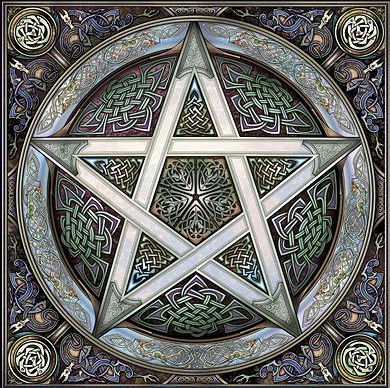


 Learning Wicca and the Tradition of the Craft