Witch hunts sound like a thing of the past. A religious fanaticism of the earlier ages. In the United States religions like Wicca and other pagan cultures are the fastest growing faiths and followings. However, the same acceptance is not uniform in many places.
After two men died in the village of Gujarat, India, three women were accused of the murders and then feasting upon the souls of the young men. They were surrounded by men carrying iron pipes and wooden sticks and beaten in front of a gathering crowd. The villagers screamed “Dakan” at then, the local word for witch. This happened in 2014 and is only one of the thousands of witch hunts that have happened in India. More than 2,500 Indians have been persecuted and killed for witchcraft between 2000 and 2016. The number is estimated to be higher, however, because witchcraft is not considered a motive for murder in many places throughout the country (Religious Discrimination, 2020).
Women in India are the main targets for witchcraft discrimination and the caste system is often exploited as well as the strong patriarchy culture. Men often target the witches based on deeply rooted superstition, misogyny, and patriarchy that gives them the power to blame the women. Historically, the accusations were used to oust women from land that men wanted. Witches are also a convenient excuse for the rising rates of infant mortality, and deaths caused by disease such as malaria, typhoid and cholera (Religious Discrimination, 2020).
Anti-witch hunting laws have been passed in several states, but Gujarat is not one of those. Women fight back with their resistance group ANADI. The group is a non-profit that supports vulnerable communities. Women share their stories in circles where they sit on the floor and shar samosas. They find strength in protecting each other, learning the laws, demanding a desk in the police department for an advocate for women (Religious Discrimination, 2020) .
Sub-Saharan Africa also sees witch hunts in modern times. In Ghana, it is common for disputes to be settled with accusations of witchcraft. Sometimes, the simple accusation is all it takes to remove one of the members of the argument. Witchcraft is perceived as a legitimate threat in the country to the point of the establishment of eight prisons for the victims/ prisoners of witch hunts. Over 1,100 people were reported to have been imprisoned in these places in 2014. These are the lucky ones who escaped murder at the hands of the towns and villages (Religious Discrimination, 2020).
President Yahya Jammeh of Gambia ordered a group of government witch hunters to round up nearly 1000 villagers in 2009. They were taken to confidential governmental detention centers and forced to consume hallucinogenic substances which caused instant diarrhea and vomiting from the poisonous herbs the liquids contained. They were then tortured and beaten until confessions of witchcraft were made. The victims were both young and elderly, men and women. Of the 1000 taken prisoner, miraculously only 2 died. Jammah is notorious for his unethical practices, such as the time in 2007 when he claimed to have discovered an herbal cure for HIV and ordered the execution of all homosexuals in Gambia . Both acts were reported to Amnesty International (Kantor, 2018).
Kenyon with hunts date back centuries but still occur today. In 2008, it is documented that a mob trapped 11 people and burned them to death for alleged witchcraft activities. There were eight women and three men killed that night ranging in age from 80 to 96. The victims were dragged from their houses individually and burned, then their houses were burned to the ground. This was all caused by a book someone found that supposedly kept a documentation of a witches meeting. This type of attack is shockingly, and saddeningly, common in Kenya (Kantor, 2018).
Nepal has a widespread belief in witchcraft, and a widespread custom of witch hunts. Most victims are women of a lower caste who are rounded up, beaten, humiliated in public, and ultimately murdered. The families of the alleged ‘witch’ also suffer the same fate. In 2010 a woman was accused of witchcraft, beaten, tortured and forced to consume human excrement until finally confessing to witchcraft two days later. Many times, the victim in this country is released after a confession but that is not always the case (Kantor, 2018).
Muslims in Saudi Arabia live with a deep fear of sorcery and witchcraft. It is considered a legitimate criminal offence. When one is accused of practicing witchcraft, they will be tried by the government and, if found guilty, the punishment is death. If the case is a high-profile individual, the sentence may be life imprisonment rather than death. Reports of governmentally sanctioned witch hunting can be seen as recently as June, 2012. Muree bin Issa al-Asiri was accused of witchcraft and sorcery in southern Saudi Arabia (Kantor, 2018).
Other countries perdue witches as well. I encourage further research.
Please Note: As this particular set of witch trials is so sensationalized, I did not go into as much detail as I have others
Arguably the most well known of American witch trials are those of Salem in 1692. Several women were accused of practicing dark arts after several young girls claimed they were being possessed by the devil. (History, 2020).
As discussed previously, often outside sources of stress caused hysteria, in this case there were many effects lingering after a British war with France 1689, as well as fears of Native American attacks on the colonies, a recent outbreak of smallpox, and an outstanding fear of outsiders fueled through rivalries and distrust (History, 2020).
In January of 1692, Dr. Williams Griggs attended the daughter of the local minister, as well as his niece. These girls, Elizabeth “Betty” Parris, 9, and Abigail Williams, 11, had begun having terrifying fits of violent contortion and screaming outbursts. Shortly after, Ann Putnam Jr., Mercy Lewis, Elizabeth Hubbard, Mary Walcott, and Mary Warren, all young girls like Abigail and Betty, began experiencing similar symptoms. Tituba, the Paris’ Carribean slave, was the first to be arrested. Sarah Good, a homeless beggar, and Sarah Osborn, a poor, elderly woman, were next; all were accused of bewitching the children (History, 2020).
Jonathan Crowain and John Hathorne served as magistrates in the questioning of the witnesses. The accusers suffered fits of contortions and screaming throughout the trial. Of the three accused being questioned, only Tituba confessed. She then accused several others of working with her in witchcraft against the children. This served to enlarge the hysteria in Salem. Soon even upstanding members of the church and community were being accused, such as Martha Corey, her husband, Giles, and Rebecca Nurse (History, 2020).
Judges Samuel Sewall and William Stoughton joined the trials and watched together as they convicted and sentenced 19 to hanging. Seven other witches died in confinement. Giles Cory, Martha’s elderly husband, refused to enter a plea during his trial and was crushed to death by stones (History, 2020).
A minister, Cotton Mather, had expressed his concerns with the way witch trials were run throughout the course but he was not listened to. His father, Increase Mather, later joined his son, his status as the president of Harvard College allowing weight behind his words. He urged others to consider witchcraft as any other crime and to allow the same amount of evidence for witchcraft as one would another crime rather than the reliance on spectral evidence; i.e. dreams and visions. He urged courts to consider the weight of ten escaped witches versus one innocent life taken for a wrong conviction (History, 2020).
The governor heeded the warnings and dissolved any courts in which witch trials had taken place. In their places he established successors who swore to not entertain spectral evidence in the courts. By May, 1693, the last of the accused witches were pardoned. In 1697, Massachusetts declared a day of fasting in remembrance of the trials that were now deemed unlawful. Judge Samuel Sewall publicly apologized for the role he had had in the Salem witch trials. The colony of Massachusetts passed legislation and paid financial restitution to families of the accused until 1711 in an attempt to make amends (History, 2020).
When people think of witch trials in the early years of the United States, usually only the Salem witch trials come to mind. However, witch mania was widespread across the Eastern world and rooted into the settlements in the early American colonies (Cavanaugh, 2016).
In 1642, Connecticut was the first region to make witchcraft punishable by death. It was not until five years later, however, that Hartford enacted this brutality. Records were ill kept, so many of the circumstances and the trial are difficult to piece together. What we do know is that Alse Young was blamed for an epidemic in a nearby settlement. She was convicted of witchcraft and killed. Sickness was, of course, common during this era, as was cold, hunger, and many other hardships. When these things happened, it was easier to blame witchcraft and those who did not present themselves as devout puritans (Cavanaugh, 2016).
The story that started it all is that of Goodwife Ayres. After 8 year old Elizabeth Kelly died suddenly, her parents convinced themselves it was the work of the devil. The girl had been well only a few days before when she had been in the company of Goody Ayres. John and Bethia Kelly were convinced that Ayres had possessed their child and killed her. During the trial they told the courts that Elizabeth hadn’t gotten sick until the evening Ayres brought her home. They claimed their daughter, hysterical, had proclaimed “Father! Father! Help me, help me! Goodwife Ayres is upon me. She chokes me! She kneels on my belly! She will break my bowels! She pinches me! She will make me black and blue!” Elizabeth’s death and Goodwife Ayres’ trial began the flurry of accusations in Connecticut (Klein, 2012).
Rebecca Greensmith was the next to be accused after Ann Cole claimed she had become afflicted with violent shaking and uncontrollable vocal blasphemies. Greensmith was not well liked in the town, having been described as “a lewd, ignorant, considerably aged old woman.” Many agreed that witchcraft was the culprit as many had believed witchcraft had beene the cause of Elizabeth Kelly’s death. It was very easy to switch the blame from Goodwife Ayres to Rebecca Greensmith due to her unpopular reputation. Ayres’ husband joined the popular opinion about Greensmith, perhaps to save his wife. Those accused would accuse others, spouses would accuse each other and neighbors would accuse neighbors (Klein, 2012).
Greensmith did not help her own case, claiming she was “familiar” with the devil and would meet with him every Christmas to form a covenant. She claimed that she met with seven other witches including Goody Ayres, Mary Sanford, Elizabeth Seager, and even her own husband. Neighbors supported the claim stating they had seen Seager dancing with others in the woods and concocting mysterious mixtures in a black cauldron (Klein, 2016).
Two of the accused, speculated to be Rebecca Greensmith and her husband, Nathaniel, were subjected to the water test. Their hands and feet were bound and they were thrown into a body of water, testing the popular “witches float” theory. They were tried and convicted and sentenced to death. Nathaniel Greensmith continued to proclaim his innocence, while his wife publicly confessed. The couple, as well as a few others of the accused, were hung (Klien, 2016)
Mary Johnson was executed in 1648. She was detained and tortured for four years until a confession was extracted from her. They were able to make her confess to “familiarity with the devil” and “uncleanliness with men and devils.” This was the first reported confession of witchcraft in the colonies. There were 11 people executed by hanging and many others were banished for witchcraft between 1647 and 1697. Nine of the 11 were women and in some cases, the women’s husbands were hung along with them (Cavanaugh,2016).
It took one one person to bring an individual to trial for witchcraft. In most cases, the person’s stories were also enough to ensure an execution as well. Most often, the accuser was a person who felt wronged by the accused or someone who could gain financially from the death. In one case, a woman was accused of “bewitching” her neighbor’s livestock and “caused beer to jump out of a barrel.” Men’s mistakes were also blamed on women and labeled as witchcraft. Lydia Gilbert was accused of using witchcraft and causing the death of an innocent person when one man accidentally shot and killed another (Cavanaugh,2016).
The Hartford Witch Panic was the height of witch mania in Connecticut. Three witches were executed in only a couple weeks time. After this in 1662, new laws were made requiring testimony from multiple people during the trial to determine guilt of witchcraft. Many were beginning to find the “evidence” presented for these cases suspect and began to question the motivation of witnesses. As a result, many were acquitted and some were even given restitution for the slander and damages. Torture methods such as hot irons and boiling water were demonized, and death sentences were not given lightly. Katherine Harrison was convicted of witchcraft in 1668 but the courts refused to have her executed despite the protests by citizens(Cavanaugh, 2016).
When the Salem witch trials began in 1692, the hysteria of witches in Connecticut returned, but no executions were made. Witchcraft was still a capital crime, but investigation into accusations was no longer hasty. Thorough investigations were made and, more often than not, the accusations were a product of feuds between people. The courts were beginning to tire of the accusations and even an unsolicited confession couldn’t sway them. Hugh Crotia announced to the courts that he practiced black magic and had made a pact with the devil, himself. He stated that he often used his dark magics against fellow citizens. The courts declared him an “Ignoramus”, made him pay his jail fees and freed him (Cavanaugh, 2016).
Elizabeth Francis was the most notable first witch trial in 1566 England. She claimed that she had used her cat, coincidentally named Satan, to self-abort a fetus, commit murder, and to cripple her husband. Elizabeth also named other supposed witches including Agnes Waterhouse, who became the first woman to be executed for witchcraft in England (Alexander, 2015).
Agnes’ story begins with King Henry VIII. After the beheading of Ann Boleyn in 1536, he believed firmly that the woman had been a witch and had had him bewitched. In 1542, he created and passed a law against witchcraft. There was widespread public concern at this point anyway, but the law passed by the King made the trials larger and more official (Klimczak, 2016).
Agnes was known in her town as Mother Waterhouse which implied that the town liked her and saw her as a mothering, kind, single woman. There is speculation that she was also appreciated as a healer and spirit woman. She lived a respectful life until the accusation condemning her for witchcraft in 1566 (Klimczak, 2016).
Agnes was accused of causing the illness and subsequent death of a man named William Fynne. She was also charged with killing livestock, killing her husband and causing illness amongst the village. People began to believe that Agnes and Elizabeth were sisters and committed these atrocities by witchcraft together (Klimczak, 2016).
During the trial, Elizabeth confessed that her cat, Satan, was her familiar that she had recieved from her grandmother; also a witchcraft practitioner that had taught Elizabeth. She claimed the cat spoke to her and followed her bidding in return for a drop of blood. He killed her baby when it was only 6 months old but believed the cat had done it for a reason. She also claimed that the animal had a vast knowledge of herbology and taught her what it knew. She stated that she had gifted the cat to Agnes to serve her and had received a cake as a thank you (Klimczak, 2016).
Agnes confessed that the cat had proved its power to her by killing a pig. It proceeded to teach her witchcraft as well. The cat caused her many problems, she stated, so she turned it into a toad and kept it in a black pot lined with cotton (Klimczak, 2016).
Agnes’ daughter, Joan, was a young woman of 18 and also one of the accused in this trial who claimed that she was curious about the mysterious cat and decided to look at it while her mother was away. It was a toad at the time. She claimed to have played with it but it never spoke to her or taught her witchcraft. She considered the toad as a pet and used it to prank her 12 year old neighbor Agnes Brown. Agnes claimed that it was not a toad she saw but rather a demon with a black dog’s body, an ape’s face, a short tail and horns. The judges took this testimony and believed that Agnes had bespelled the young girl with malicious intent to hurt her (Klimczak, 2016).
Officials demanded of Agnes to declare loyalty and ask forgiveness from God. It is said, however, that Agnes instead told them that she had sent her familiar to hurt and damage goods of another of her neighbors but did not succeed. The officials claimed the failure was due to the man’s unwavering faith in God (Klimczak, 2016).
In 1612, one of the most notorious witch trials took place; the trial of the Pendle Witches (Castelo, n.d.). Caused by ongoing accusations between rivals to be lead local healers. They were arrested and held until their trial. Instigated by Jennet Device, the ten year old child of one of the families, accused everyone in the trial of witchcraft. The trial was an unprecedented example of a well-recorded event and later called “The Wonderfull Discoverie of Witches in County Lancaster” by Thomas Potts. As this happened during the pandemic of witches, the child’s testimony was taken as truth (Alexander, 2015).
In total, 12 people were accused. One died in custody, the other 11 went to trial. Only one of the remaining 11 was found not guilty. Six of these were members of feuding families; the Dendike family and the Chattox family. They were both matriarchal families led by widows in poverty. Despite the hysteria surrounding witches and witchcraft, there was still a great amount of fascination in those who posed as witches and healers and the posers made plenty of money off of this fascination. When the King’s fascination with witchcraft turned to fear, unrest began to take the place of the fascination amongst the civilians who posed as and supported witches (Castelow, n.d.).
The king’s laws passed against witchcraft including towns compiling lists of those who did not attend church or would not take the holy communion. Lancaster, where the majority of the trials took place, was regarded as a ‘wild west’ of sorts, where the holy doctrine was honored but without much understanding. This left the trials judges uneasy (Castelow, n.d.).
The origin of the trial was originally an altercation between Alizon Device and a wandering peddler named John Law. Alizon was thought to be either traveling or begging when she came across Law in the Trawden forest. When she begged Law for some pins, he refused and Alizon cursed him. Not long after, Law suffered a near fatal stroke, which he was convinced was the fault of the curse Alizon had laid upon him. Alizon confessed in the courts that she had implored the Devil to hurt Law. Furthermore, she accused her own grandmother of the Demdike family and also members of the Chattox family of witchcraft. The families had been feuding for years after a member of the Chattox family broke into the home and stole possessions of the Demdike clan. Alizons accusations may have been an act of revenge as the whole family held a grudge including Alizon’s father, John Device. He claimed that Old Chattox had threatened harm to him and the rest of the family because the Demdick family refused to pay for their protection (Castelow, n.d.).
Four of the citizens of the village had died years of the trial but with the accusations floating around, people began to believe that the Chattox family had witched them. Alizon’s own father told the courts that his daughter had previously hexed a young girl and her mother stated that Alizon had a mark on her body from the Devil where it had supposedly drank her blood, leaving her insane. The matriarchs of both clans confessed to selling their souls, as well. People also claimed that the daughter of Chattox, Anne, had been seen making mysterious clay figures. All accused were sent to trial (Castelow, n.d.).
There were those who were sympathetic to the families. They too, were arrested and brought to trial. The matriarch of the Demdike clan never made it to the trial. She was unable to live through the conditions the accused were forced to live in while imprisoned in the dungeons. A small girl, Jennet Device was the main evidence supplier in the trials, held in August of 1612. She was nine years old. Normally, nine year olds would not be permitted to give evidence in a trial. However, this being a trial against accused witches, normal precedents were overturned. Jennet gave evidence against those who had sympathized with the accused, the original accused, and even her own family. The extent of torture the witches endured caused some to truly believe that they were witches and had powers (Castelow, n.d.)
On the 20th of August, 1612, the Pendle witches were led to gallows hill where their execution sentence was carried out.
German Persecution of witches lasted from 1581 until 15-93.The Witch trials of Tier were considered to be the worst witch trials of that era in Germany. A third of the ‘witches’ executed were nobles and high standing members of society including Dietrich Flade, a Chief Judge on the electoral court and university rector (Alexander, 2015).
Flade opposed the trials, disagreeing with the torture methods used were ineffective. He was arrested and tortured, and ultimately died by being burned. After his example, there were no other vocal oppositions to the trials or the torture methods. Two villages were cleared out and killed, accused of witchcraft. One lone survivor was left from each village. Recorded, the death toll was 368, but historians put the number to be as great as 1000 for the Tier trials, alone (Alexander, 2015).
Some historians, however, put the beginning of the witch hunt mania at 1572. The first presumed witch was a woman named Eva, thought to have murdered a small child with witchcraft. She was tortured and eventually confessed and named two other women she claimed she was in league with. All three were burned at the stake. 500 people were murdered by the 1590s, out of a residential population of 2,200 (Guilford, 2018).
There are many theories as to why the executions were so voluminous. One theory explores the economics of the time period. Weather had taken a dramatic shift, assailing farmers with cold, wet weather, abnormal frosts, floods, hailstorms, plagues of critters such as mice and caterpillars; all disasters for the crops the farmers and residents depended on. This caused widespread famine, inflation, and disease. It was noticed by historians that the largest amount of witch hunts typically occurred at these times because when things started to go wrong, it seemed that witches were the easiest to blame (Guilford, 2018).
Another theory contends that witch hunts were perpetuated through the competition Protestant and Catholic churches. Each supplied a desired outcome eagerly sought by many; salvation. But the beliefs of the churches differed, and as the Protestant church was the first church to emerge as real competition to the Catholic church, problems arose (Guilford, 2018).
Churches began to move from spiritual services and begin to advertise salvation amongst the living rather than after death. Witch hunts became a satan fighting attraction that the followers of both the Protestant and Catholic churches. It appeased the masses and was used as a way to gain more followers, much like politics today. This theory goes far in explaining why Germany, in particular, was notorious for witch hunts (Guilford, 2018).
Witchcraft had been commonly accepted for centuries before this. Love charms and potions, spells to find lost things were all popularly bought by townsfolk. The Catholic church hadn’t bothered with the sellers until there was a reason to blame them for misfortunes. In the end, it is estimated that more that 43,000 people were prosecuted in approximately 11.000 separate trials across Germany. More than 40% of witches killed in Europe were in Germany alone (Guilford, 2018).
The first notable witch hunt in Scotland lasted 7 months in the year 1597. Historians believe that approximately 400 people were accused and at least half of them were executed.Records were not properly kept during that time so the information is scarce. King James VI was adamant about killing witches believing that they were out to get him, specifically. He published his book “Daemonologie” as he announced the witch hunt in 1597 and he is, most likely, the reason proper records were not kept. Record keeping did not become a regular occurrence until the mid 1600’s Alexander, 2015). The book by King James later became the inspiration for Shakespear’s “Macbeth”.
In Scotland, the average amount of witch persecutions reached 4 to 5 times more than Europe. In 1662 a woman confessed to having met the devil multiple times in various forms. Her name was Janet McNichol, a resident of the Isle of Bute. 13 years later, she was strangled and her corpse burnt, the average end to an accused witch (O’Sullivan, 2019).
Throughout the entirety of the witch hunt era of Scotland, approximately 3,837 people were known to have been accused of witchcraft and only 3,212 of these people have been identified leaving another 625 people unnamed. Other accounts estimate higher numbers around 4,500 to 30,000. These higher numbers however, are based on speculation rather than research and fact. Some records provide very detailed information while others are vague and leave substantial gaps in reliable information (Brewster, 2020).
Of the known cases, it has been discovered that only 305 trials were recorded, including sentencing. Of these, ,205 were executed, 52 were acquitted, 27 were banished, 11 were declared fugitives, 6 were excommunicated 2 were outlawed, 1 was to be imprisoned for life and 1 other was sentenced to public humiliation. 98 were recorded to have successfully fled from their execution sentences, suggesting that 67% were successfully executed. These numbers however, are only based on less than a tenth of known accusations due to the unreliable recording of trials (Brewster, 2020).
Most of these known cases were women approximated to be somewhere around 84%. Of all known accused, 7% were under 20 years of age, 30% were between ages 20 and 40, 53% were between 40 and 60 years old, 11% were older that 60 (Brewster, 2020).
The accused were usually the victims of quarrels with neighbors and the neighbors deemed them witches if they experienced some sort of misfortune after the argument. The neighbors would lie, claiming bespellment and other malicious spiritual acts (Brewster, 2020).
The persecutions lated for 173 years between 1563 and 1736. Despite rumor, midwives and healers were not the common target for accusations, nor were poor women, In fact, the majority fell into the middle class of the socio-economic class. Tortures were most likely used to obtain confessions Sleep deprecation was the most common method of torture as it eventually led to hallucinations (Brewster, 2020).
You may remember that scene from Monty Python and the Holy Grail where they decide that if the woman floats, she is a witch. This was also a common practice, though more in England than in Scotland, as ridiculous as it may seem (Brewster, 2020).
There were four main types of evidence used to persecute alleged witches:
Confession Evidence
This was often obtained through torture. The torture would typically continue until the victim would admit to a pact with the devil or using witchcraft to harm neighbors.
Neighbor’s Testimony
This was the evidence where the arguments with neighbors would be used
Other ‘witches’ testimony
When interrogated and tortured, witches were often demanded to name other witches that would then be arrested and interrogated. This mainly happened during the periods of intense witch hunting.
The Devil’s Mark
This mark was believed to be obtained by a pact with the devil. It was believed to be either a blemish or an insensitive spot that would be discovered by poking around the witches body with a pin.
Despite the rumors that floated around at the time, these following statements were proven false (some obviously so):
Witches did not meet in groups of thirteen
They did not worship the devil even though many were tortured into saying they did
Many theories have alluded to drug induced hallucinations as part of the witch hunts but this was also proven false.
Witches looked like regular women but were often portrayed as strange and grotesque.
Scotland did not follow the common theories of broomsticks and black cats
The earliest written records of a witch were in the bible and were estimated to be written between 931 B.C. and 721 B.C. This is in the story in shock King Saul wished to resurrect the spirit of Samuel, the prophet to assist him in his war with the Palestinian army. King Saul employed the Witch of Endor to do his bidding. She did as commanded and prophesied the death of Saul and all his sons. During the battle the next day, all of Saul’s sons died and King Saul committed suicide in his grief (History, February 21).
After this a “witch hysteria” overtook Europe in the 1400s. Some of the witches of the time were simply women who used witchcraft and spells to call upon spirits for help and to create positive change for themselves or others. Many were just “wise-women” or natural healers who were misunderstood in their profession. Many of the accused were tortured into confession for a variety of activities and behaviors they had not committed. Witch hunts became common singling out widows, single women and other women on the margins of society. The “witches” were executed primarily by hanging and burning at the stake (History, February 21).
From 1500 and 1660, it is speculated that roughly 80,000 witches were sentenced to death in Europe. Germany had the highest execution and Ireland had the lowest. Roughly 80 percent of these women were suspected to be filled with lust and have had relations with the devil (History, February 21).
Malleus Maleficarium, a German publication written in 1486, did nothing but encourage the persecution of witches. Essentially, the book served as a handbook for the identification and hunting of witches; it’s title translating to “The Hammer of Witches.” It labeled witchcraft as heresy. Protestants and Catholics soon took every word to heart and used it in the attempt to flush out any and all witches that may be amongst them. The Bible was the only book to surpass sales of Maleus Maleficarium for over 100 years (History, February 21).
The 16th and 17th centuries saw another rise in witchcraft persecution as religious wars broke out across Europe. The countries that practiced Catholic and Protestant faiths were brutal in their hunts and persecutions. Between the 15th and 18th centuries, it is approximated that between 40,000 and 60,000 were executed across Europe and the early American colonies. 75 percent (30,000 to 45,000) of witches were women. 10,000 to 15,000 were men (Brayton, n.d.).
Some of the earliest documented witch hunts and persecutions took place in Denmark, often based off of conspiracy theories about magical connections to the weather. Gyde Spandemanger was one such victim; accused of causing the winds to fail as the Danish navy pursued the Dutch fleet. Although she was the simple wife of a merchant, she was arrested and tortured into confession, naming several others as accomplices, as well. Although none of her alleged accomplices confessed, she was burned at the stake for her “crimes” (Brayton, n.d.).
In 1589, a princess of Denmark boarded a ship to travel to Scotland for her marriage to the King of Scotland. Storms almost destroyed her carrier along the journey and the King met her in Norway to finalize the marriage. On their way back to Scotland, storms battered their vessels as well, though both survived (Brayton, n.d.).
This worsened the fear of weather witches in Denmark and spread the persecution to Scotland. In Denmark, the Minister of Finance was accused of under equipping the ships. He, in turn, blamed women in Copenhagen for witchcraft involving the inclement weather. Anna Koldings, one of the accused, named five others under duress. All were tortured mercilessly until the government received a confession of dealings with the Devil. Specifically sending the devil onto the ships. All 13 women were burned at the stake in 1590 (Brayton, n.d.).
While 2020 has had enough “events” to fill an encyclopedia set of history books, one truly beautiful event we will get to witness is the blue moon on October 31st. This means that not only will we have a full moon on the first of October, but also a full moon on the last day of October; coincidentally, on Samhain.
The veil between worlds is notably thin on an average Samhain and the blue moon makes it thinner still. Yes, like every year at the thinning veil, this is a perfect time to try to (SAFELY) contact loved ones that have passed. As always, be careful. The thinner the veil, the more likely you may accidentally attract an entity only acting as your loved one. Take any precaution you can if this is your intention for the holiday. Cleanse and purify every tool you intend to do the working with. Cast a strong circle. Keep several protective objects on your person such as symbols, oils, and crystals. Better safe than sorry, and although I would help any one of you in a heartbeat, I would hate for it to be for that reason.
About the Blue Moon
The Science Behind the Blue Moon
A full lunar cycle is a little over 28 days long. However, a calendar year is 365 days, which means that during some years, you may end up with thirteen full moons instead of twelve, depending on where in the month the lunar cycle falls. This is because during each calendar year, you end up with twelve full 28-day cycles, and a leftover accumulation of eleven or twelve days at the beginning and end of the year. Those days add up, and so about once every 28 calendar months, you end up with an extra full moon during the month. Obviously, that can only happen if the first full moon falls in the first three days of the month, and then the second takes place at the end.
So, although the term “blue moon” is now applied to the second full moon to appear in a calendar month, it originally was given to an extra full moon that happened in a season (remember, if a season only has three months on the calendar between the equinoxes and solstices, that fourth moon before the next season is a bonus). This second definition is a lot harder to keep track of, because most people just don’t pay attention to the seasons, and it generally happens about every two and a half years.
Of note, some modern Pagans apply the phrase “Black Moon” to the second full moon in a calendar month, while the Blue Moon is specifically used to describe an extra full moon in a season. As if this wasn’t confusing enough, some people use the term “Blue Moon” to describe the thirteenth full moon in a calendar year.
The Blue Moon in Folklore and Magic
In folklore, the monthly moon phases were each given names that helped people prepare for various types of weather and crop rotations. Although these names varied depending on culture and location, they generally identified the sort of weather or other natural phenomenon that might take place in a given month.
The moon itself is typically associated with women’s mysteries, intuition, and the divine aspects of the sacred feminine. Some modern magical traditions associate the Blue Moon with the growth of knowledge and wisdom within the phases of a woman’s life. Specifically, it is sometimes representative of the elder years, once a woman has passed far beyond the status of early cronehood; some groups refer to this as the Grandmother aspect of the Goddess.
Still other groups see this as a time—because of its rarity—of heightened clarity and connection to the Divine. Workings done during a Blue Moon can sometimes have a magical boost if you’re doing spirit communication, or working on developing your own psychic abilities.
Samhain and the Blue Moon
The veil between worlds is notably thin on an average Samhain and the blue moon makes it thinner still. Yes, like every year at the thinning veil, this is a perfect time to try to (SAFELY) contact loved ones that have passed. As always, be careful. The thinner the veil, the more likely you may accidentally attract an entity only acting as your loved one.
Take any precaution you can if this is your intention for the holiday. Cleanse and purify every tool you intend to do the working with. Cast a strong circle. Keep several protective objects on your person such as symbols, oils, and crystals. Better safe than sorry, and although I would help any one of you in a heartbeat, I would hate for it to be for that reason.
*:WARNING! The following is an advanced spell. If you are not a regular practitioner, if you are more of a ‘dabbler’, if you have not been practicing long, or if you do not have the confidence for advanced magic DO NOT PERFORM THIS SPELL:*
You will need:
A sparkling quartz crystal
A clean mirror
Instructions:
Cast your circle. Make sure you have everything you may need inside the circle before casting. This circle cannot be broken for your safety and to ensure that it is your loved one that you are reaching out to.
Ground and center. This spell takes a great deal of patience, intent and concentration and you must have the right frame of mind to manifest.
Hold the crystal in your hand and stand before the mirror. Say the following:
Come to me all spirits of
Family, Friends, and ones I love.
Tell me what I need to know
Tell me all before you go
Watch the mirror closely. Your loved one/s should begin to materialize in the reflective surface.
Heat the oil in a large saucepan over medium heat. Add the onion; saute until the onion is golden. Add yams, squash, and broth. Decrease heat and simmer, covered, until the vegetables are tender, about 25 minutes. Let the mixture cool.
In increments, place the vegetable mixture and yogurt in a blender or food processor. Whirl until pureed. Return the mixture to the saucepan and add the pumpkin seeds. Stir in milk until you have the desired consistency. Season with salt and pepper.
Cook over low heat until heated through, about 5 minutes. Transfer soup to warmed bowls. Top each serving with a dollop of sour cream and a sprinkle of almonds and nutmeg.
Apple Scones
Yield: 3 dozen
Ingredients:
1 apple, any kind
2 cups all purpose flour
2 tbsps granulated sugar
3 tsps baking powder
½ tsp ground cinnamon
½ tsp salt
6 tbsps vegetable shortening
½ cup raisins
¼ cup apple juice
Directions
Peel, core, and mince the apple.
Preheat oven to 400
In a bowl, mix flour, sugar, baking powder, cinnamon, and salt. With a pastry blender, cut in the shortening.
Stir in the apples and raisins.
Add apple juice to stiffen the dough.
Turn dough out onto a floured surface. Roll to about ½ inch thick.
Cut into triangles
Bake on an ungreased baking sheet for 10 minutes, until light brown.
Magickal Mushrooms (No, not that kind)
Yield: 12 stuffed Mushrooms
Ingredients
2 tbsps butter
¼ cup chopped mushroom stems
2 tbsps diced green bell pepper
2 tbsps chopped onion
¾ cup bread crumbs
2 tbsps cooked, crumbled bacon
1 tsp minced fresh rosemary
Salt and pepper
1 cup large mushrooms, stemmed
⅓ cup grated cheddar cheese
Directions
Preheat oven to 350
In a saucepan, , melt 1 tbsp of butter over low heat. Add the mushroom stems, green pepper, and onions. Saute until until tender.
Mix in bread crumbs, bacon, and rosemary. Season with salt and pepper
Spoon mixture into mushroom caps. Place caps on a baking sheet. Melt the remaining butter and drizzle over the caps. Top each one with grated cheddar cheese.
Bake for 15 minutes. Serve hot.
Rosemary Salmon
Serves 4
Ingredients:
½ cup merlot or other red wine
2 tsps Cider vinegar
2 tsps chopped fresh rosemary
¼ tsp ground ginger
4 (6oz) fresh salmon steaks
Salt and pepper
2 tbsps unsalted butter
Directions
Set oven to broil
Mix wine, vinegar, rosemary and ginger in a saucepan. SImmer over low heat for at least 10 minutes. The mixture will boil down a bit, but if too much of the wine evaporates, add a little water.
Season both sides of the fish steaks with salt and pepper. Melt butter and brush on the fish.
Set the salmon on a rack in the broiler pan; broil for 9-11 minutes. To test fish to see if it is done, place a fork in the thickest part of the steak. Gently twist fork; if the meat flakes easily, it is ready.
Place on a platter, pour sauce over fish, and serve.
All Hallows’ Eve Cakes (My personal favorite)
Yield: about 3 dozen cakes
Ingredients
½ cup vegetable oil
4 oz unsweetened baking chocolate, melted
2 cups granulated sugar
4 large eggs
2 tsps vanilla extract
2 cups sifted cake flour
2 tsps baking powder
½ tsp salt
1 cup confectioners sugar
Directions
In a large bowl, mix vegetable oil, chocolate, and granulated sugar. Add the edds, one at a time, stirring well after each addition. Mix in vanilla.
In a small bowl, mix flour, baking powder, and salt.
Stir in flour mixture to oil mixture.
Chill for 4 hours or over night.
Preheat oven to 350.
Roll 1 tbsp of dough into ball, coat in confectioners sugar, rolling until covered. Repeat with all the dough.
Place the balls 2 inches apart on a greased baking sheet. Bake for 10-12 minutes. The cakes should be soft and edges should be firm. Do not overbake as they burn easily.
Bonus Lore: These cakes are said to appease the dead from causing trouble when the veil is thin. It is advisable to leave some in your yard or by your door as an offering to the spirits. I like to leave some in cemeteries as well. Also one in my spaces for the fairies. Though they have little to do with the veil, they enjoy sweet treats.
Baked Apples
Yield: 12 apples
Ingredients
12 golden delicious apples
½ cup firmly packed light brown sugar
¾ cup butter at room temperature
1 tsp grated nutmeg
1 tsp ground cinnamon
¾ cup boiling water
Directions
Preheat oven to 350
Peel upper half of each apple.
Core apples to within ½ inch of the bottom
Place 1 scant tbsp of brown sugar, 1 tsp butter, 1 pinch nutmeg, and a pinch of cinnamon in the center of each apple. Sprinkle remaining spice over apples
Add boiling water to baking dish
Bake 30-40 minutes, basting occasionally. To see if apples are done, pierce with a fork. If tender, they are done.
Samhain is a pagan religious festival originating from an ancient Celtic spiritual tradition. In modern times, Samhain (a Gaelic word pronounced “sow-win”) is usually celebrated from October 31 to November 1 to welcome in the harvest and usher in “the dark half of the year.” Celebrants believe that the barriers between the physical world and the spirit world break down during Samhain, allowing more interaction between humans and denizens of the Otherworld.
Ancient Samhain
Ancient Celts marked Samhain as the most significant of the four quarterly fire festivals, taking place at the midpoint between the fall equinox and the winter solstice. During this time of year, hearth fires in family homes were left to burn out while the harvest was gathered.
After the harvest work was complete, celebrants joined with Druid priests to light a community fire using a wheel that would cause friction and spark flames. The wheel was considered a representation of the sun and used along with prayers. Cattle were sacrificed, and participants took a flame from the communal bonfire back to their home to relight the hearth.
Early texts present Samhain as a mandatory celebration lasting three days and three nights where the community was required to show themselves to local kings or chieftains. Failure to participate was believed to result in punishment from the gods, usually illness or death.
There was also a military aspect to Samhain in Ireland, with holiday thrones prepared for commanders of soldiers. Anyone who committed a crime or used their weapons during the celebration faced a death sentence.
Some documents mention six days of drinking alcohol to excess, typically mead or beer, along with gluttonous feasts.
Samhain Monsters
Because the Celts believed that the barrier between worlds was breachable during Samhain, they prepared offerings that were left outside villages and fields for fairies, or Sidhs.
It was expected that ancestors might cross over during this time as well, and Celts would dress as animals and monsters so that fairies were not tempted to kidnap them.
Some specific monsters were associated with the mythology surrounding Samhain, including a shape-shifting creature called a Pukah that receives harvest offerings from the field. The Lady Gwyn is a headless woman dressed in white who chases night wanderers and was accompanied by a black pig.
The Dullahan sometimes appeared as impish creatures, sometimes headless men on horses who carried their heads. Riding flame-eyed horses, their appearance was a death omen to anyone who encountered them.
A group of hunters known as the Faery Host might also haunt Samhain and kidnap people. Similar are the Sluagh, who would come from the west to enter houses and steal souls.
Myths of Samhain
One of the most popular Samhain stories told during the festival was of “The Second Battle of Mag Tuired,” which portrays the final conflict between the Celtic pantheon known as the Tuatha de Danann and evil oppressors known as the Fomor. The myths state that the battle unfolded over the period of Samhain.
One of the most famous Samhain-related stories is “The Adventures of Nera,” in which the hero Nera encounters a corpse and fairies, and enters into the Otherworld.
Samhain figured into the adventures of mythological Celtic hero Fionn mac Cumhaill when he faced the fire-breathing underworld dweller Aillen, who would burn down the Hall of Tara every Samhain.
Samhain also figures into another Fionn mac Cumhaill legend, where the hero is sent to the Land Beneath the Wave. As well as taking place on Samhain, it features descriptions of the hero’s holiday gatherings.
Samhain in the Middle Ages
As the Middle Ages progressed, so did the celebrations of the fire festivals. Bonfires known as Samghnagans, which were more personal Samhain fires nearer the farms, became a tradition, purportedly to protect families from fairies and witches.
Carved turnips called Jack-o-lanterns began to appear, attached by strings to sticks and embedded with coal. Later Irish tradition switched to pumpkins.
In Wales, men tossed burning wood at each other in violent games and set off fireworks. In Northern England, men paraded with noisemakers.
Dumb Supper
The tradition of “dumb supper” began during this time, in which food was consumed by celebrants but only after inviting ancestors to join in, giving the families a chance to interact with the spirits until they left following dinner.
Children would play games to entertain the dead, while adults would update the dead on the past year’s news. That night, doors and windows might be left open for the dead to come in and eat cakes that had been left for them.
Christian Samhain
As Christianity gained a foothold in pagan communities, church leaders attempted to reframe Samhain as a Christian celebration.
The first attempt was by Pope Boniface in the 5th century. He moved the celebration to May 13 and specified it as a day celebrating saints and martyrs. The fire festivals of October and November, however, did not end with this decree.
In the 9th century, Pope Gregory moved the celebration back to the time of the fire festivals, but declared it All Saints’ Day, on November 1. All Souls’ Day would follow on November 2.
Halloween
Neither new holiday did away with the pagan aspects of the celebration. October 31 became known as All Hallows Eve, or Halloween, and contained much of the traditional pagan practices before being adopted in 19th-century America through Irish immigrants bringing their traditions across the ocean.
Trick-or-treating is said to have been derived from ancient Irish and Scottish practices in the nights leading up to Samhain. In Ireland, mumming was the practice of putting on costumes, going door-to-door and singing songs to the dead. Cakes were given as payment.
Halloween pranks also have a tradition in Samhain, though in the ancient celebration, tricks were typically blamed on fairies.
Wicca and Samhain
A broad revival of Samhain resembling its traditional pagan form began in the 1980s with the growing popularity of Wicca.
Wicca celebration of Samhain takes on many forms, from the traditional fire ceremonies to celebrations that embrace many aspects of modern Halloween, as well as activities related to honoring nature or ancestors.
Wiccans look at Samhain as the passing of the year, and incorporate common Wiccan traditions into the celebration.
In the Druid tradition, Samhain celebrates the dead with a festival on October 31 and usually features a bonfire and communion with the dead. American pagans often hold music and dance celebrations called Witches’ Balls in proximity to Samhain.
Celtic Reconstructionists
Pagans who embrace Celtic traditions with the intent of reintroducing them faithfully into modern paganism are called Celtic Reconstructionists.
In this tradition, Samhain is called Oiche Shamnhna and celebrates the mating between Tuatha de Danaan gods Dagda and River Unis. Celtic Reconstructionists celebrate by placing juniper decorations around their homes and creating an altar for the dead where a feast is held in honor of deceased loved ones.
Celebrating Samhain:
Samhain Nature Walk. Take a meditative walk in a natural area near your home. Observe and contemplate the colors, aromas, sounds, and other sensations of the season. Experience yourself as part of the Circle of Life and reflect on death and rebirth as being an important part of Nature. If the location you visit permits, gather some natural objects and upon your return use them to adorn your home.
Seasonal Imagery. Decorate your home with Samhain seasonal symbols and the colors of orange and black. Place an Autumnal wreath on your front door. Create displays with pumpkins, cornstalks, gourds, acorns, and apples. Set candles in cauldrons.
Ancestors Altar. Gather photographs, heirlooms, and other mementos of deceased family, friends, and companion creatures. Arrange them on a table, dresser, or other surface, along with several votive candles. Kindle the candles in their memory as you call out their names and express well wishes. Thank them for being part of your life. Sit quietly and pay attention to what you experience. Note any messages you receive in your journal. This Ancestors Altar can be created just for Samhain or kept year round.
Feast of the Dead. Prepare a Samhain dinner. Include a place setting at your table or at a nearby altar for the Dead. Add an offering of a bit of each beverage being consumed to the cup at that place setting, and to the plate, add a bit of each food served. Invite your ancestors and other deceased loved ones to come and dine with you. To have this as a Samhain Dumb Supper experience, dine in silence. After the feast, place the contents of the plate and cup for the Dead outdoors in a natural location as an offering for the Dead.
Ancestor Stories. Learn about family history. Contact one or more older relatives and ask them to share memories of family members now dead. Record them in some way and later write accounts of what they share. Give thanks. Share what you learned and have written with another family member or friend. Add names of those you learned about and wish to honor to your Ancestors Altar.
Cemetery Visit. Visit and tend the gravesite of a loved one at a cemetery. Call to mind memories and consider ways the loved one continues to live on within you. Place an offering there such as fresh flowers, dried herbs, or a libation of water.
Reflections. Reflect on you and your life over the past year. Review journals, planners, photographs, blogs, and other notations you have created during the past year. Consider how you have grown, accomplishments, challenges, adventures, travels, and learnings. Meditate. Journal about your year in review, your meditation, and your reflections.
Renovate. Select an area of your home or life as a focus. Examine it. Re-organize it. Release what is no longer needed. Create a better pattern. Celebrate renewal and transformation.
Bonfire Magic. Kindle a bonfire outdoors when possible or kindle flames in a fireplace or a small cauldron. Write down an outmoded habit that you wish to end and cast it into the Samhain flames as you imagine release. Imagine yourself adopting a new, healthier way of being as you move around the fire clockwise.
Divinatory Guidance. Using Tarot, Runes, Scrying, or some other method of divination, seek and reflect on guidance for the year to come. Write a summary of your process and messages. Select something appropriate to act upon and do it.
Divine Invocations. Honor and call upon the Divine in one or more Sacred Forms associated with Samhain, such as the Crone Goddess and Horned God of Nature. Invite Them to aid you in your remembrance of the Dead and in your understanding of the cycle of life, death, and rebirth. If you have lost loved ones in the past year, ask these Divine Ones to comfort and support you.
Transforming Expressions. If you encounter distortions, misinformation, and/or false, negative stereotypes about Paganism and Samhain in the media, contact the source, express your concerns, and share accurate information. Help eradicate derogatory stereotyping with courteous, concise, and intelligent communications.
Community Connections. Connect with others. Join in a group ritual in your area. Organize a Samhain potluck in your home. Research old and contemporary Samhain customs in books, periodicals, on-line, and through communications with others. Exchange ideas, information, and celebration experiences. Regardless of whether you practice solo or with others, as part of your festivities, reflect for a time on being part of the vast network of those celebrating Samhain around the world.
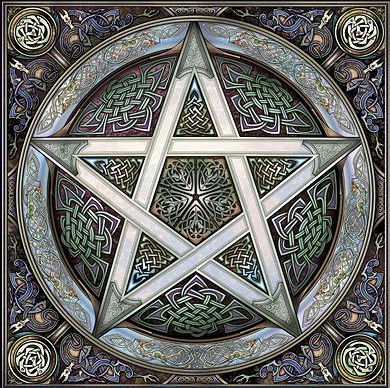


 Learning Wicca and the Tradition of the Craft