Hera (Roman name: Juno) is the wife of Zeus and queen of the ancient Greek gods. She represented the ideal woman, was the goddess of marriage and the family, and protectress of women in childbirth. Although always faithful herself, Hera was most famous for her jealous and vengeful nature, principally aimed against the lovers of her husband and their illegitimate chldren.
Family Relations
In Greek mythology, Hera was the daughter of Cronus and Rhea, and mother of Ares (god of war), Hebe (goddess of youth), and Eileithyia (goddess of childbirth), all with Zeus. Hera also gave birth alone to Hephaistos (god of metallurgy) in retaliation for Zeus’ similarly single-handed birth of Athena. However, Hera threw Hephaistos from Mount Olympus because of his ugliness, and crashing to earth, the god became lame. In other accounts, Hephaistos was thrown from the heavens by Zeus precisely because of his lameness. In any case, Hephaistos held a grudge against his mother and even imprisoned her in a special throne. Hera was only released from the device by promising her son the hand of Aphrodite in marriage.
The Infidelities of Zeus
Hera constantly battled with her husband’s infidelity and she often took swift revenge. Leto was so punished through Hera promising to curse any land that gave the pregnant goddess refuge. Only after months of wanderings could Leto find a place (Delos) to give birth to her son, the god Apollo. Even then, Hera had her daughter Eileithyia prolong the labour to nine months.
In various versions, a very popular myth involved Hera, Zeus, and Io. In some accounts, the queen of the gods turned Io, who was one her own priestesses and a former princess of Argos, into a cow to deter Zeus’ advances, but in other versions, it was Zeus who turned the girl into a white cow, either to secretly rendezvous with her or to persuade Hera that he was not really interested in Io. However, Hera discovered their courting, took custody of the cow. and set the one- hundred-eyed Argos to guard her. Zeus then employed Hermes to lull Argos to sleep and kill him. In memory, Hera then set his 100 eyes on the wings of a bird – the peacock. Finally, not to be outdone, the Greek goddess sent a gadfly to continually pester the unfortunate Io.
Other victims of Hera’s jealousy were Semele, who was tricked by Hera into asking Zeus to reveal himself in all his godly splendour and the sight immediately destroyed her. Callisto was another of Zeus’ lovers who caught the wrath of Hera as she was turned into a bear and hunted by Artemis. Zeus, in pity, later made her into a constellation, the Bear.
Hera went to great lengths to revenge herself for Zeus’ infidelity with Alkmene, principally focussing her wrath on their son Hercules. Hera delayed his birth so that his cousin Eurystheus could claim the throne of Tiryns, sent two snakes to kill the infant while he slept, caused the hero to become mad and kill his own wife and children, and had Eurystheus set the hero his twelve labours, which being so dangerous, she hoped they would be fatal. She also set the Hydra of Lerna against the inhabitants of Hercules’ home town and set the Amazons against the hero when he went in search of the girdle of Hippolyta. Hera was also responsible for some of the fierce monsters Hercules had to fight – the lion which terrorized Nemea and the Ladon dragon which protected the goddess’ sacred apple trees, a wedding gift from Gaia. Another pan–Hellenic hero though, who did receive Hera’s favour, was Jason, of the Golden Fleece fame. The hero had helped the goddess unknowingly when she was disguised as an old woman and wanted to cross a dangerous river, and she promised to be always at hand in any hour of need.
Finally, two more victims of the queen of gods were Ixion, who was tied to an ever-spinning wheel down in Hades as punishment for his attempted seduction of Hera, and Tityos, who was punished for the same indiscretion by being chained to a rock and having his liver eaten daily by a vulture.
Hera was a major protagonist in the story of the Trojan War as told in Homer‘s Iliad. The goddess supports the Achaeans and frequently schemes with other deities to bring the downfall of Troy, as she never forgave the Trojan prince Paris for choosing Aphrodite above her as the most beautiful goddess. In the Iliad, Hera mentions three cities particularly dear to her – Argos, Sparta, and Mycenae (or Mykene). We are also told that as a child she was raised by Ocean and Tethys whilst Zeus battled with Cronos. Homer most often describes Hera as ‘white-armed’, ‘ox-eyed’, and ‘Hera of Argos’. Hesiod, in his Theogony, similarly describes Hera as: ‘of Argos’ and more frequently as ‘golden-sandaled’.
Sacred Sites
Hera was a major figure in the Greek religion. She was the patron of Argos, which possessed a sanctuary to the goddess from the mid-8th century BCE. She also had a temple dedicated to her at Olympia (650-600 BCE), and Tiryns was an important cult centre to the goddess in the 7th century BCE. The island of Samos, in some accounts the birthplace of the goddess, had been a centre for cult worship of the Greek goddess as far back as the Mycenaean period in the mid-2nd millennium BCE, and a major centre was created from the 8th century BCE which prospered right into the Roman period. Hera was greatly esteemed at Elis, where coins depicted the goddess in the 5th and 4th century BCE. Across Greece, sporting competitions for women, the Heraia, were held in Hera’s honour, as were annual marriage festivals (hierogamy) when couples re-enacted the marriage of Zeus and Hera.
Representation in Art
As one of the most important deities, Hera was, naturally, a prominent figure in ancient Greek art, particularly on Attic red- and black-figure pottery. However, without any specific attributes she is often hard to distinguish from other goddesses. She is most often seated on a throne and sometimes wears a crown (polos), holds a royal sceptre, and wears a bridal veil. On occasion she is also depicted holding a pomegranate, a traditional symbol of fertility. Other associations include the peacock – symbol of pride – and the cuckoo, the form Zeus first took when he courted Hera – both of which the goddess reportedly kept as pets on Mount Olympus – and finally, with the lily flower.
Hera as Roman Juno
In Roman culture the goddess lived on as Juno, although she principally represented the good family and faithful marriage attributes of Hera rather than the jealous avenger of infidelity. Juno was one of the most important Roman gods along with Jupiter and Minerva; indeed she was also the patron of Rome itself. The annual Matronalia was a festival held in her honour in June, the month which carried her name and the period regarded as the most auspicious time to get married in Roman culture.
Hades is the Ancient Greek god of the Underworld, the place where human souls go after death. In time, his name became synonymous with his realm. It has to be said unsurprisingly – since he barely left it. Appropriately, the most significant myth related to Hades concerns one of the very few times he did – to abduct Demeter’s daughter, Persephone.
Hades means “The Unseen One” – a suitable name since Hades is the ruler of the invisible world. However, the Ancient Greeks rarely used this name – just like Christians rarely used the word “Hell” during the Middle Ages. So, since minerals and precious metals are found underground, they often referred to Hades euphemistically as Plouton – namely, “The Wealth-Giver.” Unsurprisingly, Hades’ Roman equivalent is called Pluto as well.
Hades’ Portrayal and Symbolism
As the ruler of the dead, Hades was a grim and ghastly figure, inspiring awe and terror in everybody. Consequently, he was rarely depicted in art. When he was, he was most commonly portrayed with a beard, and a solemn, mournful look. He frequently wears a helmet, named the Helm of Darkness or the Cap of Invisibility. Cerberus, the three-headed dog which guarded the entrance to the Underworld, is usually beside him. Every so often he carries a scepter or holds the key to his kingdom. At a later stage, he became associated with his weapon of choice, the bident, a two-pronged fork modeled after Poseidon’s trident. As Plouton, he was sometimes shown with a cornucopia, the horn of plenty.
Hades’ Epithets
Among the Ancient Greeks, Hades was known as “the Other Zeus.” Homer even calls him “The Infernal Zeus,” in addition to “the grisly God.” He was also called “the host of many” or “the Attractor of Man” – since all men eventually went to serve him.
Hades was the fourth child of the Titans Cronus and Rhea (after Hestia, Demeter, and Hera), both the oldest and the youngest male sibling. In other words, he was the first of the three brothers (Hades, Poseidon, Zeus) to be born and swallowed by his father, but the last one to be regurgitated.
Titanomachy and Hades
After being rescued by Zeus from the belly of Cronus, Hades joins him in the Titanomachy. Eventually, the decade-long war ends with a victory for the Olympians. Hades, Poseidon, and Zeus cast lots to decide who of the brothers will rule which domain. Hades gets the underworld.
Since Hades was a fearsome deity who rarely left his kingdom, there are very few myths about him in Ancient Greek sources.
The Abduction of Persephone
By far the most important myth is Hades’ abduction of Persephone, Demeter’s daughter. That was one of the few times Hades traveled above ground. The reason, naturally, was love: he fell for Persephone. However, Persephone didn’t want to give in easily, so Hades devised an ingenious ploy. As Persephone was gathering flowers with her maidens at the Nysian plain, he caused an indescribably beautiful flower to suddenly bloom before her. When Persephone reached out to pluck it, the ground under her opened and Hades appeared before her, all dreadful and majestic in his four-horse golden chariot and took her with him to the Underworld.
Demeter, the goddess of fertility, was so distressed at the absence of her daughter, that she started fasting and wandering aimlessly. Finally, after nine days, Hecate told her what happened. After the All-Seeing Helios confirmed the event, Demeter left Olympus as an act of protest against the injustice done to her.
With her gone, the earth was as barren and infertile as a desert. One year passed, and the gods started worrying that the famine would wipe out humanity. So Zeus sent all the gods, one by one, to beg Demeter to come back, promising her all kinds of gifts and functions. She wanted none; the only thing she wanted was to see her daughter once again.
So, Zeus had no choice but to send Hermes to Hades with the request that he return Persephone to Demeter. He complied, but only after making Persephone eat one pomegranate seed before leaving. This ensured that she would remain bound to his kingdom eternally.
Winter and Spring
Now, both sides had no choice but to accept Zeus’ compromise: Persephone would spend two-thirds of the year with her mother, but one-third of it with Hades. And this is the part of the year which corresponds with the winter months: they say that Demeter retreats from Olympus to her temple at Eleusis to grieve the absence of Persephone. Every spring Persephone would be reunited with her mother Demeter marking the season of rebirth.
It’s possible that Hades and Persephone didn’t have any children. However, some say that Zagreus may have been their son. Macaria is also claimed to have been Hades’ daughter – but no mother is mentioned.
Hades in the Bible
As the realm of the dead, Hades is mentioned ten times in the “New Testament” in its original Greek text. Older translations – such as the King James Bible – invariably translate it as “hell.”
Samhain is a pagan religious festival originating from an ancient Celtic spiritual tradition. In modern times, Samhain (a Gaelic word pronounced “sow-win”) is usually celebrated from October 31 to November 1 to welcome in the harvest and usher in “the dark half of the year.” Celebrants believe that the barriers between the physical world and the spirit world break down during Samhain, allowing more interaction between humans and denizens of the Otherworld.
ANCIENT SAMHAIN
Ancient Celts marked Samhain as the most significant of the four quarterly fire festivals, taking place at the midpoint between the fall equinox and the winter solstice. During this time of year, hearth fires in family homes were left to burn out while the harvest was gathered.
After the harvest work was complete, celebrants joined with Druid priests to light a community fire using a wheel that would cause friction and spark flames. The wheel was considered a representation of the sun and used along with prayers. Cattle were sacrificed, and participants took a flame from the communal bonfire back to their home to relight the hearth.
Early texts present Samhain as a mandatory celebration lasting three days and three nights where the community was required to show themselves to local kings or chieftains. Failure to participate was believed to result in punishment from the gods, usually illness or death.
There was also a military aspect to Samhain in Ireland, with holiday thrones prepared for commanders of soldiers. Anyone who committed a crime or used their weapons during the celebration faced a death sentence.
Some documents mention six days of drinking alcohol to excess, typically mead or beer, along with gluttonous feasts.
SAMHAIN MONSTERS
Because the Celts believed that the barrier between worlds was breachable during Samhain, they prepared offerings that were left outside villages and fields for fairies, or Sidhs.
It was expected that ancestors might cross over during this time as well, and Celts would dress as animals and monsters so that fairies were not tempted to kidnap them.
Some specific monsters were associated with the mythology surrounding Samhain, including a shape-shifting creature called a Pukah that receives harvest offerings from the field. The Lady Gwyn is a headless woman dressed in white who chases night wanderers and was accompanied by a black pig.
The Dullahan sometimes appeared as impish creatures, sometimes headless men on horses who carried their heads. Riding flame-eyed horses, their appearance was a death omen to anyone who encountered them.
A group of hunters known as the Faery Host might also haunt Samhain and kidnap people. Similar are the Sluagh, who would come from the west to enter houses and steal souls.
MYTHS OF SAMHAIN
One of the most popular Samhain stories told during the festival was of “The Second Battle of Mag Tuired,” which portrays the final conflict between the Celtic pantheon known as the Tuatha de Danann and evil oppressors known as the Fomor. The myths state that the battle unfolded over the period of Samhain.
One of the most famous Samhain-related stories is “The Adventures of Nera,” in which the hero Nera encounters a corpse and fairies, and enters into the Otherworld.
Samhain figured into the adventures of mythological Celtic hero Fionn mac Cumhaill when he faced the fire-breathing underworld dweller Aillen, who would burn down the Hall of Tara every Samhain.
Samhain also figures into another Fionn mac Cumhaill legend, where the hero is sent to the Land Beneath the Wave. As well as taking place on Samhain, it features descriptions of the hero’s holiday gatherings.
SAMHAIN IN THE MIDDLE AGES
As the Middle Ages progressed, so did the celebrations of the fire festivals. Bonfires known as Samghnagans, which were more personal Samhain fires nearer the farms, became a tradition, purportedly to protect families from fairies and witches.
Carved turnips called jack-o-lanterns began to appear, attached by strings to sticks and embedded with coal. Later Irish tradition switched to pumpkins.
In Wales, men tossed burning wood at each other in violent games and set off fireworks. In Northern England, men paraded with noisemakers.
DUMB SUPPER
The tradition of “dumb supper” began during this time, in which food was consumed by celebrants but only after inviting ancestors to join in, giving the families a chance to interact with the spirits until they left following dinner.
Children would play games to entertain the dead, while adults would update the dead on the past year’s news. That night, doors and windows might be left open for the dead to come in and eat cakes that had been left for them.
CHRISTIAN SAMHAIN
As Christianity gained a foothold in pagan communities, church leaders attempted to reframe Samhain as a Christian celebration.
The first attempt was by Pope Boniface in the 5th century. He moved the celebration to May 13 and specified it as a day celebrating saints and martyrs. The fire festivals of October and November, however, did not end with this decree.
In the 9th century, Pope Gregory moved the celebration back to the time of the fire festivals, but declared it All Saints’ Day, on November 1. All Souls’ Day would follow on November 2.
HALLOWEEN
Neither new holiday did away with the pagan aspects of the celebration. October 31 became known as All Hallows Eve, or Halloween, and contained much of the traditional pagan practices before being adopted in 19th-century America through Irish immigrants bringing their traditions across the ocean.
Trick-or-treating is said to have been derived from ancient Irish and Scottish practices in the nights leading up to Samhain. In Ireland, mumming was the practice of putting on costumes, going door-to-door and singing songs to the dead. Cakes were given as payment.
Halloween pranks also have a tradition in Samhain, though in the ancient celebration, tricks were typically blamed on fairies.
WICCA AND SAMHAIN
A broad revival of Samhain resembling its traditional pagan form began in the 1980s with the growing popularity of Wicca.
Wicca celebration of Samhain takes on many forms, from the traditional fire ceremonies to celebrations that embrace many aspects of modern Halloween, as well as activities related to honoring nature or ancestors.
Wiccans look at Samhain as the passing of the year, and incorporate common Wiccan traditions into the celebration.
In the Druid tradition, Samhain celebrates the dead with a festival on October 31 and usually features a bonfire and communion with the dead. American pagans often hold music and dance celebrations called Witches’ Balls in proximity to Samhain.
CELTIC RECONSTRUCTIONISTS
Pagans who embrace Celtic traditions with the intent of reintroducing them faithfully into modern paganism are called Celtic Reconstructionists.
In this tradition, Samhain is called Oiche Shamnhna and celebrates the mating between Tuatha de Danaan gods Dagda and River Unis. Celtic Reconstructionists celebrate by placing juniper decorations around their homes and creating an altar for the dead where a feast is held in honor of deceased loved ones.
How to Celebrate Samhain
Samhain is typically celebrated by preparing a dinner to celebrate the harvest. The holiday is meant to be shared with those who have passed on as well as those still with us. Set a place at the table for those in the spiritual plane, providing an offering for them upon every serving throughout the meal. In addition to those who have passed, invite friends and family to enjoy the feast with you. Typical beverages include mulled wine, cider, and mead, and are to be shared with the Dead throughout the meal.
Despite occurring at similar times and containing similar themes, Samhain and Halloween actually are not the same holiday. Halloween, short for All Hallow’s Eve, is celebrated on and around Oct. 31 and tends to be more family-focused. On the other hand, Samhain is more religious in focus, spiritually observed by practitioners.
There are some more light-hearted observances in honor of the dead through Samhain, but the underlying tone of Samhain is one of a serious religious practice rather than a light-hearted make-believe re-enactment. Today’s Pagan Samhain rites, while somber, are benevolent, and, although centered on death, do not involve human or animal sacrifices. Another difference between Samhain and Halloween is that most Samhain rituals are held in private rather than in public.
If you want to start honoring this pagan tradition, you might wonder when to start. Well, the timing of contemporary Samhain celebrations varies according to spiritual tradition and geography. Practitioners state to celebrate Samhain over the course of several days and nights, and these extended observances usually include a series of solo rites as well as ceremonies, feasts, and gatherings with family, friends, and spiritual community.
In the northern hemisphere, many Pagans celebrate Samhain from sundown on October 31 through November 1. Others hold Samhain celebrations on the nearest weekend or on the Full or New Moon closest to this time. Some Pagans observe Samhain a bit later, or near November 6, to coincide more closely with the astronomical midpoint between Fall Equinox and Winter Solstice. Most Pagans in the southern hemisphere time their Samhain observances to coincide with the middle of their Autumn in late April and early May, rather than at the traditional European time of the holiday. In the end, it’s really up to you!
Samhain isn’t necessarily a creepy, morbid holiday obsessed with death, as some may conclude. Instead, it reaches for themes deeper than that, tying in with Nature’s rhythms. In many places, Samhain coincides with the end of the growing season. Vegetation dies back with killing frosts, and therefore, literally, death is in the air. This contributes to the ancient notion that at Samhain, the veil is thin between the world of the living and the realm of the Dead and this facilitates contact and communication. For those who have lost loved ones in the past year, Samhain rituals can be an opportunity to bring closure to grieving and to further adjust to their being in the Otherworld by spiritually communing with them. However, it’s also a way to appreciate life, when you get right down to it.
There are many rituals you can partake in to celebrate Samhain. Here are just a few ideas (and none of them involve life sacrifice):
Samhain Rituals
Samhain Nature Walk
Take a meditative walk in a natural area near your home. Observe and contemplate the colors, aromas, sounds, and other sensations of the season. Experience yourself as part of the Circle of Life and reflect on death and rebirth as being an important part of Nature. If the location you visit permits, gather some natural objects and upon your return use them to adorn your home.
2. Set Up A Samhain Altar
If you’re new to the pagan tradition and don’t have a permanent altar in place, you can easily set up a table to leave in place for the three days prior to Samhain. Decorate the altar with symbols of late fall, such as:
• Skulls, skeletons, grave rubbings, ghosts
• Harvest food such as pumpkins, squash, root vegetables
• Nuts and berries, dark breads
• Dried leaves and acorns
• A cornucopia filled with an abundance of fruit and veggies
• Mulled cider, wine, or mead
Samhain Ceremony
Start out by preparing a meal for the family, focusing on fruits and vegetables, and wild game meat if available. Include a loaf of a dark bread like rye or pumpernickel and a cup of apple cider or wine. Set the dinner table with candles and a fall centerpiece, and put all the food on the table at once. Consider the dinner table a sacred space.
Gather everyone around the table, and say this, “Tonight is the first of three nights, on which we celebrate Samhain. It is the end of the harvest, the last days of summer, and the cold nights wait on the other side for us. The bounty of our labor, the abundance of the harvest, the success of the hunt, all lies before us. We thank the earth for all it has given us this season, and yet we look forward to winter, a time of sacred darkness.”
Take the cup of cider or wine, and lead everyone outside. Make this a ceremonial and formal occasion. Head to your garden (if you don’t have one, find a grassy place in your yard). Each person in the family takes the cup in turn and sprinkles a little bit of cider onto the earth, saying, “Summer is gone, winter is coming. We have planted and we have watched the garden grow, we have weeded, and we have gathered the harvest. Now it is at its end.”
Collect any yard trimmings or dead plants and use them to make a straw man or woman. If you follow a more masculine path, he may be your King of Winter, and rule your home until spring returns. If you follow the Goddess in her many forms, make a female figure to represent the Goddess as hag or crone in winter. Once that is done, go back inside and bring your deity into your home. Place him on your table and prop him up with a plate of his own, and when you sit down to eat, serve him first.
Begin your meal with the breaking of the dark bread, and make sure you toss a few crumbs outside for the birds afterwards. Keep the King of Winter in a place of honor all season long — you can put him back outside in your garden on a pole to watch over next spring’s seedlings, and eventually burn him at your Beltane celebration. When you are finished with your meal, put the leftovers out in the garden as an offering for the dead.
Make an Ancestors Altar
Honor your deceased family members with this ceremony. Gather photographs, heirlooms and other mementos of deceased family, friends, or even pets. Arrange them on a table, dresser, or other surface, along with several votive candles. Light the candles in their memory; while you do so, speak their names out loud and express well wishes and thank them for being part of your life or lineage. Sit quietly and pay attention to what you experience. Note any messages you receive in your journal. This Ancestors Altar can be created just for Samhain or kept year round.
Guide the Spirits
Place a white seven-day candle in the window to guide the dead to the Spirit World. Light the candle and speak these words, “O little flame that burns so bright, be a beacon on this night. Light the path for all the dead, that they may see now what’s ahead. And lead them to the Summerland and shine until Pan takes their hands. And with Your light, please bring them peace, that they may rest and sleep with ease.”
Visit a Cemetery
Another way to honor the passing of family and friends is to visit and tend their gravesite at a cemetery. Call to mind memories and consider ways the loved one continues to live on within you. Place an offering there such as fresh flowers, dried herbs (rosemary is one great choice), or fresh water.
Hit ‘Pause’
As we mentioned, Samhain is also a time to celebrate life in contrast to death, which makes it a great moment to stop and introspect. Reflect on you and your life over the past year. Review journals, planners, photographs, blogs, and other notations you have created during the past year. Consider how you have grown, accomplishments, challenges, adventures, travels, and learnings. Meditate. Journal about your year in review, your meditation, and your reflections.
Hold a Séance
Also as we mentioned, Samhain is thought to be a time of little distance between the living and the dead. If there’s anyone on the other side you’d like to communicate with, now is an excellent time, according to the pagan tradition.
Bonfire Magic
Kindle a bonfire outdoors when possible or kindle flames in a fireplace or a small cauldron. Write down an outmoded habit that you wish to end and cast it into the Samhain flames as you imagine release. Imagine yourself adopting a new, healthier way of being as you move around the fire clockwise.
Divinatory Guidance
Using tarot, runes, scrying, or some other method of divination, seek and reflect on guidance for the year to come. Write a summary of your process and messages. Select something appropriate to act upon and do it.
Divine Invocations
Honor and call upon the divine in one or more sacred forms associated with Samhain, such as the Crone Goddess and Horned God of Nature. Invite them to aid you in your remembrance of the dead and in your understanding of the cycle of life, death, and rebirth. If you have lost loved ones in the past year, ask these deities to comfort and support you.
Herbs and Spices
There are many plants that tie in closely with Samhain. To name a few: allspice berries, broom, catnip, mountain ash berries, mugwort, mullein, oak leaves, acorns, rosemary, sage, pine cones, and straw. Find creative (and safe; research each before consuming) ways to use them in your cooking and around your house as decorations.
Community Connections
Connect with others. Join in a group ritual in your area. Organize a Samhain potluck in your home. Research old and contemporary Samhain customs in books, periodicals, on-line, and through communications with others. Exchange ideas, information, and celebration experiences. Regardless of whether you practice solo or with others, as part of your festivities, reflect for a time on being part of the vast network of those celebrating Samhain around the world.
Poseidon was known for his poor temper and for being a god of the sea, bringer of earthquakes and the creator of the horse though, today, he is most widely known as the god of the sea. It is believe that he may have also been a god of the Earth and fertility, and possibly a god of the sky. He is said to have looked very similar to Zeus and to have possessed a yell comparable to ten thousand men combined.
He is often seen as riding a chariot drawn by four horses and holding a raised trident. He created the horse by striking a rock with his weapon of choice, and is said to have also used to to break off a piece of an island to imprison the giant Polybotes.
He is said to have devised a plan to overthrow Zeus, failed, and was made to serve the Trojan king. He helped design the defenses to protect the city of Try but, after the king refused to pay him for his services, fought on the Greek side of the war and sent the sea monster Cetus to destroy the Trojans.
Poseidon was very arrogant and prideful and attempted at one time to wrest Athens from Athena. He believed he would be more of a benefit to the city. He used his trident to create a seawater stream to run through Athens; Athena responded by planting her legendary Olive Tree. The king of Athens ruled that Athena’s gift was more valuable to Athens’ people since it allowed them resources such as wood, fruit, and oil and the olive branch became a universal symbol of peace.
Like Zeus, Poseidon was a lusty god, often taking his pleasure from women either willingly or by force. Caenus and Medusa were both raped by Poseidon. Athena, enraged, turned then into gorgons (some say it was to protect them from being raped ever again, some say it was in anger). Medusa was pregnant at the time and, after being beheaded by the hero Perseus, gave birth to the children Chryasaor and Pegasus, the winged horse.
He made advances on the goddess Demeter who turned into a mare to escape him. Poseidon transformed himself into a stallion and fooled her into mating with him and she became pregnant as well. She gave birth to the nymph Despoena and Arion, the talking horse.
Poseidon, like Zeus, had copious amounts of affairs such as Amymone, resulting in Nauplius, and Aethra, resulting in the demi-god Theseus.
His eventual wife, Amphitrite, fled from Poseidon at first, seeking refuge in the Atlas mountains. Delphinus went to her, on Poseidon’s behalf, and convinced her to become Poseidon’s consort. She remained his faithful wife despite his dalliances. Poseidon was so pleased with Delphinus’ success, he cast a constellation into the sky in honor of him; the dolphin. Together, Poseidon and his wife had three children; Triton, Rhode, and Benthesikyme.
Below is a ‘brief’ list of Poseidon’s relationships; friends, enemies, siblings, children, and lovers:
Lovers
Aba (a nymph)
Aethra
Agamede
Alistra
Alkyone
Alope
Amphitrite (Poseidon’s Wife)
Amphimedusa, Danaid
Amymone
Aphrodite
Arene
Arne (Melanippe)
Askre
Astydameia , daughter of Phorbas
Astypalaea
Beroe (daughter of Aphrodite)
Boudeia (Bouzyge)
Demeter
Diopatra, nymph of Mount Othrys
Erythras
Euryale, daughter of Minos
Eurykyda
Eurynome (Eurymede), daughter of Nisos
Euryte / Bathykleia
Gaea
Halia
Harpale / Skamandrodike / Kalyke
Helle
Hermippe
Hippothoe
Iphimedeia
Kaenis
Kalkhinia
Kanake
Kelaino (Pleiad or daughter of Ergeus)
Kelaino, Danaid
Kerebia
Keroessa
Kleodora
Khione
Khrysogeneia
Korkyra, nymph
Koronis
Taphius
Laodike
Larissa
Leis, daughter of Orus
Libya
Lysianassa/Anippe
Mekionike/ Europa, daughter of Tityos
Medusa
Melantheia, daughter of Alpheus
Melantho (daughter of Deukalion)
Melia
Melissa, daughter of Epidamnus
Mestra
Mideia
Molione
Mytilene
Oenope
Olbia, nymph
Ossa
Peirene
Periboea
Pero, nymph / Kelousa, nymph
Pitane, nymph / Lena
Phoenike
Pronoe, daughter of Asopus
Rhodope, daughter of Strymon
Salamis, daughter of Asopus
Satyria, nymph of Taras
Syme
Themisto
Theophane
Thyia
Tyro
Thoosa
Unknown Consort (Mother Of Amphimarus)
Unknown Consort (Mother Of Amyrus, eponym of a river in Thessaly)
Unknown Consort (Mother Of Astraeus and Alcippe of Mysia)
Unknown Consort (Mother Of Kalaurus)
Unknown Consort (Mother Of Korynetes) (possibly)
Unknown Consort (Mother Of Kromus) (eponym of Krommyon)
Unknown Consort (Mother Of Geren), eponym of a town or village Geren on Lesbos
Unknown Consort (Mother Of Dikaeus), eponym of Dikaea, a city in Thrace
Unknown Consort (Mother Of Euseirus (father of Kerambus)
Unknown Consort (Mother Of Ialebion (Alebion) and Derkynus (Bergion) of Liguria
Unknown Consort (Mother Of Laestrygon), eponym of the Laestrygonians
Unknown Consort (Mother Of Lamus), king of the Laestrygonians
Unknown Consort (Mother Of Lilaea (possibly)
Unknown Consort (Mother Of Messapus)
Unknown Consort (Mother Of Onkhestus)
Unknown Consort (Mother Of Ourea)
Unknown Consort (Mother Of Palaestinus)
Unknown Consort (Mother Of Phorbas of Acarnania)
Unknown Consort (Mother Of Poltys)
Unknown Consort (Mother Of Proteus)
Unknown Consort (Mother Of Prokrustes)
Unknown Consort (Mother Of Sarpedon of Ainos)
Unknown Consort (Mother Of Skeiron)
Unknown Consort (Mother Of Syleus)
Unknown Consort (Mother Of Taenarus) (possibly)
Unknown Consort (Mother Of Amyrus), (eponym of a river in Thessaly)
Unknown Consort (Mother Of Astraeus and Alcippe of Mysia)
Unknown Consort (Mother Of Kalaurus)
Unknown Consort (Mother Of Korynetes) (possibly)
Unknown Consort (Mother Of Kromus) (eponym of Krommyon)
Unknown Consort (Mother Of Geren) (eponym of a town or village Geren on Lesbos)
Unknown Consort (Mother Of Dikaeus), (eponym of Dikaea, a city in Thrace)
Unknown Consort (Mother Of Euseirus), (father of Kerambus)
Unknown Consort (Mother Of Ialebion (Alebion) and Derkynus (Bergion) of Liguria)
Unknown Consort (Mother Of Laestrygon), (eponym of the Laestrygonians)
Unknown Consort (Mother Of Lamus, king of the Laestrygonians)
Unknown Consort (Mother Of Lilaea) (possibly)
Unknown Consort (Mother Of Messapus)
Unknown Consort (Mother Of Onkhestus)
Unknown Consort (Mother Of Ourea)
Unknown Consort (Mother Of Palaestinus)
Unknown Consort (Mother Of Phorbas of Acarnania)
Unknown Consort (Mother Of Poltys)
Unknown Consort (Mother Of Proteus)
Unknown Consort (Mother Of Prokrustes)
Unknown Consort (Mother Of Sarpedon of Ainos)
Unknown Consort (Mother Of Skeiron)
Unknown Consort (Mother Of Syleus)
Unknown Consort (Mother Of Taenarus) (possibly)
Male lovers
Nerites Pelops
Children
Abas
Aeolus
Aethusa
Agelus
Agenor
Akhaeus
Alcippe of Mysia
Almops
Aloeus
Altephus
Amphiktyon (Mother of Kerkyon)
Amphimarus
Amykus
Amyrus, eponym of a river in Thessaly
Ankaeus
Antaeus
Anthas
Arion
Asopus (possibly)
Aspledon
Astakus
Astraeus
Athos
Bellerophon (possibly)
Belus
Benthesikyme
Boeotus
Busiris
Byzas
Derkynus (Bergion) of Liguria
Despoina
Diktys
Dikaeus, eponym of Dikaea, a city in Thrace
Daimones Proseoous (by Halia)
Delphus
Derkynus (sometimes known as Bergion) of Liguria
Dikaeus, eponym of Dikaea, a city in Thrace
Diktys
Dyrrhakhius
Edonus
Eleius
Ephialtes (Aloadae)
Epopeus
Erginus
Ergiskus
Euadne
Eumolpus
Euphemus, Argonaut
Eurypylus of Kyrene
Eurypylus of Kos
Euseirus (father of Kerambus)
Geren, eponym of a town or village Geren on Lesbos
Considered the King of the Gods in ancient Greece, he was believed to have controlled the weather and enforced order and presided over both mortals and gods alike. His power was often challenged and was subject to violent fits of rage, petty fights, meddling in mortal affairs and throwing his signature lightning bolts at all who crossed him.
Zeus had 7 divine wives and, with them, sired an estimated 28 divine children, and his unknown amount of mortal affairs sired many more children; demi-gods. His first marriage ended with Zeus swallowing the titan Metis after a prophecy of her offspring over-throwing the arrogant god. Later, the Goddess Athena burst from Zeus’ forehead; Metis had been pregnant when Zeus swallowed her.
Zeus then married another Titan, Themis. With her, the Horae were born; Eunomia of Order, Dike of Justice, Eirene of Peace and Tyche of Prosperity. Clotho the Spinner, Lachesis the Allotter, and Atropos the Inflexible were also children of the god and titan. They became known as the three fates.
The nymph daughter of Oceanid the Titan, Eurynome, was the next to catch the lusty god’s eye. She bore for Zeus The Graces; Aglaea (Beauty), Euphrosyne (Laughter), and Thalia (Festivity).
Zeus then married his sister, Demeter and sired the well-known, currently pop-culture, goddess Persephone.
Zeus married another titan, Mnemosyne and she gave birth to the nine muses. They were Clio of History, Euterpe of Music, Thalia of Comedy, Melpomene of Tragedy, Terpsichore of Dance, Erato of Lyric Poetry, Polyhymnia of Choral Poetry, Urania of Astrology, and Calliope of Heroic Poetry.
He then married the Titan Leto and sired the well known divine twins Apollo and Artemis. Apollo became the god of music and poetry while his twin became the goddess of the hunt.
Finally, Zeus married his final wife, Hera, who was also his sister. With Hera, he created his final five divine children. Hebe, the cupbearer of the gods, Ares, the god of war, Enyo, a goddess of war, Hephaestus, god of fire, and Eileithyia, goddess of childbirth and midwifery.
The following is a list of some of the more well known demi-gods created by Zeus.
Aeacus
Mothered by Aegina, daughter of a river god.
Celebrated for his justice and later became a judge of the dead.
Zeus once granted his prayer for rain during a drought on the island named for his mother; the island to which Zeus abducted her to.
Would go on to father Telamon and Peleus, and became grandfather to Ajax and Achilles.
Amphion and Zethus (twins)
Mother named Antiope
Left to die on Mount Cithaeron but found and raised by a kind shepherd.
Amphion became a musician and celebrated singer while Zethus became a hunter and herdsman. Their long lost mother rejoined them and together, the three founded Thebes. It is said the the sound of a lyre played by Amphion caused giant blocks of stone to join together to create an enormous, fortified wall to protect the city.
Amphion went on to marry the love of his life, Niobe, and killed himself after she and their 12 children died. Apollo and Artemis killed their children to spite them for their pride in the little ones.
Arcas
Callisto, a minor goddess and nymph, was mother to Arcas. Callisto had been part of Artemis’ wild hunt until being expelled for becoming pregnant. Hera then transformed Callisto into a bear, forced to wander her old hunting grounds.
Legend and mythology surrounding Arcas varies widely.
Dardanus and Iasion
Birthed by the daughter of Atlas, Electra.
Iasion was the lover of Demeter before being slain by Dardanus.
After killing his brother, Dardanus fled to Troad, married the daughter of the country’s ruler, and founded the royal house of Troy.
Dionysus
Though born a demi-god through his human mother, Semele, Hestia later gave up her seat as an Olympian to Dionysus.
Epaphus
Hera’s priestess, Io, gave birth to this son of Zeus.
Believed to have been born in Egypt, He later became a king of Egypt.
Founded Memphis
Later married his wife named Memphis and had a daughter they named Libya.
Heracles/Hercules
Was supposed to become the ruler of Greece by word of Zeus. Hera tricked Zues, angered by his affair, and ensured that a sickly child was born first and became the ruler.
Forced to serve his ailing brother and fight off Hera’s attempts to murder his, including sending two snakes to kill him as a baby.
Became the epitome of bravery and masculinity, protecting mortals from villains and monsters.
Became immortal for his efforts despite his short temper and lack of composure.
Minos
Mother was Europa
King of Crete and famous for his successful code of laws that made him a judge of the underworld after he died.During his life, he made sure Crete had an impressive naval power and excellent education.
His son, Androgeos, died while fighting a bull in Athens. He, with Zeus’ help, instilled a tax of a sacrifice of seven boys and seven girls of the Athenians to give to the feared Minotaur.
The minotaur was eventually killed by legendary hero Theseus and Minos’ daughter Ariadne.
Perseus
Most well known for beheading Medusa. He used her severed head to turn his enemies to stone.
Slayed the sea monster, Cetus, and rescued his future wife Andromeda, an Aethiopian princess. She bore six sons and one daughter of Perseus.
Tantalus
Welcomed by the other olympians until he stole ambrosia and nectar in an effort to return it to his people to make them immortal.
Sacrificed his son and fed him to the Olympians. The Olympians did not eat the boy, except for Demeter, who was too distracted by her daughter, Persephone, having been kidnapped by Hades.
The Olympians expelled Tantalus from Mount Olympus and brought his son back to life. The shoulder that Demeter had mistakenly eaten was replaced with ivory forged by Hephaestus
For his crimes, Tantalus was punished for eternity, being forced to stand in a pool of water beneath the branches of a fruit bearing tree. Any time he reached for fruit out of hunger, the branches would deny him, moving out of reach. If he attempted to drink the water, it would recede beyond his ability to reach it.
Tityos
His mother ,Elara, died while pregnant. Zeus attempted to keep this affair secret from his wife, Hera, and hid the girl in the earth. Tityos had not been ready to be born yet and was carried by Gaia until it was time. As such, he was born a giant.
He was encouraged, by Hera, to rape the Goddess Leto who called for help and was answered by Apollo and Artemis. They killed Tityos by shooting his with their arrows and killing his with a golden sword.
For his attempt to rape Leto, he was cast into Tartarus where he was pinned down. Every day, two vultures would eat his liver and the organ would regenerate every night. The punishment is extremely similar to that of Prometheus.
The Greeks and Romans were neighbors for centuries, as you may have learned in history class. Naturally, the Romans couldn’t resist and ultimately invaded Greece. However, unlike most invasions, the Romans adapted to Greek culture rather than the other way around. You will find that every Roman deity also has a Greek counterpart which is why the culture and mythology is often lumped together instead of being individually viewed. The Olympians of Greek culture will be covered separately.
THE GREEK
The Greek have been credited throughout history for such things as philosophy, geometry, comedic theater, and democracy. Their pantheon has also been adopted as one of the most influential with colorful deities and enthralling legends. Like Egypt, there are universally worshipped gods and goddesses as well as more localized patrons. The universally worshipped were known as The Olympians and lived on the tallest mountain in the country, Mount Olympus. Arguably the most popular of the Greek deities are Zeus, Aphrodite, Apollo, Gaia, Chronos, and Nix. Other commonly worshipped idols include Hercules, Pan, and the nine muses of creativity.
The Greek introduced the theory of the gods and goddesses having the familiar forms of humans. They even believed that the deities were capable of some of the same emotions such as jealousy, selfishness, and rash behavior. Narcissus is a prime example in his legend; he catches his reflection in a pool of water and cannot tear his gaze away in his vanity, He eventually wastes away to nothing. Fate was the ultimate judgment for humans and the Gods alike; no deity was all powerful. The gods often interacted with the mortal realm, sometimes even breeding with them. Demi-gods and goddesses were the result of these unions and add to the complexity of the pantheon. Nymphs are also part of the complexity and are parallel to some of the beliefs held by modern day Wiccans.
The Greek Goddesses of the moon (Selene, Artemis, and Hecate) had a great influence on how the moon is viewed in modern day Wicca. In Greece it was very clearly a feminine energy compared to Egypt where the deities for the moon were mostly male. The Goddess Selene is considered to be the literal personification of the moon.
Magic was also widely practiced in Greece. The word magic, itself, comes from the Greek word ‘Magikos’. Religious and non-religious practices were conducted country wide in the form of love spells, healing rituals, chants, and calling upon the gods and goddesses.
THE ROMANS
Roman, originally known as ‘the Latins’ in their earliest form of civilization, were a settlement along the coast of western Italy. It only took a few centuries for the small community to grow into a thriving metropolis, engulfing their neighbors Greece and the Etruscans. Thanks in particular to these neighbors, civilization was the height of sophistication of the time and incredibly complex. Slowly, they also expanded their borders to the south of present day Scotland, northern Africa, and Turkey. Their culture spread with them to these new lands with the exception of Greece, whose culture pre-dated the Romans by approximately 1000 years.
When the Romans invaded, it made more sense to adopt the greek cosmology since it’s beliefs were so widely practiced. They, instead, remanded several of the deities they adopted. Artemis became Diana, Dionysus became Bachus, Aphrodite became Venus. The legends also shifted to more closely match the Roman beliefs.
Though the two cultures seem similar, there were very stark contrasts. The Greeks were very artistic and sophisticated due to their concentrations in philosophy, the arts, and the overall celebration of ideas and theories. The Romans were very strict, relying on obedience and a sense of duty. They worked for the greater good of society rather than for the effort of their own pleasures. Romans were the most concerned about gaining new land and placed a good deal of expectation and glory on their soldiers. The Roman people were celebrated for accomplishments rather than a single person. Their individual praise and rewards were waiting for them in the afterlife, with a promise of god-like status for the most exemplary deeds and selfless acts.
With the merging of Gods and Goddesses, the largest contrast that can be distinguished is from the Roman myths depicting their gods as functional and practical rather than emotionally fickle Greek gods. The Romans held belief in strong, warrior, patriarchal deities, subdued and composed, to more closely match the militarism the empire so closely prized.
A good example of this is the difference between Mars and Ares. Mars is the Roman god of war, representing stability achieved by militaristic war and the order that was kept. Ares is the Greek god of chaos and destabilization. Athena (the Greek warrior goddess) was converted to Minerva in the Roman faith and was given an association with the arts, sports and wise strategy; things more suited to the feminine energy than war in the Roman eye.
Perhaps it is because the Roman gods and goddesses lack the wildly unpredictable myths and legends, the fickle emotional instability, and the humanity of the Greek gods, but the Roman gods are decidedly less popular.
Despite their rigid cosmological background, the romans kept religion and politics intertwined to the point where any decision, especially those related to the military, battle, and war, were made by invoking the gods beforehand. They used divination, dream interpretation, interpretation of animal behavior (particularly the flight patterns of birds) and scrying (preferably from the entrails of animal sacrifices). The deities were honored at every holiday and the calendar was full of holidays to honor specific gods and goddesses. Every invocation had a patron god or goddess and every household honored its spirits and ancestors daily.
Officially, magic was not condoned and the Roman government attempted to ban even the knowledge of magic, however this went largely ignored with a multitude of magicians working to meet the needs of all citizens. Love, luck, gambling, healing, protection from evil…Citizens sought magical assistance for everything. “Harm to none”, as it is practiced in Wicca, was not a formal concept in ancient Rome and this was evident in the curses people paid for involving amulets, cord spells, and graveyard invocations.
Despite their magical usage and religion, eventually the Roman Empire reached the height of its power and began to eliminate paganism across Europe. Emperor Constantine discovered Christianity, making it the official religion of the Roman Empire and spreading it’s word throughout the land until it was the primary belief system in 400 AD. Naturally, not everyone converted which is how the ancient Greek and Roman belief systems were handed down through generations.
PAN
Pan seems to be one of the most influential forms of the male deities as a horned god, half-man and half-goat. He is associated with the forest and fertility.
He is known to have preferred the solitude and freedom of the forest over the recently civilized world of the other Greek deities. He is still known for his wild existing filled with music, food, wine, parties, and erotic nights. He is also the namesake of the Pan Flute having been considered as the God who is heard and not seen.
His origins are controversial; some believe that he is older than the pantheon, itself, and some believe he is little more than folklore rather than a deity. It is notable, however, that the knowledge of pan comes more from folklore than legend. He is believed to have assisted the Greek in wars; he would make noise at enemy camps making the soldiers believe they were under attack and decimating themselves. Pan is also the namesake of the word “Panic”. It is said that the panic he manufactured was also present at his parties where dancers suddenly found themselves dancing uncontrollably to Pan’s music.
Fittingly, Pan is most often worshipped with loud, wild parties with wine, music and festivities. Wiccans and others will honor him for his association with domestic livestock, wild goats, shepherds, hunters, nature spirits, music, and fertility and will often be honored at Beltane.
It is important to not that Pan is a God of LUST. He is not a deity of love and true passion. Because of this, he is often represented as the devil card in most modern tarot, including the Rider-Waite.
It is important to honor Pan with a musical or noisy approach; clapping, singing, chanting, and playing instruments are good ways to do this.He does not appreciate being startled, and a startled God is rarely a good omen, which is why the warning is necessary.
Wine for Pan and honey cakes for his entourage of nature spirits is an acceptable offering. You can honor him on your altar with images of wild goats, forest creatures, or a pan flute. It may, however, be more appropriate to commune with him outdoors.
No one quite knows where Hecate originated from. Though she is included in the Greek Pantheon, there are those who believe she may have emerged from the Egyptian Pantheon or the deities of Southwest Asia. Hecate’s name is thought to be the feminine version of Hekatos, the lesser known name for Apollo, meaning “Most Shining One.”
She was originally associated with childbirth and the female reproductive process as the mother goddess but later became the goddess of witchcraft, sorcery, ghosts, and the spirit world. It is believed that these darker associations emerged during a time when men began to fear women and the power they held. Hecate’s name is also considered to mean “she who works her will” and she has become a much beloved patron of many magic-practicing pagans.
She was adopted by the Olympians but never lived among them; she was always a powerful outsider. Despite this, Zeus granted her dominion over Earth, the seas, and the heavens and appears to be, in all aspects, his equal. Later myths show her as Zeus’ daughter and the goddess of the underworld. One legend says that Hecate was sent to rescue Persephone from Hades. Hades was unwilling to give Persephone to Hecate and an arrangement was made for Persephone to spend half the year in the Underworld and half the year on the earth.
It was said that the newly dead encountered crossroads in the underworld and, therefore, hecate became associated with crossroads. She would often take the form of a black dog said to guard the houses of the living and the guardian of the underworld. A snake is often shown with her image which is another symbol of the dead and a belt with the keys to the underworld. Some images portray her as having three heads; at times it is as a three headed dog, other times it is a creature with a snake head, a dog head and a lion head.
She is seen as the Queen of the Witches and a portrayal of the triple goddess, however, she is mainly considered a crone goddess due to her associations with magic and death. She is called upon for transformational magic during the dark time of year and her time starts as Samhain. Her opposite is the goddess of light, Brighid, a celtic goddess.
Hecate appreciates offerings of eggs, cheese, or garlic at crossroads and decorations of snakes, dogs, owls or ravens.
Venus is one of the few deities that survived the merge between Greece and Rome and is one of the Roman’s original goddesses. She was considered to be the divine mother goddess and part of the very foundation of the Roman people. She was associated with gardens, vegetation, blossoms, sensual love, beauty, prosperity, and victory. Though some of these associations speak to another influence, she was still always the picture of beauty and a strong feminine deity. She was the promise of new life to come.
She is almost always seen as a beautiful woman with plentiful curves and also often has symbols of roses, doves, trees, pine cones, and wild berries. She is often sought after in matters of love and relationships with friends and family, gardening, and prosperity. She is typically honored at one or many of the spring sabbats; Imbolc, the Vernal Equinox, and Beltane.
Keep an eye out for large stones next to trees in nature as these are the places in which she is present. On your altar you may use pinecones, spring blossoms, Greco-Roman images of her, and exotic plants and fruits like pineapple, mango, bay leaves and roses.
Mabon, (pronounced MAY-bun, MAY-bone, MAH-boon, or MAH-bawn) is the Autumn Equinox. The Autumn Equinox divides the day and night equally, and we all take a moment to pay our respects to the impending dark. We also give thanks to the waning sunlight, as we store our harvest of this year’s crops. The Druids call this celebration, Mea’n Fo’mhair, and honor the The Green Man, the God of the Forest, by offering libations to trees. Offerings of ciders, wines, herbs and fertilizer are appropriate at this time. Wiccans celebrate the aging Goddess as she passes from Mother to Crone, and her consort the God as he prepares for death and rebirth.
Various other names for this Lesser Wiccan Sabbat are The Second Harvest Festival, Wine Harvest, Feast of Avalon, Equinozio di Autunno (Strega), Alben Elfed (Caledonii), or Cornucopia. The Teutonic name, Winter Finding, spans a period of time from the Sabbat to Oct. 15th, Winter’s Night, which is the Norse New Year.
At this festival, it is appropriate to wear all of your finery and dine and celebrate in a lavish setting. It is the drawing to and of family as we prepare for the winding down of the year at Samhain. It is a time to finish old business as we ready for a period of rest, relaxation, and reflection.
Symbolism of Mabon:
Second Harvest, the Mysteries, Equality and Balance.
Symbols of Mabon:
Wine
Gourds
pine cones
Acorns
Grains
Corn
Apples
Pomegranates
vines such as ivy
dried seeds
horns of plenty.
Herbs of Maybon:
Acorn
Benzoin
Ferns
Grains
Honeysuckle
Marigold
Milkweed
Myrrh
Passionflower
Rose
Sage
Solomon’s seal
Tobacco
Thistle
vegetables
Foods of Mabon:
Breads
Nuts
Apples
Pomegranates
vegetables such as potatoes, carrots, and onions.
Incense of Mabon:
Autumn Blend-benzoin, myrrh, and sage.
Colors of Mabon:
Red
Orange
Russet
Maroon
Brown
gold
Stones of Mabon:
Sapphire
lapis lazuli
yellow agates
Activities of Mabon:
Making wine
gathering dried herbs
Plants
seeds and seed pods
walking in the woods
scattering offerings in harvested fields
offering libations to trees
adorning burial sites with leaves, acorns, and pine cones to honor those who have passed over.
Spellworkings of Mabon:
Protection
Prosperity
Security
Self-confidence
harmony and balance
Deities of Mabon:
Goddesses
Modron
Morgan
Epona
Persephone
Pamona
The Muses
Gods
Mabon
Thoth
Thor
Hermes
The Green Man.
Mabon is considered a time of the Mysteries. It is a time to honor Aging Deities and the Spirit World. Considered a time of balance, it is when we stop and relax and enjoy the fruits of our personal harvests, whether they be from toiling in our gardens, working at our jobs, raising our families, or just coping with the hussle-bussle of everyday life.
Altar Dressings
candles should be brown or cinnamon.
Decorate circle with autumn flowers, acorns, gourds, corn sheaves and fall leaves.
Incense
Pine
Sage
Sweetgrass
Myrhh
You can also mix Marigold, passionflower, and fern, using frankincense or myrrh as a resin for Mabon incense
Holiday Fare
Mabon is the Witch’s Thanksgiving, a time to appreciate and give thanks to the Goddess for her bounty and to share in the joys of the harvest. Fall fruits, squash, gourds, pumpkins, grains, nut breads, vegetables.
A magickal Mabon beverage: hot apple cider.
Apple rules the heart, cider alone is a self-love potion. By spicing it with cinnamon, ruled
by Jupiter and the Sun, we are in essence, ingesting the sunlight.
Sample menu #1: Mabon Wine Moon Cider, Roast Chicken Rubbed with Sage, Basil, and Thyme, Acorn Squash made with Sweet Butter, Cinnamon and Honey, and Apple Bread.
Sample menu #2: Wine from the god and beans and squashes from the goddess. A hearty multi-bean soup with smoked meats (optional), including such as cut-up mild sausage like mild Italian or Polish.
Mabon Wine Moon Cider
4 cups apple cider 1/2 tsp. whole cloves
4 cups grape juice additional cinnamon sticks
2 cinnamon sticks for cups, 6 inches long
1 tsp allspice
In a 4-quart saucepan, heat cider and grape juice. Add cinnamon, allspice and cloves. Bring just to boiling. Lower heat and simmer for 5 minutes.
Serve with ladle from a cauldron. Makes 8 cups.
Mabon Activities
Make grapevine wreaths using dried bitter-sweet herb for protection. Use ribbons of
gold and yellow to bring in the energy of the Sun, and decorate with sprigs of dried yarrow
or cinnamon sticks.
Make a protection charm of hazelnuts (filberts) strung on red thread.
Collect milkweed pods to decorate at Yuletideand attract the faeries.
Call upon the elementals and honor them for their help with (N-earth) the home and finances, (E-air) school and knowledge, (S-fire) careers and accomplishments, (W-water) emotional balance and fruitful relationships.
Make a witch’s broom. Tie dried corn husks or herbs (broom, cedar, fennel, lavender, peppermint, rosemary) around a strong, relatively straight branch of your choice.
Make magic Apple Dolls: Apples are sacred symbols of the witch. Our holy land, Avalon, means Apple-land or Island of Apples. Slice an apple through the midsection and its seeds reveal the sacred shape of the pentacle.
You will need two large apples, one for Mabon and one for Modron, 2 pencils and 2 dowels about 12 inches long, a paring knife, a glass or bowl of water to wash your fingers, a plate,and a towel to wipe your hands.
Peel and core the apples. Carve a face in the apples. Place apples on a dowel and stand them in a jar to dry (start now). Then charge in a magick circle. After 2 or 3 weeks, they should look like shrunken heads. Make them into dolls. Use wheat, dried herbs or doll’s hair for hair.
Dress them in tiny robes and bring them into the circle, asking god/dess to charge them with their light.
Hang these Mabon and Madron heads on a Witch’s cord or a Mabon wreath.
The Egyption pantheon is a combination of many different deities who arose from different regions of the land and as political winds shifted. As battles were one and regions were combined with other religions of their conquerors, deities who held the same functions would be combined into one god or goddess. Over time, the Egyptian civilization became more unified and several of the combined gods began to rise and gain a more universal power in the region. Some of the most well known of these are Isis, Osiris, Horus, and Thoth. This is not to say they were all powerful for the remainder of the Egyptian civilization. Civil and political conflict often caused their divine popularity and importance to fluctuate.
Association, visual representations and details surrounding the deities also morphed and changed over time as the years continued. As the ancient Egyptian era died, some of the region’s deities were morphed into Greek beliefs as the Greek began their control of the empire. Isis is, perhaps, the most popular of the deities to be morphed into Greek beliefs and was worshipped long into the beginning of Christianity.
The Egyptians believed in a constant universal unrest between order and chaos. Ma’at is the state of order, truth, and justice and is the responsibility of humans and gods, alike, to keep the order. It was necessary to maintain a constant commitment to this responsibility as chaos and disorder threatened to overcome. The gods control nature which allows human life to thrive and the humans were devout in their faith to ensure that the gods worked in harmony. The Pharaoh, with their divine power, was responsible for making offerings and performing rituals within the temples, assisted by priests.
These rituals were considered to be a form of magic manipulating heka; the natural force that created the universe. Heka was how the gods manifested their desires and could also be used by individuals to overcome obstacles and influence events in their favor. It could also be used for spells, incantations, sympathetic magic, or for protective objects such as amulets.
A brief on the most popular gods:
BAST
Bast, represented by a lioness, was portrayed as a goddess of war in the delta region of the Nile river. As mentioned above, cultures began to merge so ultimately, Bast ended up being represented by a cat as a goddess of protection.Cats, as I am sure you are aware, were highly revered in Egypt; hundreds of thousands of mummified cats were laid to rest in the temple of Bast despite her power diminishing over time.
As cats are a popular familiar among witches, Bast is held in high regard amongst Wiccans. Also, since cats are known for their mothering nature, Bast has taken on an additional role as a fertility goddess and model of motherhood. Since cats are also known for their unmatched abilities at stalking and killing rodents and vermin, Bast has also been considered a protector of disease and evil spirits. She is also a goddess of joy, music, dancing (after a cats trait of playfulness) and of perfume, healing ointments, music, and magic.
Bast’s name was eventually altered to Bastet, reflecting her diminished power. She is referred to as Bastet by many scholars but is still called Bast by many of her contemporary followers. Every year though, a festival held in her honor is held with singing, dancing, feasting, and the playing of flutes and rattles.
She is the daughter of Ra, the sun god, sharing his chariot as he rides through the sky daily. At night, she guarded her father while he rested against the serpent Apep. Ancient Egypt considered her a goddess of the sun, like her father, but the merge of cultures with Greece transformed her into a goddess of the moon.
Bast can be called upon for conception, childbirth, motherhood, prevention of illness, and protection during travel. An altar to her can consist of cat and lion images (most notably an image of a mother cat and her kittens), carvings and images of of baskets and sistrums (the ancient egyptian rattles), milk, honey, sweet foods, and perfumes. An utchat, an amulet of the evil eye, can be placed over your doorway for Bast’s protection from thieves and those with ill intentions.
Singing, dancing and/or chanting is a perfect way to invite Bast to your circle. Cats Eye or Tiger’s Eye are the crystals associated with her so you may keep one or both in your pocket to carry her protection with you. Bast also helps with animals, overcoming hostile opposition, and finding humor and joy in everyday life.
Osiris is the most important influence in the Egyptian views of life, death, the afterlife, and the importance of order within the world throughout the many myths surrounding his death and resurrection.
There are many versions of the story, including the following: In one, the god of disorder, Set, could not bear Osiris and his success and adoration. Set tricked him into entering a large chest which Set locked and threw into the Nile, floating out to sea. One myth states that Isis searched the world until she found the chest and resurrects Osiris long enough to conceive Horus. Anubis then embalms Osiris’ body, setting the Egyptian precedent of mummification. Another myth runs parallel to this with the exception that the truck eventually finds its way to shore and grows into a tree trunk before Isis discovers it.
Another version of the myth alleges that Set hacked Osiris’ body to pieces after he discovered Isis’ resurrection and she must once again, rescue her husband’s remains. Another legend claims that Set destroyed the body first before Isis’ began her search. Either way, Osiris became the protector of the dead, awaiting the deceased as they travelled from the land of the living.
The flooding of the Nile has been compared to the death and resurrection of Osiris. One myth states that the flooding is associated with the tears of Isis after discovering her husband’s remains. Others compare the waters to the resurrection itself. The water, much needed for the people and the land, caused the Egyptians to view Osiris as also the god of abundance and life as well as death and the underworld. Some even compare the dismemberment of his body to that of cutting and threshing grain and see him as a god of the harvest as well.
Osiris’ story runs parallel to that of the God in Wiccan beliefs.
Osiris is often called upon to assist with new beginnings, ends and difficult transitions. He is helpful with work focusing on regeneration, restoring order, peace harmonizing relationships ( specifically where there has been a harboring of resentment), and assisting to help make the positive aspects of a negative situation clearer.
He can be represented with depictions of a pharaoh holding a crook and flail, and the colors black and/or green to represent soil and rebirth.
Colors: black, green
images/ symbols: pharaoh, crook and flail
Offerings: bread, incense
Types of Magic: Regeneration, peace, restoring order
ISIS
Isis is arguably the most well known Ancient Egyptian goddess. She was worshipped universally throughout Egypt, a strange occurrence as most popular deities were the result of the lands and cultures merging. Her followers continued to worship long after Christianity and the Roman empire began to ravage the land. SHe was revered as the mother goddess and a queen of magic.
She is often represented wearing a throne headdress (her name translates to “throne”) and holding an ankh, representing eternal life.
She is Osiris’ twin and, like her brother, represents both life and death due to the legend of her resurrection of her dead husband for the purpose of bringing new life, Horus, into the world. In the story of Bast, it is mentioned that Bast protected her father, Ra, at night from a mighty serpent. This serpent is believed to have been created by Isis in order to attempt to gain control over the sun god. In myth, the serpent succeeds in biting Ra and Isis promises to heal him in exchange for his true name.
She is associated with motherhood as her son Horis ascended to the throne, making her a mother of a pharaoh. She is also considered a mother of Egypt from her teachings of the ways of civilization with her devotion to Osiris. As soon as she gave birth to Horus, his uncle, Set, required her to protect Horus from him, making her a goddess of protection and she is believed to be a goddess of protection for the dead as well. She is also believed to be a goddess of love, faithfulness, spirituality, dreams, inner wisdom, and destiny.
Though she is now seen as a goddess of the moon, she was once considered a goddess of the sun. In modern wiccan practices, she is comparable to the triple goddess and her symbolism of maiden, mother, and crone as Isis is recognized for her representation of birth, life, and death.
She is connected with magic, itself, and aids in creative magical workings. She is especially helpful with workings of fertility, growth, healing, and protection.
She can be connected with in a dream state with rose petals under one’s pillow. When praying to her, wear white and/or silver and keep amethyst or bloodstone on her altar. Myrrh and jasmine incense, flowers, milk, and honey are the best offerings.
Colors: Black, blue
Images/Symbols: moon, hawk, amethyst, bloodstone
Offerings: milk, honey, flowers, myrrh
Types of magic: magical power, fertility, growth, fertility, healing, protection
HORUS
Horus has been known as a sky god, a god of war, hunting, protection, and represented the link between Pharaohs and gods. As the years progressed, it became common belief that the line of pharaohs were direct descendants of Horus, himself.
The son of Isis and Osiris, Horus is sometimes depicted as an infant on a lotus petal, intertwined his story with that of his mother’s mother and protector roles. Due to his mother’s connection to magic, his energy is considered to be especially strong, forceful, and aggressive. As wiccans, we shun negative workings, but the energy of Horus can be particularly useful for positive intentions as well, particularly with problem solving and helping someone in need.
He can assist with interpersonal conflict and hunting.
Horus is believed to protect Egypt at his mother’s request. Many legends depict him constantly at was with his uncle, Set, who murdered his father. Eventually Horus and Set were brought before Ra to debate a claim to the throne of Egypt and Ra ultimately chose Horus and was considered, as a result from his years of conflict with Set) a hero.
As a falcon god of the sky, festivals are held to honor him, which it is said he attends. At these festivals, a live falcon is crowned to honor his role as the king of pharaohs.
A popular symbol of Horus, is the ‘Eye of Horus’. It is thought to bring positive energies and good health and many wear the design on clothes and even as tattoos. He can also be represented with images of falcons, hawks, and birds of prey.His offerings include raw meat, bread, iron, and other symbols of weaponry.
Colors: black, gold
Images/symbols: falcon, hawk
Offerings: raw meat, bread
Types of magic: hunting, justice, triumph
THOTH
Thoth is one of the earliest known deities of ancient Egypt, but did not achieve fame as one until late in the history of the empire. Rather than being born or made of another god, Thoth is said to be “self-made”. He is honored for his contributions to magic, civilization, medicine, and writing.
Thoth is easily recognizable by his head of either an ibis (a sacred Egyptian bird) or the head of a baboon. He may appear with a crescent on his head, symbolizing his ties as a lunar god. Often he is depicted with a nod towards his connections with writing, communication and language and can be seen holding a scroll and a reed pen.
Thoth was the voice of Ra and, with his wife Ma’at, stood beside Ra in his boat that held the sun as he drove across the sky day after day. Some legends say Thoth took the form of an ibis, laying an egg that produced the sun, itself and, therefore, created Ra. It is also said that Thoth provided Isis with the magical incantations needed to resurrect Osiris. He is also believed to have introduced instruction to the arts and sciences as Osiris developed civilization.
Thoth may be called upon for workings related to learning, acquiring new knowledge, clarity, communication, mediation, healing, and improving mastery with magic. He can be honored with lunar shaped candles, water, beer, bread, images of an Ibis, baboons, parchment, and/or writing implements. Reading and becoming familiar with ancient Egyptian culture is also a way to honor Thoth as he receives the credit for creating it.
Colors: black, white
Images/Symbols: Ibis, Baboon, parchment scroll
Offerings: water, beer, bread
Types of magic: Knowledge, communication, magical skills
Also known as: Midsummer, Midsummer’s Eve, Gathering Day, St. John’s Day, St. John’s Eve, Summer Solstice, Alban Hefin, Feill-Sheathain
“Litha” is the name given to the Wiccan Sabbat celebrated at the Summer Solstice. This is the longest day and shortest night of the year, marking the pinnacle of the Sun’s power to fuel the growing season. From here on out, the Sun will set a little earlier each night until Yule, and so we recognize and give thanks for its warmth.
Though it’s typically celebrated on June 21st, the exact moment of the Summer Solstice varies from year to year. This is due to a slight misalignment between the Gregorian calendar and the actual rate of the Earth’s rotation around the Sun. The Solstice also occurs at differing local times, so depending on where you live, it may fall the day before or after the date listed on any given calendar. For this reason, a date range of June 20-22 is often cited in sources on the Wheel of the Year.
As the Sun reaches its highest point in the sky, the God is now in his full power, and the Goddess of the Earth is bringing forth the greatest abundance of the year. The crops are reaching their full maturity and the forests are bursting with lush growth. In just a few short weeks, the harvest season will begin, but for now we pause to celebrate the manifestation of what was planted in the early weeks of Spring. The warm sunlight is a welcome contrast to the cold and dark of Winter, and we bask in its comforts. There is a focus on the Element of Fire in honor of the Sun God, but recognition is also given to the Horned God of the forest and its wild animal life.
Ancient pagans celebrated the Solstice with torchlight processions and giant bonfires to ritually strengthen the Sun. Another tradition found among European cultures was centered on the need for balance between the Elements of Fire and Water—large wheels were set on fire and rolled downhill into creeks, rivers or lakes, perhaps as a charm against summertime drought. This is also the traditional time for gathering wild herbs for medicine and magic, as most are fully grown by Midsummer and the power of this particular day will add to their benefits. For this reason, Litha is known as Gathering Day in Wales.
To celebrate this Sabbat, you can decorate your altar with summer flowers, herbs and fruits, and summer colors like yellow, green and blue. This is a traditional time for rites of re-dedication to the God and Goddess, as well as divination related to love and romance. Keep at least one candle lit throughout the day to honor the Sun, and if possible hold your Litha rituals at noon, when the Sun is at its highest point in the sky. Have an outdoor picnic feast to bask in the warmth of the day, and eat fresh fruits and vegetables—ideally from a farmer’s market or harvested from your own garden. This is a good time for magic related to masculine energies and any situation that needs to be “fired up” in your life.
Litha was long known as Midsummer, an older name for the Solstice that emphasizes the actual course of the warmer months in the Northern Hemisphere. Summer was considered to begin around May 1st, when Beltane (or May Day) is celebrated, with June 21st marking the midpoint of the season. The name “Litha” is traced back to an old Anglo-Saxon word for the month of June, and came into use as a Wiccan name for this Sabbat in the second half of the 20th century. However, many Pagans continue to use the more traditional “Midsummer.”
Ways to celebrate:
Host/ Attend a bonfire
Solar activities/ rituals
Solar Potion for Fortune, Success and Prosperity
Materials Needed – Makes 7 cups (56 ounces)
3 cups of a light, fruity white Wine – Abundance and Prosperity
1 cup Orange Blossom Water – Solar vitality and Good Fortune (Or substitute freshly squeezed juice of one large orange, strained of pulp blended with enough water to make 1 cup), God, Sun, Fire
1 cup Pomegranate Juice – Wishes and Wealth, Goddess, Earth
1 cup infusion of Cinnamon Bark – Power and Success, Love and Money, Fire, Sun
Pour 1 cup of boiling water over 1 cinnamon stick in a glass jar, cover and allow to steep for a few hours while sitting in the summer sun. Remove the stick. Alternatively, a single shot of Goldschläger cinnamon schnapps has edible gold flakes, which is as solar a potion as ever there was one, but beware the additional alcohol content.
1 cup infusion of Fresh Ginger Root – Success, Fruition, potency, Passion, Fire, Mars
Pour 1 cup of boiling water over 2 tablespoons of diced fresh Ginger root, in a glass jar, cover and allow to steep for a few hours while sitting in the summer sun. Strain out roots.
After the cinnamon and ginger infusions are done, I like to re-bottle them in witchy-looking, food-safe glass bottles in fiery colors of yellow, orange and red. I think it makes a difference psychologically, especially in group work, when things have that dramatic aesthetic flare, but that part is totally optional.
Altar Tools needed for the ritual
Chalice – the larger the better. We have a very large coven chalice that holds a whole bottle of wine, and we can mix directly into it.
Alternatively, a larger bowl, or pitcher, and a spoon to blend ingredients prior to pouring into a smaller ritual chalice…choose something special, perhaps that family heirloom crystal punch-bowl, or that glass margarita pitcher you pull out for the good parties.
Athame – ritual knife
Yellow or Gold candle lit to represent the sun.
Altar cakes of your choosing: orange, ginger or cinnamon favored treats are a good choice!
Prepare your altar and create sacred space in the way you normally would for your Litha Sabbat Give your chalice (and/or mixing bowl/pitcher) and athame a central place on the altar, and lay out the bottles of potion ingredients so they are easy at hand.
Call to be present any Solar God(s) and Earth Goddess(es) you work with.
Take up the Wine, holding it aloft over the altar:
Awaken wine, fruit of the vine! Lend your spirit of abundance and prosperity!
Pour slowly into the mixing vessel, chanting: abundance and prosperity!
(If you are working with others, this is where they can chant along with you.)
Take up the Orange Blossom Water:
Awaken Orange, Great God of the Sun! Lend your Spirit of good fortune and vitality!
Pour slowly into the mixing vessel, chanting: good fortune and vitality!
Take up the Pomegranate Juice:
Awaken Pomegranate, Great Goddess of Earth! Lend your Spirit of wealth and fertility!
Pour slowly into the mixing vessel, chanting: Wealth and fertility!
Take up the Cinnamon Infusion:
Awaken Cinnamon, of Fire and Sun! Lend your Spirit of success and energy!
Pour slowly into the mixing vessel, chanting: Success and Energy!
Take up the Ginger Infusion:
Awaken Ginger, of Fire and Mars! Lend your Spirit of passion and potency!
Pour slowly into the mixing vessel, chanting: Passion and Potency!
Stirring the potion now in the pattern of the invoking pentagram, then circling deosil 13 times, chanting to build power: Prosperity, vitality, fertility, energy, potency! (repeat with vigor until you feel it is well charged.) Pour some solar potion into your chalice, if it isn’t there already.
Holding the athame now high over the chalice, visualizing the bright sun shining down, and the dark nutrients of the earth rising up. Where they intersect, see the growing bounty of the plants grow lush and green, full of flowers. Lowering the knife slowly to dip into the potion, say:
As the Athame is the God, so the Chalice is to the Goddess, and when conjoined, all blessèdness flows.
Once more, draw the invoking pentagram in the potion with the athame, and see all the raised power filling the cup.
Bless your altar cakes with gratitude for the promise of sustenance they fulfill. Touch a drop of potion onto each cake.
Offer a libation of cake and potion to the powers who’ve aided your work.
Hold the chalice in both hands, in a powerful stance raising your glass to the high sun. Say:
Powers of the Sun, shine through me! In fortune, success and prosperity! As I will, so mote it be!
Now, drain that cup of every delicious drop of liquid sunshine. Enjoy your cake, and meditate while visualizing yourself glowing yellow, warm, full of good cheer, fortune, shining brightly. Just like the massive ball of burning gas that is our actual star, you have the gravity to attract all the resources and opportunities you need so that you are fulfilled on all levels. See that the outcome of your Great Work of magick, that you’ve been striving toward all year, is being achieved.
Litha recipes:
Midsummer Ale Bread: Yield: 3 loaves
Ingredients:
3 cups self-rising flour
2 tbsps granulated sugar
12 ounces ale
½ cup melted butter
Directions:
Preheat oven to 350 degrees
Mix flour and sugar. Stir with a wooden spoon. Blend in the ale in incriments.
Transfer batter into three 6x3in loaf pans and drizzle butter on top.
Bake for 50 minutes.
Tip:
If you use all purpose instead of self-rising flour, you may substitute with 3 tsps baking powder and 1 ½ tsps salt in the flour and sugar mixture.
Elder Flower Chicken: Serves 4
Ingredients:
2 lbs boneless chicken breasts
¼ fresh elder flower heads (5-6 clusters)
Salt
4 egg yolks
⅛ tsp ground ginger
Almond milk (see DIY Almond Milk)
Instructions:
Place chicken in a pot with enough salted water to cover it. Poach the chicken, simmering until cooked (approx. 35 minutes). Strain broth and set aside 2 cups for almond milk. Set chicken aside.
Making the sauce: Carefully strip elder flower heads from stems. Grind elder flowers and salt to season in a mortar and pestle or food processor. Combine flowers and almond milk mixture in a saucepan. Beat the egg yolks and mix them into almond mixture. Stir sauce frequently over fairly low heat until it thickens (avoid boiling). Season with ginger.
Skin chicken and cover with sauce to serve
Note: You may substitute 2-3 eggs and 1 tsp rice instead of 4 egg yolks.
Note: While exact measurements vary, the ratio is always 3 parts almonds to 4 parts broth or water.
DIY Almond Milk: About 3 cups
Ingredients:
2 cups water or vegetable broth
1 ½ cups ground almonds
Directions:
Bring water/broth to a mild boil. Turn off heat.
Add almonds and allow to steep for 10 minutes.
Cover a widemouthed pitcher with cheesecloth. Carefully pour half of the almond mixture over the cloth, straining the milk and catching the almonds.
Once liquid has been strained, carefully pour the remainder of liquid over cheesecloth.
Ensure the almond milk is not gritty. The thicker and smoother the milk, the better. If it comes out lumpy, strain the mixture again. You may also choose to strain the milk through a fine-mesh strainer or sieve.
Beltane– the time for change and new beginnings just like the season. As the buds on trees and flowers begin to blossom, we are reminded of fertility and the coming summer.
On May Eve the sexuality of life and the earth is at its peak. Abundant fertility, on all levels, is the central theme. The Maiden goddess has reached her fullness. She is the manifestation of growth and renewal, Flora, the Goddess of Spring, the May Queen, the May Bride. The Young Oak King, as Jack-In-The-Green, as the Green Man, falls in love with her and wins her hand.
The union is consummated and the May Queen becomes pregnant. Together the May Queen and the May King are symbols of the Sacred Marriage (or Heiros Gamos), the union of Earth and Sky, and this union has merrily been re-enacted by humans throughout the centuries. For this is the night of the Greenwood Marriage. It is about sexuality and sensuality, passion, vitality and joy. And about conception. A brilliant moment in the Wheel of the Year to bring ideas, hopes and dreams into action.
Several tradition are performed in the season of Beltane:
Handfasting
As Beltane is the Great Wedding of the Goddess and the God, it is a popular time for pagan weddings or Handfastings, a traditional betrothal for ‘a year and a day’ after which the couple would either choose to stay together or part without recrimination. Today, the length of commitment is a matter of choice for the couple, and can often be for life. Handfasting ceremonies are often unique to the couple, but include common elements, most importantly the exchange of vows and rings (or a token of their choice). The act of handfasting always involves tying the hands Handfasting (‘tying the knot’) of the two people involved, in a figure of eight, at some point in the ceremony and later unbinding. This is done with a red cord or ribbon. Tying the hands together symbolises that the two people have come together and the untying means that they remain together of their own free will.
Jumping the Broomstick
This was a common practice for those who could not afford to be married traditionally. It was still locally recognized and the practice would be celebrated by gatherings and food, drink, and merriment. *Mead is the oldest drink known to mankind and also known as the Brew of the Divine, using honey; the most appropriate ingredient for a love ceremony*
Going A-Maying
Couples spent the night in the woods and fields, made love and brought back armfuls of the first May or haw thorn blossoms to decorate their homes and barns. Hawthorn was never brought into the home except at Beltane – at other times it was considered unlucky. Young women gathered the dew to wash their faces, made Flower Crowns and May Baskets to give as gifts. Everyone was free to enact the Sacred Marriage of Goddess and God, and there was an accepted tradition of Beltane babies arriving nine months later.
The Maypole
The Maypole is a popular and familiar image of May Day and Beltane. A phallic pole, often made from birch, was inserted into the Earth representing the potency of the God. The ring of flowers at the top of the Maypole represents the fertile Goddess. Its many coloured ribbons and the ensuing weaving dance symbolise the spiral of Life and the union of the Goddess and God, the union between Earth and Sky.
The colours of Beltane are green, red and white/silver. Green represents growth, abundance and fertility. Red represents strength, vitality, passion and vibrancy. White represents cleansing and clearing and the power to disperse negativity.
Egg Charm for Beltane
Think carefully what you wish for! The general rule of thumb is a brown egg for wishes involving animals and white for wishes involving people and plants, for example healing a sick animal, person or plant.
1. Blow the egg. Using a fat needle, pierce a hole in both ends of the egg, making one hole larger than the other. Using the needle pierce the egg yolk gently and swirl it around to break up the yolk. Place a small drinking straw in one end and gently blow through the other hole to help gravity do its work.
2. Paint Your Egg Talisman. When your egg has thoroughly dried out, place it on top of a little mound of blue tack to hold it in place and you are ready to go!
Choose a symbol to represent your wish – a heart for love, coin for prosperity, a candle for wisdom, whatever is meaningful for you. Or you can paint the whole egg in a corresponding colour – red for love, green for prosperity, purple for wisdom and so on. Another way to do it is to stick rose petals on for love, or feathers for fertility – again it is what is meaningful to you that is important.
3. When it is ready find a suitable place for it and prepare it for hanging by threading a thin thread (embroidery thread, thin wool) through the two holes and secure it with a large knot, a bead, or even a matchstick at the bottom to hold it steady.
4. Clear your mind and focus on your desire for abundance/fruitfulness and its place in your life:
‘Little charm made of shell as I hang you here may all be well. May all things grow. May all things flow. Blessings for the turning of the Wheel.”
Use these words or any others that you are comfortable with – remember this is all about your intention.
Wish Box Charm
Beltane is a good time for bringing hopes, dreams and aspirations to life, and here is a truly beautiful charm to help you bring these into manifestation.
You will need:
A small shallow cardboard box. Shoe boxes are good.
Rose petals
Sunflower seeds and/or poppy seeds
Paper
A piece of willow bark or piece of willow, an acorn or oak leaf
Something that represents your wish (see below)
Take a piece of paper and write your wish on it while visualizing your wish coming to life and growing. You can do this alone, with friends, or as a family. If you want to, decorate the lid of the box, with a triple moon, pentacle, heart, or any symbol of your choice. Poke a few holes in the lid – this will help your wish/plants, to grow.
Take your box and sprinkle some earth into it. Put in your paper wishes, wish symbol (see below), and seeds/bark/acorn. Cover with another layer of earth. Mix the rose petals with the seeds and scatter them on top. Cover with a final layer of earth and place the lid on top, leaving enough of the rose petal/seed mixture to scatter on top of the box when you are planting it.
Planting Your Wish Box
The best time for planting your Wish Box is just after a fresh cleansing rainfall as this gives you a bright new start, but if the season is dry just give the earth a good watering the night before. Dig a hole two inches deeper than your wish box and lower it into the earth carefully while concentrating on your chosen wish, visualizing it coming to fruition. Imagine your wish growing with the flowers reaching skyward. As you cover the box with earth say:
“Dream that lies within the earth awaken now. Hope that sleeps awaken now. The stars await as so do I. Grow true, grow strong, toward the sky.”
If you don’t have a garden you can make a mini wish pot that can live on a window ledge and it works just as well. Just replace the box with a terracotta pot – one wish and one symbol per pot following exactly the same instructions as above. Remember that wishes are only to be used for positive motives.
Suggested Symbols For Your Wish Box:
Love & Marriage – gingerbread
New Job – copper coin
Abundance – silver coin
Difficult Task – glove
Hearth & Home – thimble
Seeking the Truth – sprig of rosemary
Health, Healing, Renewed Strength – blue & green ribbon entwined
Happiness, Good Luck – cinnamon stick
Seeking Knowledge – apple
To Find A Lost Item – feather
Protection – key (an old iron key is best if you have one)
Beltane Bread
You will need:
3 mugs of strong white flour
500 mls (just over 2 cups) of buttermilk
1 tsp bicarbonate of soda
3 tbs clear honey
3 tbs golden syrup
1 pack dried strawberries
3 drops vanilla essence
1 small beaten egg for glazing
soft brown sugar for sprinkling
Place the strawberries and flour in a large bowl. Make a well in the centre and pour in the buttermilk, blended golden syrup, honey and vanilla essence together with a wooden spoon – or your hands if that is better. As you mix, feel the pulsing vibrant Beltane energy and let it run through your hands and out through your fingertips. And as you mix, say:
‘As we light the Beltane flame, I make this bread in Love’s sweet name.
Two halves together bound as one, Beltane’s dance has now begun!’
Turn the dough out onto a lightly floured board and pat it into a circle. With a sharp knife lightly score the bread into two halves to represent The Lord and Lady. Glaze with beaten egg and sprinkle sugar over the top. Bake in a moderate oven for about 20-25 minutes. When the bread is cooled break it into two halves along the score mark. Repeat the words of the charm and tie with purple ribbon. Purple represents the union of red (love in all its forms) and blue (unity and harmony). Enjoy.
Other Beltane Ideas
Whatever you do, remember this is the Great Wedding! Dress in your best, especially in green, and wear a flower crown.
Stay out all night, gathering the green, watch the sunrise and make love. Wash your face in the morning dew.
Conceive a new project, grasp that idea, and get on with it.
Dress your home and/or altar with greenery – especially with hawthorn, rowan and birch branches. Ask permission from the tree before you take anything.
Dress a tree. This is the perfect time to go out and celebrate a tree. Especially a hawthorn, rowan or birch – but the tree spirit will welcome you attention whichever kind of tree it is. Sit with it, talk to it, dance around it (maypole), honour the tree and its fertility. Hang ribbons from its branches, each ribbon represents a wish or prayer.
Flowers, flowers and more flowers. This is the festival of Flora. Make a flower crown to wear – the daisy chain in the simplest of all. Make a traditional flower basket. fill it with Beltane greenery and all the flowers and herbs you can find. Think about, and honour, their magical and healing properties while you do so. Give it someone you love.
Prepare a May basket by filling it with flowers and goodwill and then give it to someone in need of healing and caring, such as a shut-in or elderly friend. Form a wreath of freshly picked flowers, wear it in your hair, and feel yourself radiating joy and beauty. Dress in bright colors. Dance the Maypole and feel yourself balancing the Divine Female and Male within. On May Eve, bless your garden in the old way by making love with your lover in it. Make a wish as you jump a bonfire or candle flame for good luck. Welcome in the May at dawn with singing and dancing.
Beltane Fires-Traditionally, sacred woods kindled by spark from flint or by friction — in Irish Gaelic, the Beltane Fire has been called teine eigin (fire from rubbing sticks).
Jump over the Beltane Fire, move through it, or dance clockwise around it.
Livestock was driven through it or between two fires for purification and fertility blessings.
In ancient times Druid priests kindled it at sacred places; later times, Christian priests kindled it in fields near the church after performing a Christian church service.
Rowan twigs were carried around the fire three times, then hung over hearths to bless homes.
In the past, Beltane community fire purification customs included symbolic sacrifice of effigy knobs on the Beltane Cake (of barley) to the fire, or, in medieval times, mock sacrifice of Beltane Carline (Hag) who received blackened piece of Beltane Cake; Maypoles in Spain were each topped with a male effigy which was later burned. Contemporary Pagans burn sacred wood and dried herbs as offerings in their Beltane fires.
May Waters-Rolling in May Eve dew or washing face in pre-dawn May Day dew for health, luck, beauty.
Getting head and hair wet in Beltane rain to bless the head.
Blessing springs, ponds, other sacred waters with flowers, garlands, ribbons, other offerings.
Collecting sacred waters and scrying in sacred springs, wells, ponds, other waters
Make some Hawthorn Brandy. You will need a bottle of brandy and at least one cup of hawthorn flowers, plus a little sugar to taste. Mix the ingredients together and leave away from direct light, for at least two weeks. Shake occasionally. Strain, bottle and enjoy. Hawthorn is renowned as a tonic for the heart.
Hawthorn Brandy
How to make Hawthorn brandy
1.5 cups brandy
⅔ cup haws
1 cup sugar
Clean the haws and dry them
Add haws and sugar to a sterilised jar
Pour in the brandy and shake vigorously
Keep warm and shake daily for 1 week
Shake weekly for 2 months
Decant liquid into sterilised bottles and enjoy
Warning
A few words of warning and rules:
Some plants and fungi are poisonous, so if you are not 100% certain that your identification is correct – DO NOT EAT IT.
Avoid foraging where agricultural sprays or vehicle pollution may have contaminated produce.
Always stay on Rights of Way unless you have the permission from the landowner to leave them.
Picking nuts, berries, leaves etc. is permitted on Rights of Way, but the uprooting of any wild plants is illegal without the landowner’s permission.
Trees of Beltane
Hawthorn
Hawthorn is a deeply magical tree and is one of the three trees at the heart of the Celtic Tree Alphabet, the Faery Triad, ‘by Oak, Ash and Thorn’. Traditionally Beltane began when the Hawthorn, the May, blossomed. It is the tree of sexuality and fertility and is the classic flower to decorate a Maypole with. It was both worn and used to decorate the home at Beltane.
Birch
Birch is regarded as a feminine tree and Deities associated with Birch are mostly love and fertility goddesses. It is one of the first trees to show its leaf in Spring. Eostre/Ostara, the Celtic goddess of Spring was celebrated in festivities and dancing around and through the birch tree between the Spring Equinox and Beltane. Birch twigs were traditionally used to make besoms (a new broom sweeps clean). Maypoles were often made from birch and birch wreaths were given as lover’s gifts.
Rowan
A tree of protection and healing. Branches of Rowan were placed as protection over the doors of houses and barns at Beltane to protect from increased Faery activity as they woke from their winter slumber. Sprigs were worn for protection also. Rowan berries have a tiny five-pointed star on the bottom reminiscent of the pentagram.
Beltane Recipes
Ares’ Asparagus Soup
While you prepare this dish, repeat the following. Repeat again as you serve.
I summon and invoke the bold and virile Aries
The Playful, unencumbered sentiment of faeries
The liberation from a cold, barren winter’s end
To practice sex as sacred is what I intend
Ingredients:
1 cup chopped chives
1 tbsp butter
1 cube vegetable bouillon
3-4 russet potatoes, peeled and cubed
12 spears asparagus, chopped into 1 inch pieces
Salt and pepper
In a small saute pan, saute the chives in the butter for 1-2 minutes. Transfer to a large pot. Add 4-6 cups of water, depending on your preference for thicker or thinner soup. Add bouillon cube and bring to a boil. Add potatoes and asparagus (and water, as needed), reduce heat to medium. Simmer until potatoes are soft. Transfer to food processor or blender and blend until smooth, Salt and pepper to taste.
Beltane Oatcake
Oatcakes are served as a representation of the sun, whose return is marked by the Beltane celebration. The cakes are not only eaten, but thrown into the traditional bonfires as an offering to protective dieties.
Begin by saying the following prayer of gratitude”
We are each a part of the joyous circle of love.
As we cast the bread into the fire,
We fuse together into the One Being.
That always was, and always will be.
Ingredients”
2 tbsp vegetable shortening
⅓ cup boiling water
3 cups rolled oats
1 tsp minced, fresh sage
¼ tsp baking soda
½ tsp salt
Preheat oven to 350. In a small pan, heat shortening and water until shortening is melted. Remove from heat and let cool.
Mix oats, sage, baking soda, and salt together in a bowl. Mix the cooled liquid and the oat mixture, adding water if necessary, to maintain a dough like consistency.
Pat the dough into a circle, about 8 inches in diameter. Place on an ungreased baking sheet. Bake for about 40 minutes.
Cut into 8 wedges. Let cool on wire rack.
Yield: 8 cakes.
Zucchini-Chocolate Muffins
Yield: 1 dozen muffins
Ingredients:
1 ⅓ cups all purpose flour
1 cup granulated sugar
½ cup unsweetened cocoa powder
2 ½ tsps baking powder
½ tsp baking soda
½ tsp salt
½ cup lowfat sour cream
1 large egg
2 tbsps vegetable oil
2 tsps vanilla extract
1 ½ cups loosely packed shredded zucchini
Preheat oven to 400.
In a large bowl, stir together flour, sugar, cocoa, baking powder, baking soda, and salt.
In a small bowl, mix sour cream, egg, oil, and vanilla. Add in zucchini being careful not to overmix. Carefully combine mixtures.
Fill each muffin tin ¾ of the way full and bake for 20 minutes.
*All recipes from The Wicca Cookbook, 2nd Edition by Jamie Wood and Tara Seefeldr*
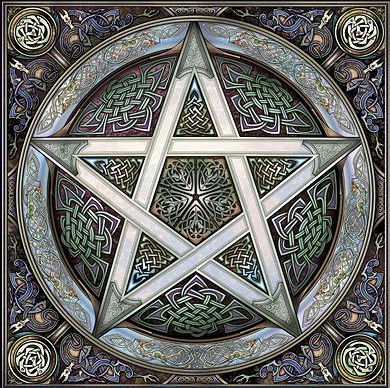


 Learning Wicca and the Tradition of the Craft