The Hunter Moon

Origin: Native American culture

  • Animals would come for field scraps after the harvest. The full moon made it easier to see the deer and other animals hunting successfully

Also Known As:

  • Blood Moon
    • English in the Middle Ages were scared of the full moon so close to an ‘evil’ day. This is what is attributed to the ominous name and portrayal of of a blood red moon in the sky over Halloween images.
  • Shedding Moon
  • Falling Leaf Moon

Element: Air

Gods: Herne, Apollo, Cernunnos, Mercury

Stones: Amethyst, Obsidian and Tourmaline are all used to ward off evil

Trees/Flowers: Apples, Yew trees, and Chrysanthemum and marigolds for working with spirits

Herbs: Apple Blossom, Penny Royal, Mint, Catnip, Sweet Annie

Prior tho the 1700’s the Hunter moon was celebrated with feasts in Native American tribes and in Europe. The tradition was lost after 1700 but is still remembered in re-enactments and with Trick or Treating and feasting on the candy afterwards.

Neo-Pagans consider this moon to be special in the representation of the changing of the seasons and the thinning of the veil (to be discussed more later in a separate post) and the heightened abilities in contacting deceased loved ones.

India also celebrates the Hunter Moon in a tradition called Sharad Purnima. The devotees to this festival fast for the entire day before offering the Moon God delicacies under the light of the moon.

How to Celebrate

Hunting and gathering, stocking up on provisions for winter, and making plans for the winter are all traditionally associated with the Hunter Moon. The cold, dark nights should be considered a reminder of our deceased ancestors and also as a reminder of our own mortality. 

These associations can be honored in several different ways:

  • Canning your garden vegetables honors the need to reinforce your food for the winter
  • Hanging the remainder of your garden herbs to dry in your home
  • Stock up on materials for your hobbies to keep you busy on long winter nights when it is too cold to go outside
  • Honor your ancestors with a small altar or shrine. This can be adorned with family heirlooms, treasures of the dearly departed, photos, etc.
  • Decorate your personal alter with traditional Samhain decor (to be discussed in a future post). 

This month is a time for spiritual growth. The veil between the living and the dead is at it’s thinnest. This is an ideal time to work on divination, hold a seance, or contact the dead. Dream messages are often more prominent this month so pay close attention to the dreams you have and analyze them thoroughly.

We will later discuss contacting the dead and the possible concerns surrounding the rituals. Please do not contact the dead without proper precaution and skill as this could result in the attraction of negative energy and unwanted consequences.

Mabon; 9/21-9/29

Mabon, (pronounced MAY-bun, MAY-bone, MAH-boon, or MAH-bawn) is the Autumn Equinox. The Autumn Equinox divides the day and night equally, and we all take a moment to pay our respects to the impending dark. We also give thanks to the waning sunlight, as we store our harvest of this year’s crops. The Druids call this celebration, Mea’n Fo’mhair, and honor the The Green Man, the God of the Forest, by offering libations to trees. Offerings of ciders, wines, herbs and fertilizer are appropriate at this time. Wiccans celebrate the aging Goddess as she passes from Mother to Crone, and her consort the God as he prepares for death and rebirth.

Various other names for this Lesser Wiccan Sabbat are The Second Harvest Festival, Wine Harvest, Feast of Avalon, Equinozio di Autunno (Strega), Alben Elfed (Caledonii), or Cornucopia. The Teutonic name, Winter Finding, spans a period of time from the Sabbat to Oct. 15th, Winter’s Night, which is the Norse New Year.

At this festival, it is appropriate to wear all of your finery and dine and celebrate in a lavish setting. It is the drawing to and of family as we prepare for the winding down of the year at Samhain. It is a time to finish old business as we ready for a period of rest, relaxation, and reflection.

Symbolism of Mabon:

  • Second Harvest, the Mysteries, Equality and Balance.

Symbols of Mabon:

  • Wine
  • Gourds
  • pine cones
  • Acorns
  • Grains
  • Corn
  • Apples
  • Pomegranates
  • vines such as ivy
  • dried seeds
  • horns of plenty.

Herbs of Maybon:

  • Acorn
  • Benzoin
  • Ferns
  • Grains
  • Honeysuckle
  • Marigold
  • Milkweed
  • Myrrh
  • Passionflower
  • Rose
  • Sage
  • Solomon’s seal
  • Tobacco
  • Thistle
  • vegetables

Foods of Mabon:

  • Breads
  • Nuts
  • Apples
  • Pomegranates
  • vegetables such as potatoes, carrots, and onions.

Incense of Mabon:

  • Autumn Blend-benzoin, myrrh, and sage.

Colors of Mabon:

  • Red
  • Orange
  • Russet
  • Maroon
  • Brown
  • gold

Stones of Mabon:

  • Sapphire
  • lapis lazuli
  • yellow agates

Activities of Mabon:

  • Making wine
  • gathering dried herbs
  • Plants
  • seeds and seed pods
  • walking in the woods
  • scattering offerings in harvested fields
  • offering libations to trees
  • adorning burial sites with leaves, acorns, and pine cones to honor those who have passed over.

Spellworkings of Mabon:

  • Protection
  • Prosperity
  • Security
  • Self-confidence
  • harmony and balance

Deities of Mabon:

  • Goddesses
    • Modron
    • Morgan
    • Epona
    • Persephone
    • Pamona
    • The Muses
  • Gods
    • Mabon
    • Thoth
    • Thor
    • Hermes
    • The Green Man.

Mabon is considered a time of the Mysteries. It is a time to honor Aging Deities and the Spirit World. Considered a time of balance, it is when we stop and relax and enjoy the fruits of our personal harvests, whether they be from toiling in our gardens, working at our jobs, raising our families, or just coping with the hussle-bussle of everyday life.

Altar Dressings

  • candles should be brown or cinnamon.
  • Decorate circle with autumn flowers, acorns, gourds, corn sheaves and fall leaves.

Incense

  • Pine
  • Sage
  • Sweetgrass
  • Myrhh
  • You can also mix Marigold, passionflower, and fern, using frankincense or myrrh as a resin for Mabon incense

Holiday Fare

Mabon is the Witch’s Thanksgiving, a time to appreciate and give thanks to the Goddess for her bounty and to share in the joys of the harvest. Fall fruits, squash, gourds, pumpkins, grains, nut breads, vegetables.

A magickal Mabon beverage: hot apple cider. 

  • Apple rules the heart, cider alone is a self-love potion. By spicing it with cinnamon, ruled 

by Jupiter and the Sun, we are in essence, ingesting the sunlight.

Sample menu #1: Mabon Wine Moon Cider, Roast Chicken Rubbed with Sage, Basil, and Thyme, Acorn Squash made with Sweet Butter, Cinnamon and Honey, and Apple Bread.

Sample menu #2: Wine from the god and beans and squashes from the goddess. A hearty multi-bean soup with smoked meats (optional), including such as cut-up mild sausage like mild Italian or Polish.

Mabon Wine Moon Cider

  • 4 cups apple cider 1/2 tsp. whole cloves
  • 4 cups grape juice additional cinnamon sticks
  • 2 cinnamon sticks for cups, 6 inches long
  • 1 tsp allspice
  • In a 4-quart saucepan, heat cider and grape juice. Add cinnamon, allspice and cloves. Bring just to boiling. Lower heat and simmer for 5 minutes.

Serve with ladle from a cauldron. Makes 8 cups.

Mabon Activities

  •  Make grapevine wreaths using dried bitter-sweet herb for protection. Use ribbons of 

  gold and yellow to bring in the energy of the Sun, and decorate with sprigs of dried yarrow

  or cinnamon sticks.

  • Make a protection charm of hazelnuts (filberts) strung on red thread.
  • Collect milkweed pods to decorate at Yuletideand attract the faeries.
  • Call upon the elementals and honor them for their help with (N-earth) the home and finances, (E-air) school and knowledge, (S-fire) careers and accomplishments, (W-water) emotional balance and fruitful relationships.
  •  Make a witch’s broom. Tie dried corn husks or herbs (broom, cedar, fennel, lavender, peppermint, rosemary) around a strong, relatively straight branch of your choice.
  •  Make magic Apple Dolls: Apples are sacred symbols of the witch. Our holy land, Avalon, means Apple-land or Island of Apples. Slice an apple through the midsection and its seeds reveal the sacred shape of the pentacle.

   You will need two large apples, one for Mabon and one for Modron, 2 pencils and 2 dowels about 12 inches long, a paring knife, a glass or bowl of water to wash your fingers, a plate,and a towel to wipe your hands. 

Peel and core the apples. Carve a face in the apples. Place apples on a dowel and stand them in a jar to dry (start now). Then charge in a magick circle. After 2 or 3 weeks, they should look like shrunken heads. Make them into dolls. Use wheat, dried herbs or doll’s hair for hair. 

Dress them in tiny robes and bring them into the circle, asking god/dess to charge them with their light.

  Hang these Mabon and Madron heads on a Witch’s cord or a Mabon wreath.

Harvest Moon

September brings us the Harvest Moon, sometimes referred to as the Wine Moon or the Singing Moon. This is the time of year when the last of the crops are being gathered from the fields and stored for the winter. There’s a chill in the air, and the earth is slowly beginning its move towards dormancy as the sun pulls away from us. It’s the season when we’re celebrating Mabon, the autumn equinox.

Correspondences

  • Colors: Use browns and greens, earth tones, to represent the changing colors of the fields and lands around you.
  • Gemstones: Citrine, chrysolite, peridot, bloodstone, and other reds, oranges, and yellows can symbolize the colorful leaves on the trees in your area.
  • Trees: Bay, larch, hawthorn, and oak are all associated with this time of year.
  • Gods: Demeter, Brighid, Freyja, and Vesta, as well as other deities of the harvest, are appropriate to honor in September. You can also work with gods connected to vegetation and vines.
  • Herbs: Do magic involving wheat, valerian, witch hazel, and skullcap, along with other sacred plants of the season.
  • Element: Earth is typically associated with this time of year.

This is a month of hearth and home. Spend some time preparing your environment for the upcoming chilly months. If you don’t already have one, set up a hearth or kitchen altar for those times when you’re cooking, baking and canning. Use this time to clear out clutter—both physical and emotional—before you have to spend the long winter days inside.

Thanks to science, the Harvest Moon does things a little differently than some of the other moon phases. According to the Farmer’s Almanac,

In China, the harvest moon holds a special significance. This is the season of the Moon Festival, which is held every year on the fifteenth day of the eighth lunar month. In Chinese mythology, Chang’e was married to a tyrannical king, who starved his people starved and treated them brutally. The king was very afraid of death, so a healer gave him a potion that would allow him to live forever. Chang’e knew that for her husband to live forever would be a terrible thing, so one night while he slept, Chang’e stole the potion. The king figured out what she had done and ordered her to return it, but she immediately drank the elixir and flew up into the sky as the moon, where she remains to this day. In some Chinese stories, this is the perfect example of someone making a sacrifice to save others.

The Chinese Moon Festival is considered a family event, and entire extended families will sit up to watch the moon rise together on this night, and eat Moon Cakes in celebration. 

Harvest Moon Magic

Finally, remember that the harvest moon is a season about reaping what you have sown. Remember those seeds you planted in the spring—not just the physical seeds, but the spiritual and emotional ones? This is the season where they are bearing fruit; take advantage of all of your hard work, and collect the bounty you deserve. Here are a few ways to benefit from this month’s full moon energy.

Use the harvest season to plan ahead for the coming winter months – stockpile magical supplies and ingredients so that you’ll have them on hand when it’s too cold or snowy to get them fresh.

Consider the abundance you have in your own life, and start thinking about ways you can share it with others. Can you donate things to organizations that help the needy? What about setting up a food drive, or volunteering your time at a homeless shelter? Use this time of year to pay things forward, both materially and magically.

Celtic Tree Month of Vine

September 2nd, 2019

The Vine month is a time of great harvest. The Vine produces fruits we can use to make that most wondrous concoction called wine. The Celts called this month Muin. The Vine is a symbol of both happiness and wrath — passionate emotions, both of them. Do magical workings this month connected to the Autumn Equinox, or Mabon, and celebrate garden magic, joy and exhilaration, wrath and rage, and the darker aspect of the mother goddess. Use the leaves of the Vines to enhance your own ambitions and goals. during this month. The month of Vine is also a good time to get balanced, as there are equal hours of darkness and light.

The Ivy is a woody stemmed vine which is evergreen. It grows spirally upwards and can grow to 30 meters or more depending on its support tree. The roots of the Ivy come out from the stems and anchor themselves as they grow. The leaves are waxy in appearance and can turn purplish in winter. Ivy can also come in variegated leaf forms.

The Ivy flowers late around September to October and wasps are often the insects pollinating the multi globular flower heads. The fruits are black and rounded similar to berries. Ivy is widely cultivated in North America, it’s a member of the ginseng family (Araliaceae).

The Ivy is associated with the Goddess and rebirth many feel this is due to the way it grows spirally upwards. The tree/vine of rebirth, joy, love, eternal life, reincarnation and exhilaration, all things connected with the Mother Goddess in her many forms around the world. The Ivy is also seen as a plant of the Otherworlds and communicating with them.

Ivy made into an alcoholic drink in ancient times was seen as a way to induce visions as it was often mixed with hallucinogenic mushrooms or other herbs, this gave rise to the sign of the Ivy for taverns and alehouses. Ivy has a poisonous substance called Hederin. 

One of Ivy’s associations is with the Greek God of wine and fertility Dionysus, as he is covered in ivy and also grape vines.

The roots of the Ivy are very tough and have had many uses in the past. The vines have been used to tie things together in gardens and given a bit of soil will quickly regrow binding fences etc as it grows.

Most cultures associate Ivy with fertility and this is seen as due to its late flowering and fruiting and its rapid growth.

General Moon Information

Since the first stirrings of human civilization, the Moon has played an important role in the myths and practices of cultures around the world. For eons, it served as both a source of light and a way of measuring time. Like its counterpart, the Sun, it has been linked with many gods and goddesses around the globe. In both myth and magic, this celestial body has been universally associated with many central concerns of human existence, such as love, passion, fertility, mystery, death and rebirth, and the afterlife. Today, the Moon is still a vital presence in Wicca and other forms of modern Witchcraft and Paganism.Traditionally, Wiccan covens meet for Full Moon rituals to honor the Goddess on the Esbats , a practice adopted by solitaries as well.

THE POWER OF THE MOON

Scientists know that the Earth has its own energy, which is independent from the energy it receives from the Sun. The Moon also emits an energy that is subtle, yet distinctive. Unlike the Sun’s masculine, projective energy, lunar energy is feminine and receptive. This is the energy of the Goddess. This power has often been described as magnetic, which makes sense to anyone who has literally felt “pulled” in some way by the Moon. Some particularly sensitive people actually feel a physical tug in their bodies at the Full or New Moon, while others just notice a heightened sense of awareness to everything in their environment.

Lunar energy is tailor-made for interacting with our the energy of own intuition, which is also feminine, receptive, and magnetic in nature. Also known as our sixth sense, this is the most crucial mode of perception when it comes to magic. So when we consciously connect with the energy of the Moon, we are opening up a pathway, or channel, for that energy to help manifest desired changes in our lives. And when we do this in conscious harmony with the energetic rhythms of the Moon’s cycle, we can truly amplify the power of our magical work. This is because each phase of the lunar cycle offers particular energies that can be harnessed for specific magical goals.

WORKING WITH THE LUNAR CYCLE

The relationship between magic and the Moon can be broadly described as a cycle of waxing and waning. As the Moon grows, we work magic for increase; as it wanes, we work magic for decrease. So when you’re seeking to bring something into your life, you work with the waxing Moon, and when you want to banish or release some unwanted element of your life, you work during the waning phase.

The transitional point between these two opposites is the Full Moon, a time of “harvest” as we celebrate what we have manifested over the first half of the cycle. We then essentially “clean up” afterward, identifying and releasing what is no longer needed throughout the second half of the cycle. At the New Moon, we set new intentions for the next round of manifestation, and on and on it goes. The rhythm of this cycle can be visualized as the rhythm of the tides, which the Moon, of course, is causing.

Here are some general suggestions for timing your magic with the phases of the Moon:

New Moon: This is the very beginning of the lunar cycle, and a good time for dreaming of what you wish to create in your life. Traditionally, magic aimed at initiating new projects and ventures is favored at this time, but anything involving attracting or increasing what you desire is appropriate.

Waxing Moon: This phase is the ideal time for taking action in the direction of our goals—actually beginning, on the physical plane, the projects we’ve intended for on the spiritual plane. The energy here is one of action and projecting our intentions outward into the Universe. Magical work may be related to gaining or strengthening partnerships with others (whether they be friends, romantic interests, or business associates) and improving physical health and general well-being.

Full Moon: This is the most powerful phase of the entire lunar cycle. Many Witches find that the day of the Full Moon is the most magically potent day of the month, and may save spellwork related to particularly important goals for this occasion. Any and all magical purposes are favored during a Full Moon ritual.

Waning Moon: This is the time to release the energy of outward action, and align with the energy of inward reflection. Eliminating negative energies and experiences is the predominant magical goal now, so spellwork aimed at overcoming obstacles, resolving conflicts, and removing causes of illness is appropriate.

Dark Moon: In the days just before the New Moon, many Witches refrain from actively working magic, choosing instead to refresh their energy for the next waxing phase. However, many others find the Dark Moon to be the best time for magic related to closure, or bringing things full circle. There is a destructive potential to the energy now that can be harnessed for releasing any karmic patterns that crop up again and again in your life, such as those related to lack, abandonment, betrayal, etc.

TUNE IN TO THE MOON FOR ENHANCED MAGIC

Not many people who are new to magic have been in the habit of paying daily attention to the rhythms of the Moon’s orbit around the Earth. If this includes you, consider adopting a practice of connecting with the Moon each day, whether through a formal ritual or just a brief, silent greeting.

Find out where the Moon is in its cycle and acknowledge this as part of your daily practice—you can find out the Full Moon schedule online. This will help you attune to the subtle differences in lunar energy from phase to phase. From New to Full, to Dark and back to New again, the never-ending cycle of the Moon presents many opportunities to tune into the energies of the natural world and enhance your spellwork.

Why are Moon Cycles Important when Casting Spells?

The Moon is Earth’s only natural satellite. She accompanies and influences us in many ways, even if we can’t always perceive it. Most Witches are extremely sensitive to the lunar cycles and can sense the effect that the Moon and its phases are having on them. This can be used to make better decisions and expect better results in turn.

It has been proven that the phases of the moon have different effects and influences on the Earth and all living beings. The lunar phases can alter the ocean tides, the weather, our sleep patterns, our moods and many other things including rates of fertility, caused by the extra light that the full moon provides ¹.

Throughout history, Witches were well aware of the power of the Moon and her changing phases, and developed spells and rituals that adjust to take as much advantage of this energy as possible.

1. New Moon

This is the first phase of the lunar cycle. It starts when the moon is invisible (this state lasts for one day and is also known as a Dark Moon) because it rests between the Sun and the Earth. On the following days, the moon slowly begins to appear in the sky. The energy of the New Moon is associated with introspection, self-analysis and reflection on ourselves. An opportunity for a fresh start and a New You.

What to do during the New Moon

The energies of this Moon phase aren’t really going to increase your powers of Manifestation. Instead of casting a spell in the New Moon use this time to establish a general intention for the lunar cycle that begins today. Work on your personal space: clean your ritual area, start or decorate your Book of Shadows, look up spells online, or take a cleansing bath. Meditate on your wishes and desires, but also on your doubts and fears. Plan and think about everything you want to conceive and achieve during the next 28 days!

Some of the best spells to try during the New Moon are:

2. Waxing Crescent

This phase of the moon starts 3 days after the New Moon, when you can begin to see a small portion of the moon in the dark sky. The crescent moon is the symbol and representation of the Wiccan Goddess, embodying Manifestation and Abundance.

What to do during the Waxing Crescent Moon

Cast a spell that will help you grow your business or your career. This is a good time for long-term or material-gain spells, such as a money-drawing spell or a ritual for finding a new job. Focus on your work and your education. Avoid thinking of your goals as something that is in the future but rather as something that is already starting to happen. Also, charge your Moon Water on the Waxing Crescent Moon.

Harness the power of this lunar phase by working with these type of spells:

3. First Quarter

This phase begins around 7 days after the new moon. This is an excellent time to take action regarding your deepest wishes and to address your biggest blockages. It is a great time for growth and self-healing. As a continuation of the previous phase, the energies present at this time can help you feel more lucid and aware of how your intuition and second natures are developing.

What to do during the First Quarter Moon

Use the energies of this phase to heal on both spiritual and emotional levels. As the moon is growing in shape, you can focus on self-growth. It’s a time of abundance so use it creatively, allow the right things and people come to you and attract the important things that you wish to see more of. Carry out health and beauty treatments, focus on personal growth such as increasing self-esteem and self-love, family and fertility, and work on developing your Powers of Manifestation. Cast these spells during a First Quarter moon:

  • Good Luck Spells for Everyone
  • Love Spells for Every Occasion 
    • Please remember that you should NEVER affect a person’s free will with any spell, including a love spell. Do spells that attract the right person into your life or spells that help you see love, not spells that will make someone love you.

4. Waxing Gibbous

This is the fourth moon phase. It starts on the 10th day after the New Moon and lasts until the 13th day after it. It is a time to be patient. Recognize the power of the Universe and let it take control. Pause your actions and instead observe the state in which your projects are. Relax, analyze, and plan your next move.

What to do during the Waxing Gibbous Moon

Wait and develop patience. If you have started casting a spell during the previous moon phases, this is the time to sit tight and let the Universe do its job. This is a gestation period in which we don’t really have to do anything in particular. Use this time to get ready for the next phase: The Full Moon. Organize your tools, gather your materials and add new spells to your Book of Shadows. Also try:

  • Bath Spells
    • Google bath spells are there are ones for love, money, success, etc.
  •  Spiritual Cleanses 

5. Full Moon

It occurs 14 days after the New Moon and it’s easy to identify because the night sky is suddenly glowing all around you. Look up and you’ll find a big pearl shining brightly as it reflects sunlight upon the Earth. It represents the culmination and success of everything you started during the Waxing moon phase. Now everything is in its fullness. During this phase, people are more receptive and social relationships become more favorable.

What to do during the Full Moon

The full moon favors communication and social interaction. This phase is very favorable to deal with romantic issues, as it can be a true aphrodisiac. If you have been working on a love spell, this is when you will see the best results. Act on your desires and take chances!

As this moon enhances communication with the spiritual world, any kind of ritual that is performed under the Full Moon will experience a boost of Power. Divination rituals are especially strengthened by this moon, like any personal spellwork that could use a major boost, including rituals for abundance, protection, love or wisdom. Your chances of success are greater than during any other lunar phase. Use the power of the full moon to cast any type of spell with confidence.

6. Waning Gibbous

It starts on the 3rd day after the Full Moon until the 7th day afterwards. It brings an opportunity to remove and eliminate negative energies. Use this moon phase to free yourself from burdens that are holding you back.

What to do during the Waning Gibbous Moon

Banishing rituals and any spells to get rid of negative things and situations are favored by this moon phase. For example, those related to divorce, separation, removal of problems, addictions, stress and other negative feelings. Best types of spells for this phase:

  • Protection Spells 
  • Bath Spells 
  • Spiritual Cleanses 
  • Banishing Spells

7. Last Quarter

This phase starts on the 7th day after the Full Moon and lasts until the 10th day afterwards. Let the energy of this moon quietly finish your removal processes and cleanses. Close any pending issues and quietly renew your inner energies.

What to do during the Last Quarter Moon

It is time to be cautious and use this lunar phase to rest. You can also use this opportunity to remove yourself from destructive relationships, negative behavior patterns or anything harmful in your life. Overcome melancholy and depression. Some Witches use this moon phase to cast spells for justice or against enemies (i.e. Black Magic).

Best spell for the Last Quarter Moon Phase:

8. Waning Crescent

This is the last phase of the Moon cycle. It spans from the 10th day after the Full Moon until the night before the New Moon. It’s a moment of closure and reflection, do not use it to make any big decisions or start a new project.

What to do during the Waning Crescent Moon

Give thanks for a cycle that ends, allowing a new one to begin. Look back to what you have accomplished during the past month, what mistakes you made and how you can improve and keep growing. Perform rituals of gratitude and relaxation, which indicate conclusion.

Best spell for this moon phase:

Tarot

History

Tarot cards were first noticed in Europe around 1375. They are believed to have come from Islamic communities where they had been used for centuries beforehand. At this time they were not considered Tarot cards and did not serve the same purpose they serve today. 

In 1440, the cards were referred to as “Triumph Cards” and were defined as a game, though different from regular playing cards. The original decks consisted of four suits with cards in each numbered one to ten and a king, queen, knight and page card per suit much like normal playing cards. There were also an additional 22 cards with symbolic pictures that were not apart of any of the suits.

The game “Triumph” bore a similarity to the game of bridge. However, all but one of the special picture cards were trump cards. As it spread through Europe, it became known as Tarocchi, an Italian word for Tarot first used in 1530.

Occult followers in 1781 England and France saw the special picture cards and determined that they had more meaning behind them than their classically used purpose. They began using the cards as a divination method and it quickly integrated into occult philosophy. One theory suggests that the cards originated in Egypt as a hieroglyphical key to life. They are thought to be the only book that survived the massive fires that destroyed the libraries of Egypt.

Tarot Today

Today’s tarot deck consists of 2 sections; 56 cards in what is known as the minor arcana and 22 cards in the major arcana. They are widely considered an occult tool now of pagans and mystics. They are not associated with any one religion or practice but are considered to be a major part in the “New Age Movement”.

How they work

Essentially, the cards are a physical manifestation of the power of the reader. There are rules and different methods used by every tarot reader. There are two types of readings:

  1. Question Readings where you address a specific question or concern. Tarot is not a method recommended for simple yes or no questions. This type of reading should never be used to make decisions but rather to help you make a decision. The way the question is stated is very important.
    1. Keep you options open. Try not to narrow the scope of the question before it is asked. For example: If you need guidance on tension in a relationship, rather than asking a straightforward “What’s wrong”, try a general, “What can I do to improve this relationship?”
    2. Measure the level of detail carefully. Focus on the issue at hand but do not focus on every little detail. Focusing on the little things could affect the way the big picture is seen and ultimately affect the outcome.
    3. If the reading is for yourself, focus on yourself. For example, if things at work seem to always be going wrong, rather than asking why, focus on your role at work to see if you may play a role in what the situation is.
    4. Stay Neutral. When asking questions that could come across one-sided (Why wont my employee work harder), try staying neutral and more open-minded (What can I do to assist my employee).
    5. Be positive. Instead of “Why hasn’t this happened yet?”, ask how you can help to make it happen.
  1. Open Readings where are usually performed when entering a new phase of life like getting married, starting a family or graduating from college, etc. There is wiggle room for more specificity such as career or health, But the reading will not get more specific than that.

The Tarot Deck

There are many styles of Tarot decks that vary in illustration only. The cards themselves and the meanings behind them remain constant. The most popular deck in the United States is the Rider-Waite deck created in 1909 by A.E. Waite, a member of The Hermetic Order of the Golden Dawn. The deck was published by Rider and Company, hence the name Rider-Waite. Pamela Colman Smith was the artist behind the illustrations of the deck which has now become considered as the definitive deck in the U.S. due to it’s ready availability.

The Minor Arcana

There are 78 cards in the Tarot deck, 56 of which belong to the minor arcana. There are four suits in the minor arcana known as wands, swords, cups, and circles/pentacles (the two names are often used interchangeably). Each suit has a card numbering one to ten, and court cards including a king, queen, knight and page. Each suit represents a specific approach to life. 

  • The Pentacle/circle suit- Generosity, Financial reward, success at work and craftsmanship. The reverse is meanness, covetousness, poverty, unemployment, isolation.
    • One/Ace of Pentacles– On an everyday level, the start of a new project which is likely to be successful. A new job, a new business venture all which will seem to continuously grow with each achievement leading to the next step of the journey.
    • Two of Pentacles– Indicates the need for constant change in life to prevent stagnation. A turning point-a new job, a shift of fortune, change of home. Demands a thorough reassessment of position and willingness to take chances.
    • Three of Pentacles- Attainment through effort marks achievement. Keep the pressure on yourself to maintain momentum and better your attention to detail. All energies will be channeled into one project.
    • Four of Pentacles- The time when we reach a stable level of material balance for the moment. Material bounty.
    • Five of Pentacles- Worries; unexpected expenses, job concerns, family life, etc. Whatever the problem is more of a threat than a reality. Worrying may just make it worse.
    • Six of Pentacles- Full promise of bounty. When a degree of inner confidence and self-belief has been achieved, new streams of reality are reached which release new energy. New ideas, new projects are fruitful. We are energized and enthusiastic with the project at hand
    • Seven of Pentacles- Fear of failure. Be patient. Don’t rush, practice self-control. Believing negative things will only create negative things.
    • Eight of Wands- Progress with caution. A card of starting over or starting something new, a period of expansion. A time of learning and mistakes, doubts and hard work.
    • Nine of Pentacles- Profit, gain, lucky windfall, payment for work well done. Enough to buy what you desire.
    • Ten of Pentacles- Abundance, wealth, gain. Pinnacle of prosperity. A business you can pass on, a home bought and paid for, etc.
    • Page of Pentacles- Fresh opportunities. Advocation of tackling the tasks with confidence and not worrying about consequences. Adhering to this will yield a positive outcome.
    • Knight of Pentacles- Firmest and least impetuous of the knights. Do not underestimate, do not take calm exterior for granted. Most trustworthy to get a job done quickly and comprehensively
    • Queen of Pentacles- Nurturer but practical and down to earth. Encourages and promotes creativity. Also serious and introverted.
    • King of Pentacles- Generous but worked hard for money and success. Expects those whom he has helped to help themselves. Grounded and humble.
  • Sword/Staves Suit- Strength, Courage, Hope, peace amid strife, successful journey. Reverse means spiritual suffering, loneliness, sacrifice, loss, defeat.
    • One/Ace of Swords- Ability to see things from a clear perspective. We are able to remove the confusion that clouds our judgement. We can see what is important and worth fighting for. Helps us identify “red herrings” that prevent us from clear thought.
    • Two of Swords- A painful and difficult situation is being reconciled. It is important to incorporate the other cards into the reading for this situation as there is a possibility that the relationship with be different after the conflict is resolved.
    • Three of Swords- Indicates some sort of disruption causing pain and uncertainty; loss of balance and disharmony.
    • Four of Swords- A period of rest and recovery after a difficult time; after a trauma, a breakup, loss of a relationship, financial hardships, operation/illness, etc.
    • Five of Swords- Future loss or disappointment. The reverse would indicate a lesser chance of defeat or an empty victory.
    • Six of Swords- After a stormy time when we have reached a safe harbor to recuperate and consider the difficulties that have risen around us.
    • Seven of Swords- A time in life where we’re feeling too overwhelmed and doubtful to make decisive decisions against problems or sudden situations. Things get worse by lack of action.
    • Eight of Swords- Deliberate or accidental interference with the natural flow of energy. Signals problems with endurance, inability to make decisions, lack of concentration on important details and overall disturbance.
    • Nine of Swords- Indicates hardness, unkindness, lack of consideration or compassion, harsh naturalness to the process of inflicting pain.
    • Ten of Swords- Stands for the power of mind allowing us to achieve dreams, beliefs and aspirations. Positive thinking like this will attract joy, happiness and success into our lives.
    • Page of Swords- The receiving of an important message with crucial information. A test to your reaction against drama and a warning against rash decisions. The subconscious genius leading you to moments of great clarity.
    • Knight of Swords- Insecure, refuses to take another’s feelings into account. Goal-oriented, will take down anyone in their path.
    • Queen of Swords- Cold and emotionally detached way of dealing with the world. Standing up to people, making demands and being clear about one’s needs.
    • King of Swords- An aura of intimidation. Silent, serious. The king of swords is an expert on law, politics, society, or communication. Always exercising his power. Emotionally cold. Happiest with stimulating work and high ideals.
  • Cups Suit- The suit of cups, or chalices, symbolizes romance, creativity, and sociability. The reverse of this suit means Jealousy, pain, rejection, excessive love of luxury, and preoccupation with one’s self. Remember this for any card in the suit that may be pulled.
    • One/Ace of Cups- The beginning of great love, perhaps a pregnancy. Inner attunement and spirituality. Instinctive knowledge that comes from within and trust what your feelings are telling you.
    • Two of Cups- Engagement, marriage. Union of two entities; people, groups, ideas, or talents
    • Three of Cups- Friendship, community, community, network of support, all forms of support including formal aid like counselling and social services
    • Four of Cups- positive period of self-reflection, renewal. By taking time to reflect, you restore emotional balance. Also represents kindness from other people.
    • Five of Cups- Loss, regret, denial. Could be tangible (ex: a breakup) or intangible (ex: loss of an opportunity). Can warn you of future loss and help reduce the toll.
    • Six of Cups- Happy feelings from the past and innocence (innocent meaning several things; legal problems for example). Meanings are endless depending on the situation.
    • Seven of Cups- Illusions, deceptions. A hasty decision could be as bad as no decision. Think carefully about your options in situations.
    •  Eight of Cups- Separation, devorce, a move or trip. Stands for the moments when we realize the past is truly gone.
    • Nine of Cups- The “wish” card. What you have a desire for, you will recieve. Could indicate loving and complete relationships, high creativity and good relationships with friends and emotions.
    • Ten of Cups- Joy, love, friendship, family we can trust and rely on.
    • Page of Cups- Romance and deep feelings, inner life. An opening may appear that stirs emotion, pulls at heart strings or brings great joy. When the chance comes, act on it.
    • Knight of Cups- Balanced objectivity and outlook, sincerity, harmony and equilibrium. 
    • Queen of Cups- Represents someone in touch with their emotions who asks you to think about your own. Represents someone who is like her or an atmosphere of love, acceptance, and respect for feelings.
    • King of Cups- Asks you to take the action of a king; responding calmly in a crisis, diplomacy rather than force, reaching out to help, accepting a different point of view, maintaining an atmosphere of caring and tolerance.
  • Wands- Stand for creative integrity, security, positive relationships and inner development. Reversed means disrupted work, laziness, ignorance and romantic jealousy. 
    • One/Ace of Wands- The beginning of a new life, possibly a pregnancy, new phases in life. To confirm pregnancy other cards will indicate such as the page of cups or ace or three of cups.
    • Two of Wands- We are in charge of the way our life unfolds. Doesnt rule out the occasional obsticle or pleasant surprise but allows us to fulfill our destiny
    • Three of Wands-  “The Lord of Virtue”. Our own trueness to inner needs and inspirations, inner balance, and self-reliance and happiness born from the clarity and confidence.
    • Four of Wands- “The Lord of Completion”. A circle has been completed; a work project is done, personal situations resolved, phases of life completed. A lesser reflection of the world
    • Five of Wands- “The Lord of Strife”. Quarrels, conflict, discord, often indicates argument simply for the sake of argument.
    • Six of Wands- “The Lord of Victory”. Fight, competition, eventual victory
    • Seven of Wands- Advises you to go forward and believe in yourself in a momentous happening in your life. Be true to your own desires, ambitions, and needs.
    • Eight of Wands- Represents the type of cathartic conversation that ends in confusion. Brings a new surge of energy and freshness. Signals entry into new phase or project which has a good chance of success.
    • Nine of Wands-  “Lord of Strength”. Being true to ourselves releases energies we need to deal with inner conflict. Our inner strength will guide us to our goals.
    • Ten of Wands- We are feeling trapped and unhappy in a prolonged situation. We may begin to lose faith in our ability to mold our lives. Advises you not to expend energy on an unwinnable situation. Sometimes we are better off walking away.
    • Page of Wands- Represents a person who seizes every opportunity with childlike innocence. Inspired by but does not initiate challenge in the exchange of intense viewpoints. In love, symbolizes intense faithfulness. 
    • Knight of Wands- A departure from a challenge. Unsure of commitment and cannot confront his own feelings. Also indicates that one has escaped difficulties. 
    • Queen of Wands- A passionate female who wants to rouse people into action with her outspoken and critical nature. A true champion of anyone she supports though it appears she is fighting those who cross her.
    • King of Wands- Supports creative efforts, motivates ambitions, upholds principles of integrity. Beware of reliance though as all efforts cannot go to one cause. The same intense capacity applied to romantic passion is also applied to creative work and can persevere in seeking the highest of unions.

The Major Arcana

The major arcana are all picture cards with individual names with no relation to the suits of the minor arcana. There are 22 cards in the major arcana but only 1-21 are numbered. The 22nd card, The Fool, is numbered as 0. The major arcana is used to represent strong, long-term energy and/or big events in some area of your life. Having a Major arcana and minor arcana in the same reading about the same subject matter indicates that this subject is becoming less important in your life.

0. The Fool

  • Upright– Beginnings, innocence, spontaneity, a free spirit
  • Reversed– Holding back, recklessness, risk-taking
  • The Fool is numbered 0 – the number of unlimited potential – and so does not have a specific place in the sequence of the Tarot cards. The Fool can be placed either at the beginning of the Major Arcana or at the end. The Major Arcana is often considered the Fool’s journey through life and as such, he is ever present and therefore needs no number.
  • On the Fool Tarot card, a young man stands on the edge of a cliff, without a care in the world, as he sets out on a new adventure. He is gazing upwards toward the sky (and the Universe) and is seemingly unaware that he is about to skip off a precipice into the unknown. Over his shoulder rests a modest knapsack containing everything he needs – which isn’t much (let’s say he’s a minimalist). The white rose in his left hand represents his purity and innocence. And at his feet is a small white dog, representing loyalty and protection, that encourages him to charge forward and learn the lessons he came to learn. The mountains behind the Fool symbolise the challenges yet to come. They are forever present, but the Fool doesn’t care about them right now; he’s more focused on starting his expedition.

  1. The Magician
  • UPRIGHT: Manifestation, resourcefulness, power, inspired action
  • REVERSED: Manipulation, poor planning, untapped talents
  • The Magician card is numbered One – the number of new beginnings and opportunities – and associates with the planet of Mercury. He stands with one arm stretched upwards towards the Universe, and the other pointing down to the earth. His positioning represents his connection between the spiritual realms and the material realms. The Magician uses this relationship to create and manifest his goals in the physical realm. He is the conduit that converts energy into matter. The Magician’s robe is white, symbolising purity, and his cloak is red, representing worldly experience and knowledge.
  • On the table in front of him are the four symbols of the Tarot suits – a cup, pentacle, sword and wand – each symbolising one of the four elements – water, earth, air and fire. It is also a sign that he has all the tools (and elements) he needs to manifest his intentions into being. Above his head is the infinity symbol, and around his waist is a snake biting its own tail – both of which signal that he has access to unlimited potential. And in the foreground is an array of foliage and flowers, symbolising the blossoming and fruition of his ideas and aspirations.

2. The High Priestess 

  • UPRIGHT: Intuition, sacred knowledge, divine feminine, the subconscious mind
  • REVERSED: Secrets, disconnected from intuition, withdrawal and silence
  • The High Priestess sits in front of a thin veil decorated with pomegranates. The veil represents the separate conscious and subconscious realms, the seen and the unseen, and serves to keep casual onlookers out. Only the initiated may enter. The pomegranates on the veil are a symbol of abundance, fertility and the divine feminine, and are sacred to Persephone who ate a pomegranate seed in the underworld and was forced to return every year.
  • On either side of the High Priestess stand two pillars, marking the entrance to this sacred, mystical temple (also associated with the Temple of Solomon). One pillar is black with the letter B (Boaz, meaning ‘in his strength’) and the other is white with the letter J (Jachin, meaning ‘he will establish’). The black and white colours of the pillars symbolise duality – masculine and feminine, darkness and light – stating that knowledge and acceptance of duality are required to enter this sacred space.
  • The High Priestess wears a blue robe with a cross on her chest and a horned diadem (or crown), both a symbol of her divine knowledge and her status as a divine ruler. In her lap, she holds a scroll with the letter TORA, signifying the Greater Law (according to A. E. Waite). It is partly covered, signifying that this sacred knowledge is both explicit and implicit, it will only be revealed when the student is ready to look beyond the material realm. The crescent moon at her feet symbolises her connection with the divine feminine, her intuition and subconscious mind, and the natural cycles of the moon.

3. The Empress

  • UPRIGHT: Femininity, beauty, nature, nurturing, abundance
  • REVERSED: Creative block, dependence on others
  • The Empress is a beautiful, full-figured woman with blonde hair and a peaceful aura about her. On her head, she wears a crown of twelve stars, showing her connection with the mystical realm and the cycles of the natural world (the twelve months of the year and the twelve planets). Her robe is patterned with pomegranates, symbolic of fertility, and sits upon a luxurious array of cushions and flowing red velvet. One cushion features the symbol of Venus, the planet of love, creativity, fertility, beauty and grace – the essence of the Empress.
  • A beautiful, lush forest and winding stream surround the Empress, signifying her connection with Mother Earth and life itself. She draws her sense of peace from the trees and the water and is rejuvenated by the energy of nature. In the foreground, golden wheat springs from the soil, reflecting abundance from a recent harvest.

4. The Emperor

  • UPRIGHT: Authority, establishment, structure, a father figure
  • REVERSED: Domination, excessive control, lack of discipline, inflexibility
  • If the Empress is the Mother archetype of the Tarot deck, the Emperor is the Father. He sits upon a large stone throne, adorned with four rams’ heads (symbolic of his connection with Aries and the planet Mars). In his right hand, the Emperor holds an ankh, the Egyptian symbol of life, and in his left is an orb representing the world over which he rules.
  • He wears a red robe, indicative of his power, passion and energy for life. Underneath it, he wears a suit of armour, suggesting that he is protected from any threat (and any emotional response or vulnerability). His long white beard is symbolic of his age-old wisdom and experience, and along with his gold crown, he is an authority figure who demands to be heard.
  • Behind his throne looms a tall, impenetrable mountain range, signifying that he is backed by a solid foundation but resistant to making any changes unless he deems it necessary. Beneath the peaks flows a small river, giving some hope that despite his tough exterior, he is still an emotional being – it will just take a lot of digging and trust to open him up to his softer side.

5. The Hierophant 

  • UPRIGHT: Spiritual wisdom, religious beliefs, conformity, tradition,institutions
  • REVERSED: Personal beliefs, freedom, challenging the status quo
  • The Hierophant is the masculine counterpart to the High Priestess. He is also known as the Pope or the Teacher in other Tarot decks and is ruled by Taurus.
  • The Hierophant is a religious figure sitting between two pillars of a sacred temple – though this temple differs from the one in which the High Priestess sits. He wears three robes – red, blue and white – and a three-tiered crown, both representing the three worlds over which he rules (the conscious, subconscious and superconscious). In his left hand, he holds the Papal Cross, a triple sceptre that signifies his religious status. He raises his right hand in a religious blessing, with two fingers pointing towards Heaven and two towards Earth.
  • Before him kneel two followers. The Hierophant’s task is to pass down his spiritual wisdom and initiate the two into the church so they can take up their appointed roles. This imagery speaks to a shared group identity and a rite of passage to enter the next level. The crossed keys at the Hierophant’s feet represent the balance between the conscious and subconscious minds and the unlocking of mysteries, which only he can teach.

6. The Lovers

  • UPRIGHT: Love, harmony, relationships, values alignment, choices
  • REVERSED: Self-love, disharmony, imbalance, misalignment of values
  • The Lovers card shows a naked man and woman standing beneath the angel, Raphael, whose name means ‘God heals’ and represents both physical and emotional healing. The angel blesses the man and woman and reminds them of their union with the Divine.
  • The couple stands in a beautiful, fertile landscape, reminiscent of the Garden of Eden. Behind the woman stands a tall apple tree, with a snake winding its way up the trunk. The serpent and apple tree represent the temptation of sensual pleasures that may take one’s focus away from the Divine. Behind the man is a tree of flames, which represent passion, the primary concern of the man. The twelve flames suggest the twelve zodiac signs, the symbol of time and eternity. The man looks to the woman, who watches the angel, showing the path of the conscious to the subconscious to the super-conscious, or from physical desire to emotional needs to spiritual concerns.
  • The volcanic mountain in the background is rather phallic and represents the eruption of passion that happens when a man and a woman meet in full frontal nudity.

7. The Chariot

  • UPRIGHT: Control, willpower, success, action, determination
  • REVERSED: Self-discipline, opposition, lack of direction
  • The Chariot Tarot card shows a brave warrior standing inside a chariot. He wears armour decorated with crescent moons (representing what is coming into being), a tunic with a square (the strength of will) and other alchemical symbols (spiritual transformation). The laurel and star crown signals victory, success and spiritual evolution. Although he appears to be driving the chariot, the charioteer holds no reins – just a wand like the Magician’s – symbolising that he controls through the strength of his will and mind.
  • The charioteer stands tall – there’s no sitting down for this guy, as he’s all about taking action and moving forward. Above his head is a canopy of six-pointed stars, suggesting his connection to the celestial world and the Divine will. In front of the vehicle sit a black and a white sphinx, representing duality, positive and negative and, at times, opposing forces. Note how the sphinxes are pulling in opposite directions, but the charioteer uses his willpower and sheer resolve to steer the chariot forward in the direction he wants.
  • Behind the chariot flows a wide river, symbolic of the need to be ‘in flow’ with the rhythm of life while also charging ahead toward your goals and intentions.

8. Strength

  • UPRIGHT: Strength, courage, persuasion, influence, compassion
  • REVERSED: Inner strength, self-doubt, low energy, raw emotion
  • In the Strength Tarot card, a woman gently strokes a lion on its forehead and jaw. Even though it is known for its ferociousness, the woman has tamed this wild beast with her calming, loving energy. The lion is a symbol of raw passions and desires, and in taming him, the woman shows that animal instinct and raw passion can be expressed in positive ways when inner strength and resilience are applied. She doesn’t use force or coercion; she channels her inner strength to subdue and subtly control the lion.
  • The woman wears a white robe, showing her purity of spirit, and a belt and crown of flowers that represent the fullest, most beautiful expression of nature. Over her head is the symbol of infinity, representing her infinite potential and wisdom.

9. The Hermit

  • UPRIGHT: Soul-searching, introspection, being alone, inner guidance
  • REVERSED: Isolation, loneliness, withdrawal
  • The Hermit stands alone on the top of a mountain. The snow-capped range symbolises his spiritual mastery, growth and accomplishment. He has chosen this path of self-discovery and, as a result, has reached a heightened state of awareness.
  • In his right hand, he holds a lantern with a six-pointed star inside; it is the Seal of Solomon, a symbol of wisdom. As the Hermit walks his path, the lamp lights his way – but it only illuminates his next few steps rather than the full journey. He must step forward to see where to go next, knowing that not everything will be revealed at once. In his left hand, the side of the subconscious mind, the Hermit holds a long staff (a sign of his power and authority), which he uses to guide and balance him.

10.  Wheel of Fortune

  • UPRIGHT: Good luck, karma, life cycles, destiny, a turning point
  • REVERSED: Bad luck, resistance to change, breaking cycles
  • The Wheel of Fortune card shows a giant wheel, with three figures on the outer edges. Four Hebrew letters – YHVH (Yod Heh Vau Heh), the unpronounceable name of God – are inscribed on the wheel’s face. There are also the letters TORA, thought to be a version of the word Torah, meaning ‘law’, or TAROT, or even ROTA (Latin for ‘wheel’). The middle wheel has the alchemical symbols for mercury, sulphur, water and salt – the building blocks of life and the four elements – and represents formative power.
  • On the outer circle is a snake, the Egyptian god Typhon (the god of evil), descending on the left side. The snake also represents the life force plunging into the material world. On the right side rises Anubis, the Egyptian God of the dead who welcomes souls to the underworld. And on top of the wheel sits the Sphinx, representing knowledge and strength.
  • In the corners of the Wheel of Fortune card are four winged creatures, each associated with the four fixed signs of the Zodiac: the angel is Aquarius, the eagle is Scorpio, the lion is Leo, and the bull is Taurus. Their wings signify stability amidst movement and change, and each holds the Torah, representing wisdom.

11. Justice 

  • UPRIGHT: Justice, fairness, truth, cause and effect, law
  • REVERSED: Unfairness, lack of accountability, dishonesty
  • The figure of Justice sits in front of a loosely hung purple veil, signifying compassion, and between two pillars, similar to those framing the High Priestess and the Hierophant, which symbolizes balance, law and structure.
  • She holds a sword in her right hand, showing the logical, well-ordered mindset necessary to dispense fair justice. The sword points upwards – expressing a firm and final decision – and the double-edged blade signifies that our actions always carry consequences. The scales in her left (intuitive) hand, show intuition must balance that logic and are a symbol of her impartiality. Justice wears a crown with a small square on it representing well-ordered thoughts, and a red robe with a green mantle. A little white shoe pops out from beneath her clothing as a reminder of the spiritual consequences of your actions.

12. The Hanged Man

  • UPRIGHT: Pause, surrender, letting go, new perspectives
  • REVERSED: Delays, resistance, stalling, indecision
  • The Hanged Man shows a man suspended from a T-shaped cross made of living wood. He is hanging upside-down, viewing the world from a completely different perspective, and his facial expression is calm and serene, suggesting that he is in this hanging position by his own choice. He has a halo around his head, symbolising new insight, awareness and enlightenment. His right foot is bound to the tree, but his left foot remains free, bent at the knee and tucked in behind his right leg. His arms are bent, with hands held behind his back, forming an inverted triangle. The man is wearing red pants representing human passion and the physical body, and a blue vest for knowledge. The Hanged Man is the card of ultimate surrender, of being suspended in time and of martyrdom and sacrifice to the greater good.

13. Death

  • UPRIGHT: Endings, change, transformation, transition
  • REVERSED: Resistance to change, personal transformation, inner purging
  • The Death card shows the Messenger of Death – a skeleton dressed in black armour, riding a white horse. The skeleton represents the part of the body which survives long after life has left it; the armour symbolises invincibility and that death will come no matter what. Its dark colour is that of mourning and the mysterious, while the horse is the colour of purity and acts as a symbol of strength and power. Death carries a black flag decorated with a white, five-petal rose, reflecting beauty, purification and immortality and the number five represents change. Together, these symbols reveal that death isn’t just about life ending. Death is about endings and beginnings, birth and rebirth, change and transformation. There is beauty in death, and it is an inherent part of being alive.
  • A royal figure appears to be dead on the ground, while a young woman, child and bishop plead with the skeletal figure to spare them. But, as we all know, death spares no one.
  • In the background, a boat floats down the river, akin to the mythological boats escorting the dead to the afterlife. On the horizon, the sun sets between two towers (which also appear in the Moon Tarot card), in a sense dying each night and being reborn every morning.

14. Temperance

  • UPRIGHT: Balance, moderation, patience, purpose
  • REVERSED: Imbalance, excess, self-healing, re-alignment
  • The Temperance card shows a large, winged angel who is both masculine and feminine. She wears a light blue robe with a triangle enclosed in a square on the front, representing that humans (the triangle) are bound by the Earth and natural law (square). The angel balances between one foot on the rocks, expressing the need to stay grounded, and one foot in the water, showing the need to be in flow. She pours water between two cups, symbolic of the flow and alchemy of life.
  • In the background, there is a winding path up to a mountain range, reflecting the journey through life. Above the mountains hovers a golden crown encased in a glowing light, a symbol of taking the Higher path and staying true to one’s life purpose and meaning.

15. The Devil

  • UPRIGHT: Shadow self, attachment, addiction, restriction, sexuality
  • REVERSED: Releasing limiting beliefs, exploring dark thoughts, detachment
  • The Devil card shows Baphomet, or the Horned Goat of Mendes, a creature that is half man, half goat. Baphomet originally represented the balance between good and evil, male and female, and human and animal; however, more recently, this figure has been linked to the occult and has become a scapegoat for all things considered ‘evil’.
  • The Devil has the wings of a vampire bat, an animal that sucks the lifeblood out of its prey, symbolic of what happens when you give in to your raw desires. He has a hypnotic stare which ‘magnetises’ and entrances those who come near him, bringing them under his power. Above him is an inverted pentagram – a sign of the darker side of magic and occultism. He raises his right hand in the Vulcan Salute – a Jewish blessing, later made famous by the film series, Star Trek. In his left hand, he holds a lit torch.
  • At the foot of the Devil stand a man and a woman, both naked and chained to the podium on which the Devil sits. They appear to be held here against their will – but look closer, and you will notice that the chains around their necks are loose and could be easily removed. Each has small horns on their head, like the devil’s, a sign that they are becoming increasingly like him the longer they stay here. Both have tails, a further symbol of their animalistic tendencies and raw instincts, and the grapes and the fire on their respective tails signify pleasure and lust.

16. The Tower

  • UPRIGHT: Sudden change, upheaval, chaos, revelation, awakening
  • REVERSED: Personal transformation, fear of change, averting disaster
  • The Tower shows a tall tower perched on the top of a rocky mountain. Lightning strikes set the building alight, and two people leap from the windows, head first and arms outstretched. It is a scene of chaos and destruction.
  • The Tower itself is a solid structure, but because it has been built on shaky foundations, it only takes one bolt of lightning to bring it down. It represents ambitions and goals made on false premises.
  • The lightning represents a sudden surge of energy and insight that leads to a break-through or revelation. It enters via the top of the building and knocks off the crown, symbolising energy flowing down from the Universe, through the crown chakra. The people are desperate to escape from the burning building, not knowing what awaits them as they fall. Around them are 22 flames, representing the 12 signs of the zodiac and 10 points of the Tree of Life, suggesting that even in times of disaster, there is always a divine intervention.

17. The Star

  • UPRIGHT: Hope, faith, purpose, renewal, spirituality
  • REVERSED: Lack of faith, despair, self-trust, disconnection
  • The Star card shows a naked woman kneeling at the edge of a small pool. She holds two containers of water: one in her left hand (the subconscious) and one in her right (the conscious). She pours the water out to nourish the earth and to continue the cycle of fertility, represented by the lush greenery around her. The other container pours the water onto dry land in five rivulets, representing the five senses.
  • The woman has one foot on the ground, representing her practical abilities and good common sense, and the other foot in the water, representing her intuition and inner resources and listening to her inner voice. She is naked, representing her vulnerability and purity under the vastness of the starry night sky. Behind her shines one large star, representing her core essences, and seven smaller stars, representing the chakras.

18.  The Moon

  • UPRIGHT: Illusion, fear, anxiety, subconscious, intuition
  • REVERSED: Release of fear, repressed emotions, inner confusion
  • The Moon card shows a full moon in the night’s sky, positioned between two large towers. The Moon is a symbol of intuition, dreams, and the unconscious. Its light is dim compared to the sun, and only slightly illuminates the path to higher consciousness winding between the two towers.
  • In the foreground is a small pool, representing the watery, subconscious mind. A small crayfish crawls out of the pool, symbolising the early stages of consciousness unfolding. A dog and a wolf standing in the grassy field, howling at the moon, representing both the tamed and the wild aspects of our minds.

19.  The Sun

  • UPRIGHT: Positivity, fun, warmth, success, vitality
  • REVERSED: Inner child, feeling down, overly optimistic
  • The Sun Tarot card radiates with optimism and positivity. A large, bright sun shines in the sky, representing the source of all life on Earth. Underneath, four sunflowers grow tall above a brick wall, representing the four suits of the Minor Arcana and the four elements.
  • In the foreground, a young, naked child is sitting on top of a calm white horse. The child represents the joy of being connected with your inner spirit, and his nakedness is a sign he has nothing to hide and has all the innocence and purity of childhood. The white horse is also a sign of purity and strength.

20.  Judgement

  • UPRIGHT: Judgement, rebirth, inner calling, absolution
  • REVERSED: Self-doubt, inner critic, ignoring the call
  • The Judgement card shows naked men, women, and children rising from their graves, arms outspread and looking up into the sky. Above, Archangel Gabriel – the Messenger of God – blows his trumpet. The people respond to his call, ready to be judged and to find out if they will be accepted into the heavens or not. In the background is an extensive mountain range, signifying the insurmountable obstacles and the impossibility of avoiding judgement.

21. The World

  • UPRIGHT: Completion, integration, accomplishment, travel
  • REVERSED: Seeking personal closure, short-cuts, delays
  • The World card shows a naked woman wrapped in a purple cloth, dancing inside a large laurel wreath. She looks behind her to the past, while her body moves forward to the future. In her hands are two wands or batons, like the one the Magician holds. It is a symbol that what was manifested with the Magician has now come to completion with the World. The wreath is circular, symbolising a continual cycle of successful completion and new beginnings because, as the woman steps through the wreath, she is completing one phase but beginning another one almost straight away.
  • Around the wreath are four figures (a lion, bull, cherub and eagle), similar to those in the Wheel of Fortune. Both the World and the Wheel of Fortune speak to the cyclical nature of your life and your progression through its cycles. The four figures represent the four fixed signs of the Zodiac—Leo, Taurus, Aquarius, and Scorpio. They are symbolic of the four elements, the four suits of the Tarot, four compass points, four seasons, and the four corners of the Universe. They are here to guide you from one phase to the next, bringing balance and harmony to your journey.

Tarot Card Spreads

Basic Three Card Layout

If you want to brush up on your Tarot skills, do a reading in a hurry, or just get an answer to a very basic issue, try using this simple and basic Three Card Layout for your Tarot cards. It’s the simplest of readings, and allows you to do a basic reading in just three steps. You can use this quick method to do readings for friends and family as you brush up on your skills, or you can use it for any Querent who needs an answer in a hurry. The three cards represent the past, the present and the future.

The Seven Card Horseshoe Spread

As you develop your Tarot reading skills, you may find that you prefer one particular spread over the others. One of the most popular spreads in use today is the Seven Card Horseshoe spread. Although it utilizes seven different cards, it’s actually a fairly basic spread. Each card is positioned in a way that connects to different aspects of the problem or situation at hand. 

In this version of the Seven Card Horseshoe spread, in order, the cards represent the past, the present, hidden influences, the Querent, attitudes of others, what should the querent do about the situation and the likely outcome.

The Pentagram Spread

The pentagram is a five-pointed star sacred to many Pagans and Wiccans, and within this magical symbol you’ll find a number of different meanings. Think about the very concept of a star. It is a source of light, blazing in the darkness. It is something physically very far away from us, and yet how many of us have wished upon one when we saw it up in the sky? The star itself is magical. Within the pentagram, each of the five points has a meaning. They symbolize the four classical elements–Earth, Air, Fire and Water–as well as Spirit, which is sometimes referred to as the fifth element. Each of these aspects is incorporated into this Tarot card layout.

The Romany Spread

The Romany Tarot spread is a simple one, and yet it reveals a surprising amount of information. This is a good spread to use if you are just looking for a general overview of a situation, or if you have several different interconnected issues that you’re trying to resolve. This is a fairly free-form spread, which leaves a lot of room for flexibility in your interpretations. 

Some people interpret the Romany spread as simply past, present, and future, using the cards together in each of the three rows. The more distant past is indicated in Row A; the second row of seven, Row B, indicates issues that are presently going on with the Querent. The bottom row, Row C, uses seven more cards to indicate what is likely to take place in the person’s life, if all continues along the present path. It’s easy to read the Romany spread by looking simply at the past, present and future. However, you can go into more depth and get a more complex understanding of the situation if you break it down into its different aspects. 

The Celtic Cross Layout

The Tarot layout known as the Celtic Cross is one of the most detailed and complex spreads used. It’s a good one to use when you have a specific question that needs to be answered, because it takes you, step by step, through all the different aspects of the situation. Basically, it deals with one issue at a time, and by the end of the reading, when you reach that final card, you should have gotten through all the many facets of the problem at hand.

Helpful Advice

  1. Tarot, like any scrying art, opens a veil. It is crucial that you guard yourself with your circle and bless your space before a reading
  2. Remember that the person you are reading for carries energy. Make sure that their energy does not affect your own. Personally, I do not allow others to touch my cards or to speak during the reading. In fact, I do not allow them to give me anymore than the most basic information such as why they feel they need the reading. I personally prefer that there are no outside influences that may affect my connection with the reading.
  3. Trust your gut. When I do a reading, I always explain the basic meanings of the cards I have pulled. However, I do not always feel that that kind of straightforward answer fits a more convoluted story that the cards are trying to tell. You will feel the answer. Take your time in answering. When the meaning of the card becomes clear, it will physically feel right to you. Alternatively, there is nothing wrong with admitting that you aren’t sure what the cards are trying to convey with that message.
  4. Despite all of my personal advice, do not remember that ANY magical working must be your own. If my way is what you are most comfortable with, please let me know and I will be more than happy to work with you and teach you my methods. But experiment with what feels right to you.

SIDE NOTE: I am creating an email specifically for this blog. As I have several private students that connect with me personally, I would like to extend the invitation to connect with me personally through email as well. Also considering a facebook page but I’m not sold on that just yet. Please leave your thoughts of expansion of lessons in the comments. I would love to hear them as well as any ideas or suggestions for the future 🙂 

Email: TheCraftOfWitchcraft@gmail.com 

Aromatherapy

Before we begin, some important reminders:

  1. Oils are not FDA regulated so always make sure you buy from a reputable producer
  2. Never apply essential oils to skin without a carrier oil or doing a spot test first
  3. Certain oils create certain sensitivities and should be researched before use. For example, citrus creates a sensitivity to light
  4. Never ingest oils
  5. Some oils are toxic to pets so make sure you research the toxicity before use
  6. Use with caution if you have:
    1. Hay fever
    2. Asthma
    3. Epilepsy
    4. High blood pressure
    5. Eczema
    6. Psoriasis
  7. Side effects include:
    1. Rashes
    2. Asthma attacks
    3. Headaches
    4. Allergic reactions
    5. Skin irritation
    6. Nausea

What is aromatherapy?

Aromatherapy is a holistic healing method using natural plant extracts to promote health and well-Being. It is recognized as both an art and science used to enhance physical and emotional health.

History

The practice of aromatherapy is thousands of years old; China, India, Egypt and others are well-known for ancient practices using aromatherapy for both medical and religious reasons. They incorporated aromatic plants in resins, balms, and oils that were well known to have physical and psychological benefits.

The distillation of these oils is attributed to the Persians in the 10th century even though the oils themselves were used for many years before that. 

The medicinal properties were officially recognized in the nineteenth century by French physicians. While chemical drugs are more widely common today, French and German doctors still acknowledge and use the benefits received from aromatic plants.

The term “Aromatherapy” was not coined until 1937. Rene-Maurice Gattefosse, a french perfumer and scientist wrote a book on it after discovering and exploring lavender’s use for treating burns.

Ways to use essential oils

  • Diffusers
  • Aromatic Spritzers
  • Inhalers
  • Bath Salts
  • Body oils, creams, lotions
  • Facial steamers
  • Hot and cold compresses
  • Clay masks

How can they help you?

  • Pain Management
  • Improve sleep
  • Stress/anxiety management
  • Sooth sore joints
  • Treat headaches and migraines
  • Alleviate chemotherapy side effects
  • Ease discomforts in labor
  • Fight bacteria, viruses and funguses
  • Improve digestion
  • Improve hospice/palliative care
  • Boost immunity

They have the potential to treat:

  • Asthma
  • Insomnia
  • Fatigue
  • Depression
  • Inflammation
  • Peripheral neuropathy
  • Menstrual issues
  • Alopecia
  • Cancer
  • Erectile dysfunction
  • Arthritis
  • Menopause

Could treat but lacking science to back it up:

  • Alzeheimers
  • Parkinsons
  • Heart Disease

Most common oils – The most widely used include additional facts

  • Bergamot
    • Lowers stress hormones
  • Cinnamon
    • Boosts focus
    • Increases concentration
    • Reduces frustration
  • Clary Sage
    • Reduces blood pressure
    • Helps stimulate memory
    • Helps attention span
  • Cypress
  • Eucalyptus
    • Helps congestion
    • Improves mental clarity
    • Soothes headaches
  • Fennel
  • Geranium
  • Ginger
  • Helichrysum
  • Lavender
    • Better sleep
    • Reduces anxiety
    • Lowers blood pressure
    • Lowers heart rate
    • Lowers skin temperature
  • Lemon
    • Improves mood (more effective than lavender)
    • Eases anxiety
    • Eases stress
  • Lemongrass
    • Lowers worry
    • Lowers anxiety
    • Lowers tension
    • Repels insects
  • Mandarin
  • Neroli
  • Orange
    • Decreases anxiety
    • May assist with PTSD
  • Patchouli
  • Peppermint
    • Wakes you up
    • Increases alertness
    • Boosts memory
    • Reduces fatigue
    • Reduces chocolate cravings
  • Roman Chamomile
  • Rose
  • Rosemary
    • Enhances Brain Power
    • Can improve speed and accuracy in demanding mental tasks while leaving you feeling refreshed and mentally stimulated
    • Boosts energy
  • Tea Tree
  • Vetiver
  • Ylang ylang

Carrier Oils– What are they?

Carrier oils are derived from the fatty parts of the plants such as the seeds, kernels and nuts as opposed to essential oils which come from the leaves, bark and roots of a plant. Carrier oils contain vitamins, minerals and other nutrients to improve the benefits of aromatherapy. They also provide nourishing fatty acids that we can absorb topically but cannot digest. 

Carrier OilsEssential Oils
From Seeds, kernels, or nuts From leaves, bark or roots
Evaporate over timeDo not evaporate
Lightly scentedConcentrated aroma
Can go rancid over timeDo not expire

Always try to get all natural oils and watch for dust on the bottles which could indicate that they are older. Remember that the color of the carrier oil does not matter but the aroma does. Also consider the viscosity of the oil (whether it is “thin”, “medium”, or “thick”) and the absorption and feel of the oil as some will leave an oily residue. Never forget to consider the shelf life as you buy your carrier oils as they do go bad after a time. Avoid mineral oil.

Most common oils – The most widely used include additional facts

  • Almond 
    • Reasonably priced
    • Very light oil
    • Easily absorbed
    • Good for dry, itchy, inflamed skin
    • Good for facial massage
    • Slight nutty smell
    • Shelf life: Approx. 1 year
    • Good for all skin types
  • Apricot
    • Works well for aging skin
    • Common ingredient for cosmetics
    • Lightweight
    • Faint sweet smell
    • No oily residue
    • Inexpensive
    • Shelf life: 6-12 months. Best kept in fridge
    • For dry and aging skin
    • Can stain clothes; use caution
  • Argan
    • Helps with skin elasticity
    • Softens wrinkles and fine lines
    • Restores nutrient content
    • Smell strength dependant on when it was harvested
    • Shelf life: 2+ years
    • For dry, sensitive, mature skin
  • Avocado
    • Cold-Pressed, unrefined preferred for aromatherapy
    • Thick, heavy, not too greasy
    • Easily absorbed
    • Shelf life: Approx. 1 year
    • For Dry, sensitive, mature skin
  • Borage
  • Camellia
  • Coconut (Fractioned)
    • Powerful medicinal properties
    • Very smooth
    • Won’t clog pores
    • Indefinite shelf life
    • Good for all skin types
  • Cranberry
  • Evening Primrose
  • Grapeseed
  • Hazelnut
  • Hemp Seed
  • Jojoba
    • Very little scent
    • Easily absorbed
    • Mimics collagen-makes skin relax
    • Good for irritated skin
    • Indefinite shelf life
    • Good for all skin types
  • Kukui Nut
  • Macadamia
  • Meadowfoam
  • Olive
  • Peanut
  • Pecan
  • Pomegranate
  • Rose Hip
  • Seabuckthorn Berry
  • Sesame
  • Sunflower
  • Watermelon

Storage

Dark glass bottles with tight fitting tops are ideal. Amber or colbalt boston round bottles are best. Most carrier oils should be stored in the fridge. Fragile oils like Borage seed and avocado cannot be stored in the refrigerator. Some may solidify or turn cloudy in the cold storage but they will return to normal as they regain room temperature.

When shopping for essential oils, they may be stored in plastic disposable bottles for cost and manufacturing reasons. But for long-term storage at home, they should always be stored in glass because the essential oil will slowly dissolve the plastic bottle.

Celtic Tree Month of Hazel

Hazel is the tree found at the center of the Otherworld, or the World’s End depending on the myth

Hazel Tree. Image copyright Ireland Calling

In Celtic mythology, nine magical hazel trees hang over the sacred Well of Wisdom dropping their hazelnuts into the well.

The water of the well flows into streams where the magical nuts are eaten by the Salmon of Wisdom.

Sacred nut

Those who consume either the nuts or the fish will gain prophetic abilities. Often stories would tell of a legendary hero sent on a quest to the Well at the world’s end to catch a sacred nut before it reached the salmon of wisdom.

According to folklore, hazel could often be found with the apple and the hawthorne at the borders between worlds where magical things are believed to occur.

Guardians of the hazel in Ireland and Britian

In many myths the hazel has a guardian. In Ireland, Bile Ratha, the poetic fairy lives in the hazel. In Scotland the hazel guardian is the mythical Hind Etin and in Northern England the guardian of the hazel is called Melsh-Dick.

It is considered extremely bad luck to chop down a hazel tree and was once said to be punishable by death.

In Greek and Roman mythology the hazel is associated with Hermes and Mercury who represent intelligence. Hermes staff was said to be made of hazel wood.

This is a practice followed by some druids who prefer a hazel staff over the traditional oak.

Hazel staffs were often seen as a sign of authority and the old English word for hazel, ‘haesl’ means ‘baton of authority’.

In British folklore Hazel is associated with love and fertility. In England a new bride would traditionally be greeted with a gift of hazels and up until the mid-twentieth century country folk believed good show of hazel catkins foretold a year with lots of babies.

The Celts equated hazelnuts with concentrated wisdom and poetic inspiration, as is suggested by the similarity between the Gaelic word for these nuts, cno, and the word for wisdom, cnocach. There are several variations on an ancient tale that nine hazel trees grew around a sacred pool, dropping nuts into the water to be eaten by some salmon (a fish revered by Druids) which thereby absorbed the wisdom. The number of bright spots on the salmon were said to indicate how many nuts they had eaten.

In an Irish variation of this legend, one salmon was the recipient of all these magical nuts. A Druid master, in his bid to become all-knowing, caught the salmon and instructed his pupil to cook the fish but not to eat any of it. However in the process, hot juice from the cooking fish spattered onto the apprentice’s thumb, which he instinctively thrust into his mouth to cool, thereby imbibing the fish’s wisdom. This lad was called Fionn Mac Cumhail and went on to become one of the most heroic leaders in Irish mythology.

The Gaelic word for hazel is Coll. It appears frequently in place names in the west of Scotland, such as the Isle of Coll and Bar Calltuin in Appin, both in Argyll-shire where the tree and its eponymous place names are the most common. It also appears in the name of Clan Colquhoun whose clan badge is the hazel. The English name for the tree and its nut is derived from the Anglo-Saxon haesel knut, haesel meaning cap or hat, thus referring to the cap of leaves on the nut on the tree.

Hazel trees frequently grow as a clump of slender trunks, and when they do adopt a one-trunk-and-canopy tree shape, they readily respond to coppicing, a practice which can actually extend and even double the lifespan of a hazel. Either way, people have put the young shoots or whips and the thin trunks to a variety of uses.

Hazel has long been a favourite wood from which to make staffs, whether for ritual Druidic use, for medieval self defence, as staffs favoured by pilgrims, or to make shepherds crooks and everyday walking sticks. In the case of the latter two, the pliancy of the hazel’s wood was used to bend the stems into the required shape, though it was also customary to bend the hazel shoots when still on the tree to ‘grow’ the bend into a crook or walking stick. The wood readily splits lengthways and bends easily, even right back on itself, which makes it ideal for weaving wattle hurdles for use as fencing or as medieval house walls when daubed with mud and lime. Hazel stakes bent to a U-shape were also used to hold down thatch on roofs. Like willow, young coppiced hazel shoots were used to weave a variety of baskets and other containers. Forked twigs of hazel were also favoured by diviners, especially for finding water. Hazel leaves are usually the earliest native ones to appear in spring and often the last to fall in autumn, and were fed to cattle as fodder. There was also a belief that they could increase a cow’s milk yield.

In days gone by hazelnuts would have provided a plentiful and easily stored source of protein, and they were often ground up and mixed with flour to be made into nourishing breads. Cultivated hazelnuts called filberts take their name from St Philibert’s Day on 20 August, the date by which hazelnuts were supposed to start ripening. Holy Cross Day on 14 September was traditionally given as a school holiday for children to go nutting, a custom which persisted in England until the First World War. Various places celebrated Nutcrack Night sometime during November, when the stored nuts were opened, though apparently some parishioners were in the habit of taking hazelnuts to church on the following Sunday to be cracked noisily during the sermon. Today hazelnuts continue to be eaten, though more frequently in luxury foods such as chocolate and as hazelnut butter, and as a Christmas delicacy. Woodland crafts using hazel are also enjoying a resurgence, and hazel wattle hurdles have even been used as sound screens along motorways.

Lammas

The Festival Sabbat of Lammas 

Date: Thursday, August 1, 2019

Celebrations: Handfasting; Funeral Games; First Fruits

Observances: Loaves made from the grain collected at harvest

Observed by: Great Britain; Pagans; (Neopagans, Wiccans); Christians; (Catholics, Anglicans)

Lammas Day is a holiday celebrated in some English-speaking countries in the Northern Hemisphere, usually between 1 August and 1 September. It is a festival to mark the annual wheat harvest, and is the first harvest festival of the year

Lughnassadh, Lugnasad August 1st/2nd

It is now high summer and the union of Sun and Earth, of God and Goddess, has produced the First Harvest. Lammas is the celebration of this first, Grain Harvest, a time for gathering in and giving thanks for abundance. We work with the cycle that Mabon or the Autumn Equinox is the Second Harvest of Fruit, and Samhain is the third and Final Harvest of Nuts and Berries. 

The word ‘Lammas’ is derived from ‘loaf mass’ and is indicative of how central and honored the first grain and the first loaf of the harvesting cycle is.

Lugh

It is also the great festival of Lugh, or Lug, the great Celtic Sun King and God of Light. August is His sacred month when He initiated great festivities in honor of His mother, Tailtiu. Feasting, market fairs, games and bonfire celebrations were the order of the day. Circle dancing, reflecting the movement of the sun in sympathetic magic, was popular, as were all community gatherings. August was considered an auspicious month for handfastings and weddings.

But underlying this is the knowledge that the bounty and energy of Lugh, of the Sun, is now beginning to wane. It is a time of change and shift. Active growth is slowing down and the darker days of winter and reflection are beckoning…

The Grain Mother

At Lammas the Goddess is in Her aspect as Grain Mother, Harvest Mother, Harvest Queen, Earth Mother, Ceres and Demeter. Demeter, as Corn Mother, represents the ripe corn of this year’s harvest and Her daughter Kore/Persephone represents the grain – the seed which drops back deep into the dark earth, hidden throughout the winter, and re-appears in the spring as new growth. This is the deep core meaning of Lammas and comes in different guises. The fullness and fulfillment of the present harvest already holds at its very heart the seed of all future harvest. (It is a fact that a pregnant woman carrying her as yet unborn daughter is also already carrying the ovary containing all the eggs her daughter will ever release – she is already both mother, grandmother and beyond, embodying the great Motherline – pure magic and mystery.)

So, as the grain harvest is gathered in, there is food to feed the community through the winter and within that harvest is the seed of next year’s rebirth, regeneration and harvest. The Grain Mother is ripe and full, heavily pregnant she carries the seed of the new year’s Sun God within her. There is tension here. For the Sun God, the God of the Harvest, the Green Man, or John Barleycorn, surrenders his life with the cutting of the corn.

John Barleycorn

The Sun God, Lugh, as John Barleycorn, is the living Spirit of the corn, or grain. As the corn is cut so John Barleycorn is cut down also. He surrenders his life so that others may be sustained by the grain, so that the life of the community can continue. He is both eaten as the bread and is then reborn as the seed returns to the earth. The first sheaf of corn is supremely important, produces the first (and best) seed and assurance of future harvest. Death and rebirth. Everything dies in its season. Everything is reborn. This is our whisper of immortality. And the wonderful bittersweet of Lammas.

Customs of Cutting the Grain

There are many customs throughout Europe around the cutting of the grain or corn and they applied to all cereal crops including wheat, barley, rye and oats. Both the cutting of the first gain and the last grain are significant.

The first sheaf would often be ceremonially cut at dawn, winnowed, ground and baked into the Harvest Bread which was then shared by the community in thanks. The first barley stalks would be made into the first beer of the season. The first sheaf guarantees the seed and thus continuity.

The last sheaf was also ceremonially cut, often made into a ‘corn dolly’, carried to the village with festivity and was central to the Harvest Supper. The corn dolly was made into a Corn Maiden (after a good harvest) or a cailleach, hag or cone (after a bad harvest). She could be dressed in ribbons, even clothed.

This last sheaf would live in the home, often above the fireplace or hearth of the home, until the next harvest. Or it might be placed in the branches of a tree or mixed with the seed for the next year’s sowing. In some way it eventually needed to return to the earth from whence it came so that the fertilizing spirit of John Barleycorn, of the Harvest God, could pass from harvest to harvest. It could be ploughed back, returned to decay and rot, or burnt and the ashes scattered.

In some parts of Europe, the tradition was to weave the last sheaf into a large Corn Mother with a smaller ‘baby’ inside it, representing the harvest to come the following year. Once the harvest was completed, safely gathered in, the festivities would begin. Bread was made from the new grain and thanks given to the Sun’s life-giving energy reborn as life-giving bread.

Honoring the Past

In some Wiccan and modern Pagan traditions, Lammas is also a day of honoring Lugh, the Celtic craftsman god. He is a god of many skills and was honored in various aspects by societies both in the British Isles and in Europe. Lughnasadh (pronounced Loo-NAS-ah) is still celebrated in many parts of the world today. Lugh’s influence appears in the names of several European towns.

In our modern world, it’s often easy to forget the trials and tribulations our ancestors had to endure. For us, if we need a loaf of bread, we simply drive over to the local grocery store and buy a few bags of prepackaged bread. If we run out, it’s no big deal, we just go and get more. When our ancestors lived, hundreds and thousands of years ago, the harvesting and processing of grain was crucial. If crops were left in the fields too long, or the bread not baked in time, families could starve. Taking care of one’s crops meant the difference between life and death.

By celebrating Lammas as a harvest holiday, we honor our ancestors and the hard work they must have had to do in order to survive. This is a good time to give thanks for the abundance we have in our lives, and to be grateful for the food on our tables. Lammas is a time of transformation, of rebirth and new beginnings.

Rituals and Ceremonies

Depending on your individual spiritual path, there are many ways you can celebrate Lammas, but typically the focus is on either the early harvest aspect or the celebration of the Celtic god Lugh. It’s the season when the first grains are ready to be harvested and threshed, when the apples and grapes are ripe for the plucking, and we’re grateful for the food we have on our tables.

Here are a few rituals you may want to think about trying — and remember, any of them can be adapted for either a solitary practitioner or a small group, with just a little planning ahead.

  • Lammas Harvest Ritual: This ritual celebrates the beginning of the harvest season and the cycle of rebirth and can be done by a solitary practitioner or adapted for a group or coven setting. 
  • Honor Lugh of the Many Skills: Take the opportunity this day to celebrate your own skills and abilities, and make an offering to Lugh to honor him, the god of craftsmanship.
  • Lammas Prayers: Use these simple seasonal prayers to celebrate Lammas, the early grain harvest.
  • Decorating Your Altar: Set up your altar for Lammas/Lughnasadh, using colors and symbols of the season.

Lammas Magic

Lammas is a time of excitement and magic. The natural world is thriving around us, and yet the knowledge that everything will soon die looms in the background. This is a good time to work some magic around the hearth and home.

  • Ash Tree Magic and Folklore: Because of its close association not only with the Divine but with knowledge, Ash can be worked with for any number of spells, rituals, and other workings.
  • Bread Magic
  • Protection Magic
  • Sunflower Magic
  • Honey Magic

Crafts and Creations

As summer winds to a close and autumn approaches, make crafts and decorations for your home that celebrate the outdoors and the gifts of nature.

Feasting and Food

Nothing says “Pagan celebration” like a potluck! Lammas, or Lughnasadh, is the time of year when the gardens are in full bloom. From root vegetables to fresh herbs, so much of what you need is right there in your own back yard or at the local farmer’s market. Let’s take advantage of the gifts of the garden and cook up a feast to celebrate the first harvest at Lammas.

Herbs and Plants of Lammas

All Grains

wheat, barley, oats, rye, all representing both fulfillment and potential.

Meadowsweet.

Also known as Queen-Of-The-Meadow, Bridewort and Bride of the Meadow. One of the most sacred herbs of the Druids, this was often worn as a garland for Lammas celebrations and was a traditional herb for wedding circlets and bouquets at this time of year. Also used for love spells and can be strewn to promote peace, and its heady scent cheers the heart.

Mint.

Mint is another of the three most revered herbs of the Druids (vervain being the third, according to Grieve). Its magical properties are both protection and healing, and at this stage in the year, its properties of drawing abundance and prosperity, are most appropriate.

Sunflower.

We take sunflowers for granted, they are perfectly named and loved by children of all ages. By this stage in the year the flower heads are full and heavy with that wonderful spiral of seeds and they spend the whole day gently turning their heads to gaze at the sun. In the Aztec temples of the sun, priestesses carried sunflowers and wore them as crowns. They symbolize the fertility of the Solar Logos.

Calendula.

Little suns, pure joy, in all their shades from deep orange to pale yellow.

Colors of Lammas

Still green, with every shade of sun and harvest, from gold and yellow to deepest orange.

Lammas Altar

Wheat and all grains, corn dolly, bread, sunflowers and calendulas (pot marigolds).

Things to Do

Lammas Charm for Gathering in Abundance

You will need:

  • A broom or besom. Don’t worry if it isn’t a traditional besom, any broom will do as it is always intent that is important. If you have no broom collect a bundle of twigs and tie them at the top with Lammas ribbon to make a hand broom shape. The besom/broom is a potent symbol of hearth and home, found in some form in almost every household. It is a traditional magical tool useful for everyday charms as it has the imprint of its owner firmly on it. Sweeping is a natural gathering gesture.
  • Ribbon. A piece of green ribbon (for abundance), a piece of gold ribbon (for prosperity and gathering) or ribbon in Lammas harvest colors would be equally suitable.
  • A Spring of Mint. Ideally a sprig of mint from your garden (but you can get this from any supermarket), or dried mint – put it in a pouch. The mint represents abundance and plenty and is easily accessible to the urban hedgewitch.

Take your broom and tie your ribbon around the stave or top. Tie in your sprig of mint or securely fasten your pouch. Take your broom outside, place both hands on the stave and focus on your intention – gathering in your harvest for winter. Turn slowly three times in a clockwise direction then start to sweep towards your door saying:

“By one, two, three and four, sweep Lammas gifts to my door. May abundance be a constant friend, by my hearth till Winter’s end.”

Repeat this three times, then take your besom/broom back into your house and put it in its usual place. You can leave the ribbon on for as long as want to, for a lunar month, or until winter is done. If you have made your own broom you can place it where you consider the heart of your home to be. The mint can be returned to the earth with thanks.

If you do not have an outside space, you can sweep from your front door inwards to either your kitchen or hearth using the same charm.

Make A Grain Mother

Make your own Grain Mother or Corn Dolly. Go for a walk and see what you can find – stalks of wheat, oats, barley, rye often left growing on the edges of fields after harvesting, failing that any grasses and/or reeds you can find. Let your creativity out – if you feel confident, weave your Grain Mother into being, but equally you can just lace and tie her into being with Lammas colored ribbons. As you do so, give thanks for the gifts of Harvest. Place your Grain Mother on your altar or at the center of celebrations. At Samhain, return the grain stalks to the earth, they contain the seeds of future harvest… 

Bake Bread

Buttermilk Bread Charm for Lammas

You will need:

  • 3 mugs of strong white flour
  • 500 ml of Buttermilk (available from the supermarket)
  • I teaspoonful of bicarbonate of soda
  • Lammas ribbon in your choice of color – gold, orange, yellow
  • Sprouted seeds – these represent regeneration. Can even be bought in the supermarket now. Frequently found in wholefood shops – or sprout your own.

Place the flour in a large bowl. Make a well in the center. Sieve in the blended salt and soda and pour in the buttermilk. Mix well with a wooden spoon until the dough feels springy and then mix in the sprouted seeds. If it feels too sloppy just add a little more flour. Turn it onto a board and cover with a fine dusting of flour. Pat it with your hands until you have a round shape. Take a sharp knife and score lightly into eight sections, one for each festival. Our picture shows the bread cut into five sections, making a pentacle.

Place onto a greased baking tray and pop your buttermilk bread into a moderate oven for about 20-25 minutes. Keep an eye on it. When the bread is ready it will change color and it will sound hollow when you tap the bottom. Cool completely on a wire rack. When it is cool, tie it with Lammas ribbon.

Take time to concentrate on the bread you have created and turn the loaf three times saying, “From the fields and through the stones, into fire, Lammas Bread, as the Wheel turns may all be fed. Goddess Bless.”

Now take your bread and share it with your family and friends and pass on the generous blessings of this bright and bountiful festival. Eat it fresh, as soon as it is made if you can.

Collect the Seeds of Future Harvest

Involve children if you can. Collect and dry them in the sun, ready for next year’s planting. Consider giving them as gifts at Samhain or Yule. Seeds are such amazing and mysterious things – each tiny seed contains within it the blueprint for the whole plant it will become. It will mirror its mother plant, the mother that raised the seed and returned it to the earth with the help of the light of the sun. It’s a miracle every time.

Above all:

Have Fun, Give Thanks and Celebrate.
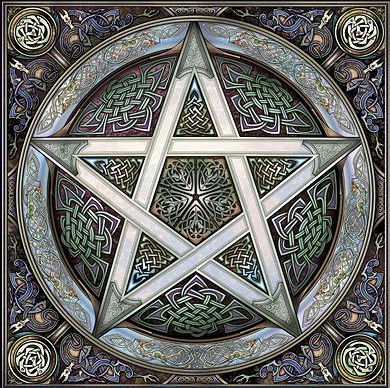
Oils

WHAT’S MAGIC ABOUT ESSENTIAL OILS?

Plant-derived scented oils are powerful components of ritual and spellwork for two main reasons. First, they contain the magical energies of the plants from which they are made—the trees, shrubs, flowers, etc. that are transformed into liquid form. Plants themselves are living beings, with their own living intelligence that works in perfect harmony with nature. And of course, plants have magical properties as well, which are highly concentrated in the form of essential oils.

The same is not true for synthetic fragrance oils, which may smell quite similar to the real thing, but won’t have the natural ingredients contained in botanical oils. While many Witches have used synthetic oils with success over the past few decades, most agree that the power of true botanicals just can’t be beat.

The second “trick” that magical oils have up their sleeve is the power of scent and the effect it has on the mind. We understand this effect intuitively, as we all have favorite scents that put us in a happier or more relaxed mood. The scents of myrrh and cedarwood, for example, or a blend of lavender and clove, seem to instantly awaken something in us that’s beyond our ordinary sense of smell and put us into a different frame of mind—one that is more in touch with the invisible powers of the Universe and therefore more able to direct those powers to achieve our aims. In this way, botanical oils provide a direct tie between the natural physical world and the spiritual plane.

After all, if you can’t summon the necessary state of mind to send your intention confidently into the Universe, you’re unlikely to get the results you seek. This is why incense is such a key part of ritual and magic in Wiccan and other Pagan traditions. As the richly scented smoke wafts throughout the sacred space, it puts us in a frame of mind that is unconcerned, for the time being, with the mundane details of everyday life.

We are more able to focus on going within, connecting with our deities, our higher self, or whatever our belief systems recognize as the power that aids us in transforming our reality. Scented oils provide another way of promoting this inner focus, and magical oils–those that are blended and charged specifically for magical purposes–are arguably the most potent aromatic resources we can have at our disposal.

HOW DO I MAKE MY OWN MAGICAL OILS?

Since many essential oils can be on the pricey side, it’s best to start with just two or three single oils, which you can use individually and to make your own blends. Then you can gradually build up your collection of oils over time. You can also find plenty of quality pre-made blends, but the hands-on experience of blending your own is a great way to get more acquainted with the magical energies of the individual oils. 

Unfortunately, due to the growing popularity of essential oils in the mainstream world, many poor-quality knock-offs are being sold as “essential oils” in big box stores and elsewhere. Be sure to do some research into all companies you’re considering buying oils from, especially if you’re ordering online. That being said, essential oils sold in most health food stores are generally considered a safe bet.

This is where I buy my oils:

https://www.pipingrock.com/essential-oils-mc

The following is a website that has the magical properties of oils. It is important to keep intentions clear in your oil making by making sure the oils correspond with that intent.

http://www.tryskelion.com/herbs_magickal_oil_correspondences.html

WHICH MAGICAL OILS ARE BEST FOR BEGINNERS TO START WITH?

The answer to this is different for each person, so you’ll need to use your intuition. If you love the scent of lemon or lavender, these are good (and affordable) places to start. And if there’s a scent you truly dislike, then by all means avoid it! If you’re able to sample tester bottles in a shop, this is a great way to get a feel for which oils you’re likely to work best with. And as always, you can set an intention that the best oils for you to bring into your life at this time will be revealed to you. Then, just be open to receiving the message, and you’ll have your answer when the time is right!

A History of Magical Oils

Author Sandra Kynes, who wrote Mixing Essential Oils for Magic, says “Aromatic plants in the form of oil and incense were elements of religious and therapeutic practices in early cultures worldwide. In addition, anointment with perfumes and fragrant oils was an almost universal practice.”

In some folk magic traditions, such as Hoodoo, oils can be used for both anointing people and objects, such as candles. In some magical systems, such as various forms of Hoodoo, candle dressing oils are also used to anoint the skin, so many oils are blended in a way that is skin-safe. This way, they can be used for dressing candles and charms, but also can be worn on your body.

How to Make Your Own Blends

While many commercial vendors would have you believe that there’s some Super Secret Magical Method for blending oils, it’s actually pretty simple. First, determine your intent — whether you’re creating a money oil to bring you prosperity, a love oil to boost your romantic encounters, or a ritual oil to use in ceremonies.

Once you’ve determined your intent, assemble the essential oils called for in the recipes. In a clean container, add 1/8 Cup of your base oil — this should be one of the following:

  • Safflower
  • Grape seed
  • Jojoba
  • Sunflower
  • Almond

(I have never used a base since I annoint objects with my oils. However, by all means, do if you prefer it.)

Using an eyedropper, add the essential oils in the recipes. Be sure to follow the recommended proportions. To mix, don’t stir… swirl. Swish the essential oils into the base oil by swirling in a clockwise direction. Finally, consecrate your oils if your tradition requires it – and not all do. Make sure you store your oil blends in a place away from heat and moisture. Write the date on the label, and use within six months.

There are a number of ways you can use your oils in a ritual setting. They are often rubbed on candles for use in spellwork – this blends the powerful energies of the oil with the magical symbolism of the candle’s color and the energy of the flame itself.


Sometimes, oils are used to anoint the body. If you are blending an oil to use for this purpose, be sure that you’re not including any ingredients that are irritating to the skin. Some essential oils, such as frankincense and clove, will cause a reaction in sensitive skin and should only be used very sparingly, and diluted heavily before use. Oils applied to the body bring the wearer the energies of the oil — an Energy Oil will give you a much-needed boost, a Courage Oil will give you strength in the face of adversity.

Finally, crystals, amulets, talismans and other charms may be anointed with the magical oil of your choice. This is a great way to turn a simple mundane item into an item of magical power and energy.

Magical Oil Recipes

Blessing Oil

This oil can be blended together in advance and used for any ritual requiring blessing, anointing or consecration oil. Use this blend of sandalwood, patchouli, and other scents when welcoming guests into a ritual circle, for anointing a new baby, consecrating magical tools, or any number of other magical purposes.

To make Blessing Oil, use 1/8 Cup base oil of your choice. Add the following:

  • 5 drops Sandalwood
  • 2 drops Camphor
  • 1 drop Orange
  • 1 drop Patchouli

As you blend the oils, visualize your intent, and take in the aroma. Know that this oil is sacred and magical. Label, date, and store in a cool, dark place.

Gratitude Oil

Looking for a special oil blended for a gratitude ritual? Mix up a batch of this oil that features oils associated with thankfulness and gratitude, including rose and vetiver. 

To make Gratitude Oil, use 1/8 Cup base oil of your choice. Add the following:

  • 5 drops Rose
  • 2 drops Vetiver
  • 1 drop Agrimony
  • A pinch of ground cinnamon

Label, date, and store in a cool, dark place.

Money Oil

Blend this oil up ahead of time, and use in rituals calling for abundance, prosperity, good fortune, or financial success. Money spells are popular in many magical traditions, and you can incorporate this into your workings to bring prosperity your way.

To make Money Oil, use 1/8 Cup base oil of your choice. Add the following:

  • 5 drops Sandalwood
  • 5 drops Patchouli
  • 2 drops Ginger
  • 2 drops Vetiver
  • 1 drop Orange

As you blend the oils, visualize your intent, and take in the aroma. Label, date, and store in a cool, dark place.

PLEASE REMEMBER THAT SOME ESSENTIAL OILS ARE HAZARDOUS TO ANIMALS!!

The following is a list of known oils that could harm your pets if ingested or come in direct contact with them. For their safety, it is best to keep all oils out of the reach of your pets and familiars.

Essential Oils Harmful to Cats

Oils that are harmful to cats include, but are not limited to:

  • Wintergreen
  • Sweet birch
  • Citrus (d-limonene)
  • Pine
  • Ylang ylang
  • Peppermint
  • Cinnamon
  • Pennyroyal
  • Clove
  • Eucalyptus
  • Tea tree (melaleuca)
  • Thyme
  • Oregano
  • Lavender

Essential Oils Harmful to Dogs

Oils that are harmful to dogs include, but are not limited to:

  • Cinnamon
  • Citrus (d-limonene)
  • Pennyroyal
  • Peppermint
  • Pine
  • Sweet birch
  • Tea tree (melaleuca)
  • Wintergreen
  • Ylang ylang
  • Anise
  • Clove
  • Thyme
  • Juniper
  • Yarrow
  • Garlic

What Are the Symptoms of Poisoning in Pets?

Generally speaking, essential oils and animals do not mix. But how can you tell if your critter is having a bad reaction?

There are several common symptoms of poisoning in pets. A good rule of thumb as a pet owner is to stay alert if you see any changes of behavior in your animal. Here are some other symptoms to watch out for:

  • The smell of essential oils on their fur, skin, breath or vomit
  • Difficulty breathing
  • Drooling
  • Fatigue
  • Weakness
  • Difficulty walking or stumbling
  • Muscle tremors
  • Pawing at the mouth or face
  • Redness or burns on their lips, tongue, skin or gums
  • Vomiting

What Should I Do If My Pet Shows These Symptoms?

Essential oils and animals can be a harmful combination. Just like poisoning in humans, the key to reacting to poisoning in your pet is to act fast. Don’t delay contacting a professional. Seek medical treatment immediately. Call your veterinarian, or contact the Pet Poison Helpline at (800) 213-6680.

If you can’t reach your vet or their office is closed, bring your cat or dog to an animal emergency medical center. The sooner the better. Acting fast will improve your pet’s prognosis!

Be sure to also follow these tips for essential oils and animals:

  1. If the oil is on your pet’s fur or skin, wash it off immediately.
  2. Don’t give your pet any treatments without a vet’s approval.
  3. Take the oil with you to the vet so they know what they’re dealing with.

How to Keep Your Pet Safe

Michelson Found Animals doesn’t recommend using any essential oils for pets, especially when it comes to direct application to an animal’s body, or diffusing the oils into the air. And if you do wish to use some, only do so with a vet’s approval. Our view on essential oils and animals is that they’re likely to do more harm than good, so better to be safe than sorry.

To avoid poisoning, keep these oils out of reach of your pets. Store them in secure containers that your dog or cat cannot get to. 

Essential oils are also commonly used as calming aids. An animal-friendly alternative is Canna-Pet. This company offers soothers in several forms, including capsules, treats and liquids. These are helpful whenever your pet might be particularly stressed out, such as during fireworks, travel or trips to the vet.