A Tradition to Celebrate New Life
In many cultures, it is traditional not only to bless a new baby but also to present them to the gods of the family. Although the gods of the household have probably been aware of the imminent new arrival, it’s a good idea to perform a more formal presentation. By incorporating this ceremony with a baby’s blessing, the child is joined to both the earth and the heavens at the same time. This should be done fairly soon after the baby’s arrival so that the gods of the home can begin forming a relationship with the new family member. If your baby is adopted, you can certainly perform this ritual as well–children are children, whether they were born to you or not.
In some traditions, this is called a Wiccaning, but keep in mind that if you’re not Wiccan, you don’t have to call it that.
You may choose to do this in tandem with a naming ceremony or have it be a separate celebration. It is up to you whether you‘d like to have guests present or not–many families see the time when a baby comes home as a time in which privacy is valued, while for others it is a time of family gathering. Go with whichever option works best for your family‘s needs. If you‘d like some peace and quiet after bringing baby home from the hospital, have the blessing ceremony be for the parents and siblings only, and then invite family and friends to a naming ceremony later on.
Baby Blessings and Ritual
Ideally, you can offer the baby for blessing by the household gods as the child enters the home for the first time, but realistically you can do it any time that the whole family is up for it. Stand outside your home, on the front step, holding the baby. Everyone present should hold hands–parents, siblings, etc.–and surround whoever is holding the baby. Say:
Gods of our home, gods of our hearth,
today we present you with someone new.
She is a member of our family,
and this is her new home.
We ask you to welcome her,
we ask you to love her,
we ask you to protect her,
we ask you to bless her.
Have a cup of water, wine, or milk at the door. Before entering the home, pass the cup sunwise around the group. As each person drinks, they should say:
Welcome baby, to our home. May the gods love you as much we do.
Once the cup has made the rounds, touch a drop of the liquid to the baby’s lips.
Open the door, and step inside. Go to the family altar or shrine, and circle it. Again, have everyone hold hands, surrounding whoever is holding the baby. Say:
Gods of our home, gods of our hearth,
today we present you with someone new.
She is a member of our family,
and this is her new home.
Watch over her as she grows.
Watch over her as she lives.
Watch over her with love.
Pass the cup one more time, each person offering the blessing as they sip. Once the cup has returned, touch a drop of liquid to the baby’s lips. Leave the cup on the altar overnight as an offering to your household’s guardians. In the morning, take the cup outside the front door, and pour anything that’s left onto the ground, as an offering to the spirits of the outdoors.
Esbat Ritual
What Is an Esbat?
An Esbat is a Wiccan meeting held each month at the time of the full moon. This is usually the time for initiation ceremonies or healing magic to be done, as opposed to a Sabbat (holiday) celebration.
So, what’s special about an Esbat? Well, it’s a good way to mark the thirteen lunar months that make up a calendar year. Author Edain McCoy says, over at Llewellyn, “The full moon esbat tends to be a ribald, frenetic celebration—suitable for the “lunatics” who were once believed to display their insanity under the light of the full moon. Magick for all manner of needs is enacted during esbat rituals, both in group settings and by solitary practitioners. Spells for increase or gain are usually done during the waxing phases, and spells for decrease or loss are performed during the waning period. The full moon is used for spells for wholeness, children and mothers, families, psychic enhancement, and some love spells.”
Celebrating the Esbat With Ritual
In addition to the eight Sabbats observed every year, many Pagans celebrate a regular Esbat, in which magic is performed and the gods and goddesses of the tradition are honored.
Most covens and groups meet at least once a month and time this ceremony so it coincides with the full moon. The word Esbat is of French origin, from s’esbattre, which loosely translates to “frolic joyfully.” In addition to joyful frolicking, this is a time to commune with the gods of your tradition. In some groups, the Esbat rite is followed by a Cakes and Ale ceremony. You may also wish to tie this in to Drawing Down the Moon.
First, if your tradition requires you to cast a circle, do so at this time. If you don’t normally cast a circle, at least take the time to ritually purify the area by smudging or asperging. This will establish the space as sacred. You’ll need a bowl of water and a moon candle for the altar. This is traditionally a white, unscented pillar-style candle. You can decorate the moon candle with sigils or inscriptions etched with a hot knife. Adorn your altar with lunar symbols—mirrors, silver ribbons, white crystals. Feel free to substitute the names and attributes of the deities of your path in this incantation.
Turn to the altar, and hold your arms open wide. Tilt your head so that your face is skyward—after all, this is a celebration honoring the full moon. Say:
Goddess of the moon, queen of the night,
keeper of women’s mysteries, mistress of the tides,
you who are ever changing and yet always constant,
I ask that you guide me with your wisdom,
help me grow with your knowledge,
and hold me in your arms.
At this time, light the moon candle, and take a moment to reflect upon the gifts you have in your life.
Hold the bowl of water to the sky. Say:
The moon is the symbol of the mother,
and she watches over us day and night.
She brings the changing tide, the shifting night,
the flow that changes women’s bodies,
and the passion of lovers to their beloved.
Her wisdom is great and all-knowing,
and we honor her tonight.
Keep your watchful eyes upon us, great mother,
until the cycle returns once more,
and bring us to the next full moon,
in your love and light.
Take a few moments to think about the things in your life which have changed in the past moon cycle. Are there people who have come into your world that you’re thankful for? Have you ended a toxic relationship? Have you experienced good fortune at work? Meditate on all the things you have to be thankful for, as well as the things you would like to see change for you by the next full moon. When you are ready, close the circle and end the ritual. If you choose, you can move into healing rites or magical workings, or a Cakes & Ale ceremony.
Tip: Use the moon water over the next month for watering plants, making offerings, or doing spellwork.
Self Dedication Ritual
What Should a Self Dedication Include?
By the very definition of the word, you can’t initiate yourself, because to initiate requires more than one person. But what you can do is dedicate yourself to your path and to the gods you have chosen to follow. For many people, doing this as part of a formal ritual helps to cement their relationship with the Divine. Some people choose to wait until they have studied for a year and a day before having a formal self-dedication rite. It’s entirely up to you.
You may want to wait until the time of the new moon to perform this self-dedication because it is a time of new beginnings. Bear in mind that self-dedication is a commitment you are making; it should not be done at random or without significant thought beforehand.
This goal of this rite is to bring the dedicant closer to the Divine, as well as to declare your connection to your spiritual path. It’s a pretty important step in your spiritual journey, so you may want to try to include things that make it formal and official in feel and practice.
For instance, you may wish to do a formal preparation with a ritual bath before your ceremony. Perhaps you’d like to include altar tools that you’ve crafted yourself—you certainly don’t have to, but if you do, it can make the ritual even more personal and unique. You might want to choose a new magical name for yourself, so that you can introduce yourself to your gods with it, as part of this dedication. Finally, if you’re good at memorization, you might want to take some time in advance to memorize as much of this ritual as possible—if you’re worried you might forget what to say, take the time to copy this ritual by hand into your Book of Shadows.
Simple Self-Dedication Ritual
Keep in mind that this ritual is designed as a template, and you can adapt it or adjust it to meet your own needs or those of the tradition you have created.
You should perform this ritual skyclad, if at all possible. Find a place that is quiet, private, and free of distractions. Turn off your cell phone and send the kids out to play if you have to.
Begin by grounding yourself. Find your inner peace, and become good and relaxed. Shut out all the things from your mundane life that distract you—forget for a while about paying the bills, your son’s baseball practice, and whether or not you fed the cat. Focus only on yourself, and the tranquility you’re entitled to.
You will need the following items:
- Blessing oil
- Salt
- A white candle
When you’re ready to proceed, sprinkle the salt on the floor or ground, and stand with your feet upon it. Light your white candle, and feel the warmth of the flame. Look into the glow of the fire and think about what goals you have for yourself on your spiritual journey. Think about your motivations for performing this self-dedication.
Stand before your altar, and say:
I am a child of the gods, and I ask them to bless me.
Dip your finger into the blessing oil, and with eyes closed, anoint your forehead. Some people do this by tracing a pentagram on the skin with the oil. Say:
May my mind be blessed, so that I can accept the wisdom of the gods. Anoint the eyelids (be careful here!) and say: May my eyes be blessed, so I can see my way clearly upon this path. Anoint the tip of your nose with the oil, and say: May my nose be blessed, so I can breathe in the essence of all that is Divine.
Anoint your lips, and say:
May my lips be blessed, so I may always speak with honor and respect.
Anoint your chest, and say:
May my heart be blessed, so I may love and be loved.
Anoint the tops of your hands, and say:
May my hands be blessed, so that I may use them to heal and help others.
Anoint your genital area, and say:
May my womb be blessed, so that I may honor the creation of life. (If you’re male, make the appropriate changes here.)
Anoint the soles of your feet, and say:
May my feet be blessed, so that I may walk side by side with the Divine.
If you have specific deities you follow, pledge your loyalty to them now. Otherwise, you can use “God and Goddess,” or “Mother and Father.” Say:
Tonight, I pledge my dedication to the God and Goddess. I will walk with them beside me, and ask them to guide me on this journey. I pledge to honor them, and ask that they allow me to grow closer to them. As I will, so it shall be.
Take some time to meditate. Feel the afterglow of the ritual, and feel the energy of the gods around you. You have brought yourself to the attention of the Divine, so they will be keeping an eye on you. Accept the gift of their wisdom.
Threshold Blessings
Blessing By Iron
Use a knife, horseshoe, or other piece of iron. Bury it beneath your front step or porch during a full moon. Ask the deities of your pantheon to watch over the residents of your home. Ask for their blessings so that your home will remain safe and happy, or if you do not follow a particular deity, you can alternately ask the universe for general blessings. If you can’t get under the front step (for instance, if there’s concrete all around, or if you live in an apartment) you may wish to use another method.
Blessing by Asperging
Asperging is the process of using consecrated water or other liquids to purify a space. Sprinkle consecrated water, wine, or even milk over the threshold. As you do this, you can either call upon the deities of your tradition, or upon the universe, asking for general blessings for those who live in the home.
Blessing by Athame
Blessing by athame tends to be a little more direct and martial. To bless the threshold with your athame, stand in the doorway facing outward. You may wish to use your athame to invoke the elements as guardians, or you can call upon the gods of your tradition.
Remember, you can adjust these basic ideas to work in the manner that is best for your own tradition; there is really no set “right way” to bless the threshold of your home, there’s simply the way that works best for you personally.
Keeping the Area Cleansed
Have you ever approached a house and felt instantly comforted as you walked to the front door? Perhaps you’ve noticed a few small knickknacks tucked into the garden nearby, or a potted plant that seems friendly and welcoming. The physical surroundings of the threshold are equally as important as the spiritual ones. Some ideas for keeping the threshold welcoming and comfortable:
Make sure your front door is swept clean of dust, leaves, cobwebs, and so forth. Put out a Welcome mat, so the entrance looks inviting.
Add flowers for a splash of color. Select plants based upon what they mean to you; there are many different properties associated with various flowers. Be sure to read about magical flowers and their meanings.
Consider some hanging baskets and fill them with ferns or other plants that hang down to fill the space and make it cozy.
Add a windchime or hanging bells. These are available in a variety of tones, so select one that rings in the pitch you like best. In many countries windchimes, bells and other noisemakers are hung at doorways to repel negative entities.
Place items around the area that can act as talismans such quartz crystals, hidden coins, rocks painted with symbols, or statuary. In Feng Shui, it’s good luck to have a dragon statue greeting guests who approach your threshold.
Other Household Blessings
The late author Scott Cunningham’s book The Magical Household is an invaluable bit of reference material for anyone who wants to keep their home as a sacred and magical place. Cunning recommends the following as a doorway blessing:
Over the door, hang a fresh sprig of dill, tied with a blue or red cord, to keep anyone who means you harm from entering.
To prevent evil from coming into your home, cross two needles, and stick them into a corner of your doormat. If you don’t have a doormat, it’s ok to stick them into the door jam instead, but make sure you get them in place securely so they don’t fall out.
If you have some Dragon’s Blood, grind it up into a powder, and sprinkle it on doorsteps and window sills as a protective measure.
Samhain Ritual
Here’s What You’ll Need
Decorate the altar with symbols of late fall, such as:
- Skulls, skeletons, grave rubbings, ghosts, and other items symbolic of the dead and the spirit world.
- Harvest food such as pumpkins, squash, root vegetables, to mark the end of the growing season.
- Nuts and berries, dark breads, representing the darker time of year.
- Dried leaves and acorns, symbolizing the shedding of the trees as autumn rolls in.
- A cornucopia filled with an abundance of fruit and veggies, to represent the bounty of the fields and gardens.
- Mulled cider, wine, or mead, as a way of honoring the blessings of the orchards and vineyards.
Hold Your Ritual
To begin your ceremony, prepare a meal for the family — and this is something that everyone can get involved in. Put emphasis on fruits and vegetables, and wild game meat if available. Also make sure you have a loaf of a dark bread like rye or pumpernickel and a cup of apple cider or wine. Set the dinner table with candles and a fall centerpiece, and put all the food on the table at once. Consider the dinner table a sacred space.
Gather everyone around the table, and say:
Tonight is the first of three nights,
on which we celebrate Samhain.
It is the end of the harvest, the last days of summer,
and the cold nights wait on the other side for us.
The bounty of our labor, the abundance of the harvest,
the success of the hunt, all lies before us.
We thank the earth for all it has given us this season,
and yet we look forward to winter,
a time of sacred darkness.
Take the cup of cider or wine, and lead everyone outside. Make this a ceremonial and formal occasion. If you have a vegetable garden, great! Go there now — otherwise, just find a nice grassy spot in your yard. Each person in the family takes the cup in turn and sprinkles a little bit of cider onto the earth, saying:
Summer is gone, winter is coming.
We have planted and
we have watched the garden grow,
we have weeded,
and we have gathered the harvest.
Now it is at its end.
If you have any late-fall plants still waiting to be picked, gather them up now. Collect a bundle of dead plants and use them to make a straw man or woman. If you follow a more masculine path, he may be your King of Winter, and rule your home until spring returns. If you follow the Goddess in her many forms, make a female figure to represent the Goddess as hag or crone in winter.
Once that is done, go back inside and bring your King of Winter into your home with much pomp and circumstance. Place him on your table and prop him up with a plate of his own, and when you sit down to eat, serve him first. Begin your meal with the breaking of the dark bread, and make sure you toss a few crumbs outside for the birds afterwards. Keep the King of Winter in a place of honor all season long — you can put him back outside in your garden on a pole to watch over next spring’s seedlings, and eventually burn him at your Beltane celebration, six months from now.
When you are finished with your meal, put the leftovers out in the garden. Wrap up the evening by playing games, such as bobbing for apples or telling spooky stories before a bonfire.
Pet Farewell Ritual
This is a ritual that you can hold after a pet has passed away. Obviously, you may need to make adjustments, based on what sort of pet you had, the manner of their death, and so forth, but you can use this ritual as a general template. You can also turn this into a group ritual if the pet was one who belonged to the entire family.
You will need:
- Salt
- A pink candle (pink to represent your love for your pet)
- Incense of your choice (for a cat, as an example, blend catnip, valerian, and mint)
- Water
- A stone to represent your pet
- A stone to represent yourself
- 4 matching crystals*
- A small tray, plate or dish
- Arrange Your Elements
Arrange the salt, incense, candle, and water to represent the four elements (or in any other manner you traditionally use). Place one of your four matching crystals with each. Light the incense and the candle. Place the stones representing you and your pet in the dish in the center of the work area.
Take a moment to meditate quietly, and focus on the two stones in the center. One is you, and one is your pet. They should be side by side, touching each other, as you and your pet touched each other in life. Take both stones in your hands, and hold them tightly. As you do so, remember the positive and happy memories of your time with your pet.
Say a Pet Prayer
Pass the stones over the salt, and say:
<Pet’s name>, with the energies of Earth, I am with you in spirit. Your memory will always remain with me.
Pass the stones over the incense, and say:
<Pet’s name>, with the energies of Air, I am with you in spirit. Your memory will always remain with me.
Pass the stones over the candle, and say:
<Pet’s name>, with the energies of Fire, I am with you in spirit. Your memory will always remain with me.
Pass the stones over the water, and say:
<Pet’s name>, with the energies of Water, I am with you in spirit. Your memory will always remain with me.
Tell Your Pet How Much You’ll Miss Him
Place the two stones back in the dish in the center of your work area. Take each of the four matching crystals/gemstones and add them to the dish as well. As you do so, tell your pet how much you will miss him, and how thankful you are that you were allowed to be part of his life. If you have family members such as children involved, ask each of them to place one of the matching stones in the dish, and tell the pet one thing that they will miss about him.
*There are a number of crystals associated with animal magic, and you can use any of these. The important part is to select four that are the same. Use quartz, turquoise or amethyst, which are all-purpose healing crystals, or sugilite, which is associated with crossing over at the time of death.
If you had to euthanize your pet, make sure you tell him why you made that decision, so that he understands how difficult it was to do so. This is a good time to verbalize how you feel, such as admitting it would have been selfish to prolong your pet’s suffering any further.
Close your eyes, and reflect once more on how different your life was because of your pet. If you need to cry, scream or yell, now is a good time to do it. Don’t hold back.
Finally, take the dish with all the stones in it, and pass it to everyone involved in the ritual. Allow each person to hold it for a moment, to feel the energy of you and your pet together in the stones.
Conclude the Ritual
Conclude the ritual in whatever your tradition requires Once you have done so, place the dish with the stones in a place which was a favorite of your pet—a sunny spot on the floor, a warm corner in the bedroom, or a bright warm windowsill. Leave the dish there for several days. Whenever you walk by it, say hello to your pet, and let them know that they are remembered.
After time has passed, put the stones in a safe place somewhere, perhaps in a drawstring pouch, or in a special box, so that whenever you begin thinking of your pet you can see the stones again, and remember him. You may even choose to make one of the stones into a necklace or pass them along to family members for their own comfort.
When a pet crosses over, you may wish to use these prayers in a family memorial for your deceased friend, from goldfish to dogs and cats.
Drawing Down the Moon
There are many different ways to draw down the moon, and the method you use will vary, depending on your needs and the customs of your individual spiritual tradition. For this version, begin by standing at your altar with your arms crossed over your chest, and feet together. Face towards the full moon. Say:
Goddess of the Moon, You have been known by many names in many lands in many times. You are universal and constant. In the dark of night, You shine down upon us and bathe us in Your light and love. I ask You, O Divine One, to honor me by joining with me, and allowing me to feel Your presence within my heart.
Move your feet apart to about shoulder width, and raise your arms up and out to welcome the Goddess into you. The next part is one that you can memorize and learn, or you can speak spontaneously from the heart. You may begin to feel a surge of energy, a palpable tingle – don’t worry, that’s the Goddess making Herself known to you. Feel free to change these words as you like. You are speaking for Her, in Her voice, so let Her say what She wishes. Say:
I am the Mother of all life, the One who watches over all. I am the wind in the sky, the spark in the fire, the seedling in the earth, the water in the river.
Continue with:
I am the vessel from which All Things spring forth. Honor Me from within your heart! Remember that acts of love and pleasure are My rituals, and that there is beauty in all things. Honor Me on this night of the full moon! I have been with you since the moment you were created, and shall remain with you always. Let there be beauty and strength, wisdom and honor, humility and courage within you. If you need Me, call upon Me and I shall come to you, for I am everywhere, always.
Honor Me as you seek knowledge! I am the Maiden, the Mother and the Crone, and I live within you.
Feel the power of the Goddess within you. When you are ready, conclude with:
I look down upon the sands of the desert, I crash the tides upon the shore, I shine on the mighty trees of the forests, and watch with joy as Life continues every cycle.
Be true to Me, honoring that which I have created, and I shall be true to you in return. With harm to none, so it shall be.
Take a few moments to stand and bask in Her glow, and to meditate upon that which you have just experienced. Once the energy surge has subsided, lower your arms, and proceed with your ceremony as you normally would at the conclusion of a ritual.
Tips
Drawing Down the Moon is often considered an altered state of consciousness, a ritual possession by the Divine. It is not uncommon to feel the energy of the Goddess for quite some time following Drawing Down the Moon, so don’t be alarmed if you feel a heightened sense of clarity over the next few days. You may also feel extremely emotional – it’s not uncommon to cry or laugh spontaneously during this rite.
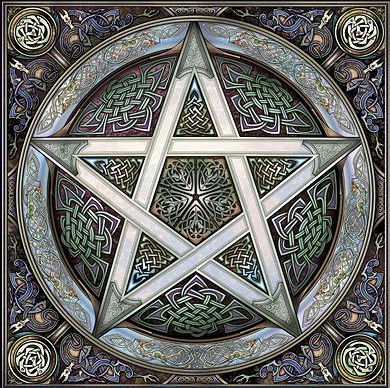







 Learning Wicca and the Tradition of the Craft