The Hanged Man from the Major Arcana of the Rider Waite Tarot
Use: Protection, prosperity, prophecy, health, sea and water rituals
In many blessings, the phrase “of oak, ask and thorn” is often seen signifying the sacred meaning to the Ash tree. The typical ask tree is readily identifiable by its light grey bark and large leaves with sharply defined margins. The wood of the tree is considered valuable due to the toughness and elasticity of the wood and the speed with which it grows. It is also considered one of the five magic trees of Ireland.
The ash tree is associated with suck gods as Uranus, Poseidon, Thor, Odin, Oceanus, Nemesis, Mars, and Gwydion. Nemesis, a greek Goddess, often carried an ash branch as a symbol of the justice of the gods. SHe is also associated with an eight spoken wheel representing the solar wheel and the Fates who dispensed her divine justice with ash; the wood assisting them to quantify happiness and misery and to ensure that it was equally dispensed and not hoarded by a small percentage. SHould someone defy the gods and the fates and hoard happiness, Nemesis would produce her scourge of Ash and dispense her divine justice.
Spiritually, Ash is associated with divination, prophecy and inspiration. The god Odin reportedly hung from an ash tree before reading runes in order to gain enlightenment. The ash tree also represents Yggdrasill, the world tree of Norse mythology. In their faith, it is believe that the first man formed from the wood of the ash and the first woman from rowan.
Brooms, often a common tool among witches, are traditionally made of birch twigs tied to an ash handle. The handle is often a hybrid of ash and willow. Ash is commonly believed to have command over the four elements. The handle of the broom, along with birch and willow, are symbolic of the triple goddess.
What can you use Ash for?
A staff of ash over a door frame wards off malignant forces
Ash leaves scattered to the four directions protects the house or area within their perimeter
A garter made from the green bark of the ash tree is often worn by magic users to protect them against psychic attacks
The wood also repels snake attacks as snakes inexplicably fear the wood and will not cross it.
If you carve ash wood into the shape of a solar cross and carry it with you while traveling across the sea or another body of water, it is said to protect you from drowning.
Healing wands are made from ash
Poppets can be carved from the roots of the ash tree.
Placing a bowl of water with ash leaves in it under a bed is said to ward off illness. Should you try this, the morning after the bowl is placed, you must discard the bowl of water and leaves outside on open ground. This procedure should be repeated every night until the person with the ailment is well again.
Leaves can be work or sewn into sachets for protection against illness or general protection charms.
Loose ash leaves in your pockets can attract the love of someone of the opposite sex.
Burning ash wood at Christmas will encourage prosperity.
When you have a baby, bury it’s first nail clipping under an ash tree if you would like the baby to grow to be a good singer.
Ash berries placed in a cradle will challenge the fey from trading the child for a changeling
Twigs are believed to be used in working to stop the rain of a destructive flood
Can be used for prophetic dreams when placed under one’s pillow
Medicinal uses
The bark is historically used as a bitter tonic and is said to have been an invaluable anti-periodic.
Treatment for fever and ague as a substitute for peruvian bark
Considered well used for removing obstructions in the liver and spleen
Aids rheumatoid arthritis
The leaves have diuretic properties as well as diaphoretic and purgative properties
The leaves can treat jaundice and obesity and can be served in the form of wine.
Leaves should be gathered in June, well-dried, powdered and kept in well corked bottles
Always be sure to ask the tree before gathering any part of it. Always thank it and leave an offering to honor it before leaving with the parts you’ve gathered.
What we know about Valentine’s Day can be summarized with love, gifts of candy or flowers or other trinkets to show your emotional connection with a loved one. Perhaps a nice dinner and some late night activities *wink, wink*. But where does Valentine’s Day come from? How did these traditions come to be? They can be tracked to the ancient Roman holiday of Lupercalia and the tradition of card giving that originated in Victorian England, and, of course, the legend of St. Valentine.
St. Valentine
The Catholic church has long honored three martyred St. Valentines/Valentinus. One legend tells the tale of the tyrannical Emperor Claudius II who decreed that he needed single men for his vast armies and forbade marriage to ensure that his ranks would be filled to his desire. Valentine married men in secret to protest the injustice of the decree. Claudius discovered Valentine’s disobedience and immediately put him to death. However, it is argued that St. Valentine of Terni was the true bishop behind the holiday. He was also beheaded by Emperor Claudius ll. The date of these supposed beheadings was on February the 14th.
Valentine is also speculated to have been executed for attempting to free Christian prisoners from Roman prisons where they were tortured and beaten ruthlessly. In the story, Valentine himself was imprisoned and fell in love with the daughter of one of his jailers. Before his execution, he wrote her a love letter signed “From your Valentine”. This began the tradition of the saying and the card giving we observe today. And, because of these romanticized legends, Valentine became one of the most recognized saints in England and France.
However, several scholars hold that there is precious little evidence to support these legends. They believe that the romanticism that developed around valentines was due to Geoffrey Chaucer, a legendary poet of the middle ages. They maintain that the stories told by Chaucer bear such a strong resemblance to the legends of St. Valentine that it is enough to raise substantial suspicion. One theory states that Chaucer’s romance was based off of the betrothal between King Richard II and Anne of Bohemia rather than the alleged St. Valentine. However, most of his romantic writing were associated with February 14th, explaining the date for the holiday.
Lupercalia
The Roman festival of Lupercalia is also thought to be an origin of the holiday. This fertility festival was held in honor of the God Faus, a god of agriculture. It was also held in honor of the founders of Rome, Remus and Romulus. Priests would gather at the cave where it is believed the Remus and Romulus were cared for by a she-wolf, also called a Lupa, when they were infants. A goat would be sacrificed for fertility and a dog for purification. Strips of the goats hide would be dipped in the blood before gently slapping fields and women in town with the bloody strips. This was believed to encourage fertility in women and crops.
On the final day of the festival, single women would place their names in an urn that bachelors would choose one of the names out of. The name chosen would be that man’s match for the next year, often ending in marriage.
Like many pagan practices, after the rise of Christianity, the practices and traditions were outlawed out of existence at the end of the 5th century. The last remaining idea of Lupercalia was immortalized in Geoffrey Chaucer’s writings in the 13th century.
Today
Written Valentines began to appear in the 1400’s. The oldest in existence was written in 1415; a love poem written by CHales, Duke of Orleans to his wife during his imprisonment in the TOwer of London following the Battle of Agincourt.
Valentine’s day is currently celebrated in Canada, Mexico, the UK, France, and Australia. The holiday became popular in the United Kingdom around the 17th century, and by the 18th century, it was common practice to exchange tokens of affection between friends and lovers. In the 1900s, printed cards began to replace written letters and quips. Pre-made cards were encouraged as the time period discouraged the expression of true, deep feelings between people. The 1700’s saw the rise of handmade valentines in the United States. Today it is estimated that approximately 145 million valentines are sent in the United States, 85 percent of which are bought by women.
The full moon in February is known as the Quickening moon, it marks the official end of winter, and the quickening, the renewal of all things. While the skies are still gray, and the weather is cold, beneath the surface life begins to secretly stir.
This moon phase is a time of abundance, ripening and completeness, heavy with fertility and female divinity. It is a time when the potential of all things begins to stir towards birth in spring, a time to work on our own inner power and confront personal truths in preparation for birth. This moon sheds enough light to help us see into our darkness, so that our energy can make its way to the surface to prepare for growth and healing.
This is the season of Imbolc, the days when we know that if we can just hold on for a few more weeks, we might get lucky and see little green shoots peeking out through the snow and slush.
Correspondences:
Colors: Purple and blue
Gemstones: Rose quartz, amethyst, jasper
Trees: Rowan, Myrtle
Gods: Brighid, Aphrodite, Juno, Mars
Herbs: Hyssop, sage, myrrh
Element: Fire
The word Quickening is also used to describe the first moment in pregnancy when a woman feels the movements of her baby. So this is also a time when new life is beginning, but still lies dormant. Pregnant animals, due in the spring, begin to feel the quickening of their unborn young. The earth itself is quickening, as seeds and bulbs far beneath the soil begin their journey towards the light. We know these things are coming — and we know also that this is a good month to make plans for the future. We can dream and hope, and set goals for ourselves. Accept responsibility for mistakes you’ve made in the past, and move on.
Magical workings this month should focus on personal achievements and advancement. This is an excellent time for fertility and childbirth spells.
For fertility:
Fertility rituals and spells can be used in the wrong way or for improper purposes. Some women cast a spell to become pregnant to convince their partner to stay with them. Others are doing it when it is just not a good time in their lives to have a baby.
Before casting magic spells to get pregnant, ask yourself a few simple questions.
Am I ready to have a baby?
Is my partner ready for us to have a child?
Are we at a point in our relationship that it would be okay to have a baby?
Can we have enough money to support a baby?
Am I only wanting a baby to fix my relationship with my partner?
Am I emotionally ready for a baby?
The worst thing any woman can do is cast a fertility spell to get pregnant with the hope that it will rescue a broken relationship. Do a spell to become pregnant when you are really, truly ready for a child.
A very popular are fertility spells with green and brown candles.
Green is the most popular candle color used for fertility spells with candles. It represents growth, productivity, and accomplishment of goals.
Brown is also an excellent color to use when you are trying to get pregnant. Brown represents family, unity, hearth and home, and bonding.
When it comes to fertility, seeking out a fertility goddess is one of the best things a woman can do to increase her chances of conception. Several goddesses represent fertility and motherhood. Goddess Offering Bowl White StatueA few fertility goddesses are Freyja, Epona, Isis, Freyr, Gaia, Danu, Brigit, Hera, and Frigg.
Repeat to each direction (East, West, North, and South)
“To you my child, my body is open,
To you my child, my mind is open.
To you my child, my heart is open.
By Earth, Fire, Wind, and Sea,
Into my arms, you will be.”
(Last two lines are said while looking at your cradled arms).
Place the candles in a triangle for luck, but do not light them yet. Say the following words:
“God and Goddess, Spirits and Guides
Thank you for all that I have I ask you now for [whatever it is you want]
Aid me as I work to achieve it
Please bring it to me when the time is right
So mote it be”
Now visualise what your life would be like if you already had this thing you wish for. Really soak yourself in the feeling of good luck, success, joy, achievement. Feel the elation in your chest, and hold on to that feeling. Meditate on it as you go deeper into yourself. There, an image or symbol will appear in your mind. As soon as you see this, whatever it may be, draw it on your piece of paper. Now take the piece of paper and place it within the triangle of candles.
As you light each candle, say:
“Fire, ignite my dream, for the highest good.”
Sit with the lit candles and visualise good luck coming your way. Trust that the Universe will bring you what is best for you. Immerse yourself in gratitude towards life and all that the God and Goddess have already brought you.
Then take your piece of paper and bury it in the earth, as you say:
“Earth, seal my dream, for the highest good.”
Note that this Good Luck spell will bring you precisely what is best for you, however, it may come in unexpected forms. Remember to keep an open mind and an open heart and look out for opportunities and signs.
Depending on your particular tradition, there are many different ways you can celebrate Imbolc. Some people focus on the Celtic goddess Brighid, in her many aspects as a deity of fire and fertility. Others aim their rituals more towards the cycles of the seasons, and agricultural markers. Here are a few rituals you may want to think about trying — and remember, any of them can be adapted for either a solitary practitioner or a small group, with just a little planning ahead.
Setting Up Your Imbolc Altar
Imbolc sabbat season is often associated with the colors red, green, and white.
Because Imbolc is a harbinger of spring, any plants that symbolize the new growth are appropriate.
You can decorate your altar with items that represent the goddess Brighid, such as candles, a corn doll, chalices and cauldrons, or healing herbs.
Cauldrons or chalices: she’s often connected to sacred wells and springs, due to her association with healing waters
A small anvil or hammer: Brighid is the goddess of smithcraft
A Brighid corn doll and Priapic wand
Sacred animals such as cows, sheep or swans
A goddess statue: you can find some beautiful statuary of Brighid, or of other spring deities in your tradition
A book of poetry, or a poem you’ve written: Brighid is the patroness of poets
Faeries: in some traditions, Brighid is the sister of the Fae
Healing herbs: she’s often connected to healing rites
Baked goods, especially those made with eggs and dairy products
Lots of candles, or a cauldron with a small fire in it; as the goddess of domesticity and the hearth, she is associated with fire and braziers
Imbolc Candle Ritual
First, set up your altar in a way that makes you happy, and brings to mind the themes of Imbolc – rebirth and renewal, purification and cleansing.
Prior to beginning your ritual, take a warm, cleansing bath. While soaking, meditate on the concept of purification. Once you’re done, dress in your ritual attire, if you normally wear it, and begin the rite. You’ll need:
Seven candles, in red and white (tealights are perfect for this)
Something to light your candles with
A large bowl or cauldron big enough to hold the candles
Sand or salt to fill the bottom of the bowl/cauldron
If your tradition requires you to cast a circle, do so now. Pour the sand or salt into the bowl or cauldron. Place the seven candles into the sand so they won’t slide around. Light the first candle. As you do so, say:
Although it is now dark, I come seeking light.
In the chill of winter, I come seeking life.
Light the second candle, saying:
I call upon fire, that melts the snow and warms the hearth.
I call upon fire, that brings the light and makes new life.
I call upon fire to purify me with your flames.
Light the third candle. Say:
This light is a boundary, between positive and negative.
That which is outside, shall stay without.
That which is inside, shall stay within.
Light the fourth candle. Say:
I call upon fire, that melts the snow and warms the hearth.
I call upon fire, that brings the light and makes new life.
I call upon fire to purify me with your flames.
Light the fifth candle, saying:
Like fire, light and love will always grow.
Like fire, wisdom and inspiration will always grow.
Light the sixth candle, and say:
I call upon fire, that melts the snow and warms the hearth.
I call upon fire, that brings the light and makes new life.
I call upon fire to purify me with your flames.
Finally, light the last candle. As you do so, visualize the seven flames coming together as one. As the light builds, see the energy growing in a purifying glow.
Fire of the hearth, blaze of the sun,
cover me in your shining light.
I am awash in your glow, and tonight I am
made pure.
Take a few moments and meditate on the light of your candles. Think about this Sabbat, a time of healing and inspiration and purification. Do you have something damaged that needs to be healed? Are you feeling stagnant, for lack of inspiration? Is there some part of your life that feels toxic or tainted? Visualize the light as a warm, enveloping energy that wraps itself around you, healing your ailments, igniting the spark of creativity, and purifying that which is damaged.
When you are ready, end the ritual. You may choose to follow up with healing magic, or with a Cakes and Ale ceremony.
Initiation Ceremony for a New Seeker
Discussed in January’s lessons
Imbolc Prayers
The goddess Brighid is well known as a keeper of the hearth fires in the home. As such, she is often associated with matters of domesticity, including cooking and kitchen magic. If you’ve prepped a meal and you’re getting ready to dig in, take a moment to bless your food in Brighid’s name.
Brighid is the lady of flame,
the fire that cooks our food!
Hail to her and to the hearth,
and may our meal be good!
In some modern Pagan traditions, it is customary to offer a blessing before a meal, particularly if it’s being held in a ritual context. At Imbolc, it’s a season to honor Brighid, the goddess of hearth, home and domesticity. Celebrate her role as a goddess of the homefires, and offer this simple blessing of gratitude before your Imbolc feast.
This is the season of Brighid,
She who protects our hearth and home.
We honor her and thank her,
for keeping us warm as we eat this meal.
Great Lady, bless us and this food,
and protect us in your name.
Although Imbolc isn’t truly the end of winter–and depending on where you live, you might be right smack in the middle of the worst weather of the season–in many traditions, it is a time to look forward towards the spring. It’s a good time to honor the idea that the days are starting to grow a little bit longer and that soon, the harsh cold winter will be coming to an end. Feel free to hold off on this prayer until it’s a little more seasonally appropriate for your area.
The winter is coming to an end
The stores of food are dwindling,
And yet we eat, and stay warm
In the chilled winter months.
We are grateful for our good fortune,
And for the food before us.
The goddess Brighid was known by many names. In parts of northern Britain, she was called Brigantia, and was seen as a keeper of the forge. In this aspect, she is associated with smithcraft and cauldrons. She was connected to the Roman goddess Victoria, a deity who was the personification of victory in battle, as well as loyalty. In some legends she is invoked as Minerva, the warrior goddess. Although as Brigantia she is not nearly as famous as her Brighid aspect, she is seen as the goddess who bestowed the title of Brigantes upon a pan-Celtic tribe in England’s border region
Hail, Brigantia! Keeper of the forge,
she who shapes the world itself with fire,
she who ignites the spark of passion in the poets,
she who leads the clans with a warrior’s cry,
she who is the bride of the islands,
and who leads the fight of freedom.
Hail, Brigantia! Defender of kin and hearth,
she who inspires the bards to sing,
she who drives the smith to raise his hammer,
she who is a fire sweeping across the land.
Among her many other aspects, Brighid is the keeper of the flame, and this simple prayer honors her in that role.
Mighty Brighid, keeper of the flame,
blazing in the darkness of winter.
O goddess, we honor you, bringer of light,
healer, exalted one.
Bless us now, hearth mother,
that we may be as fruitful as the soil itself,
and our lives abundant and fertile.
In many modern Pagan traditions, Imbolc sabbat is a time to celebrate Brighid, the Celtic hearth goddess. Among her many other aspects, she is known as the Bride of Earth, and is the patroness of domesticity and home. This simple prayer honors her in that role.
Bride of the earth,
sister of the faeries,
daughter of the Tuatha de Danaan,
keeper of the eternal flame.
In autumn, the nights began to lengthen,
and the days grew shorter,
as the earth went to sleep.
Now, Brighid stokes her fire,
burning flames in the hearth,
bringing light back to us once more.
Winter is brief, but life is forever.
Brighid makes it so.
Alexander Carmichael was a folklorist and author who spent nearly five decades traveling around the highlands of Scotland collecting stories, prayers and songs. His most noteworthy work, the Carmina Gadelica, is an interesting blend of early Pagan tradition mixed with the influences of Christianity. Smooring the Fire is from Carmichael’s Carmina Gadelica, published 1900, and is a Gaelic hymn to Brighid, honoring the tradition of smooring, or dampening, the hearth fire at night, and particularly on the night before Imbolc.
An Tri numh (The sacred Three)
A chumhnadh, (To save,)
A chomhnadh, (To shield,)
A chomraig (To surround)
An tula, (the hearth)
An taighe, (The house,)
An teaghlaich, (The household,)
An oidhche, (This eve,)
An nochd, (This night,)
O! an oidhche, (Oh! this eve,)
An nochd, (This night,)
Agus gach oidhche, (And every night,)
Gach aon oidhche. (Each single night.)
Amen.
Imbolc Cleansing Ritual Bath
As you run the bath, you’ll want to incorporate herbs that are associated with cleansing. The best way to do this is to tie herbs into a muslin cloth or bag, and hang it on the faucet so that the warm bathwater runs through it into the tub. Herbs associated with cleansing and purification include but are not limited to:
Sage
Chamomile
Cinnamon
Lemon Balm
Sandalwood
Lavender
Rosemary
Hyssop
Sweetgrass
Peppermint
Once you’ve filled the bath with warm water, running through the herbal mix, immerse yourself in the tub. Make sure you’re completely relaxed–for some people, this may take a few minutes, but that’s okay. Try to clear your mind completely. Focus on the warmth enveloping your body. Breathe deeply, taking in the scents of the herbal oils in the water. If you’ve got music playing, allow your mind to wander wherever the music may take you–a sandy beach, a forest glade, wherever. Close your eyes, and become attuned to the rhythms of your own body.
Visualize, for a moment, all the negative energy in your body. As you focus on this, imagine it being swept out of your body, bit by bit, one particle at a time, through the pores of your skin. See it being released from your body, and diluted into the water. While the negative energy is leaving your body, think about how rejuvenating the bath is. See your body, your spirit, your soul being cleansed and purified by the herbs and the water.
When you feel ready, stand up and get out of the tub. After you’ve gotten out of the water, release the plug so that all the negativity absorbed by the water can be drained away.
Important note: if you only have a shower stall, and not a bathtub–or if you just don’t have time for a long bath–you can do this cleansing rite as a shower. Hang the cloth bag of herbs over the showerhead, so the herbal water runs over your body while you shower.
Imbolc House Cleansing Ceremony
First, do a complete physical cleaning of your house. Put on some music and thoroughly clean every room, top to bottom. Strip sheets off the beds, turn the mattresses, dust every surface, and vacuum every floor. Sort through those piles of paper on your desk, and get rid of things you don’t need to keep; file everything else. Gather up the kids’ toys and put them in baskets for easy storage. If you need to get rid of things, do it now–set aside a box for charity and put gently used items in it. Set aside another box for trash, and see if you can fill it up!
Once your house is clean–and this assumes you did the kitchen as well–it’s time to have some fun. Call up some friends and invite them over for a potluck. Cook up some Imbolc-themed comfort foods, such as Braided Bread or Beer Battered Fish & Chips, and have a small potluck celebration. Ask each guest to bring a small token to bless your house — pebbles, shells, interesting bits of wood, beads, etc.
You’ll also need the following:
A bowl of water
Some sea salt
A smudging bundle of sage or sweetgrass
A blue candle
Some Blessing Oil
A bowl or bag
Begin at the front door–it is, after all, where you welcome guests into your home–and go through the house in a sunwise direction (clockwise). Ask your guests to help you by smudging the perimeter of each room with the salt, sage, candle flame and water. You may wish to say some sort of incantation as they do this, something like:
With the purifying power of water,
with the clean breath of air,
with the passionate heat of fire,
with the grounding energy of earth
we cleanse this space.
As you pass from room to room, anoint each door and windowsill with the Blessing Oil by tracing the shape of a pentagram or other symbol of your tradition. This prevents anything negative from crossing into the home. If you like, you can offer a small incantation as you do this, something like:
May the goddess bless this home,
making it sacred and pure,
so that nothing but love and joy
shall enter through this door.
Finally, once you’ve gone through the house, ask each of your guests to deposit their blessing token in your bowl or bag. Keep it in a place of honor in your home — on the mantel or in your kitchen is a good idea. Gather around the dinner table, break out the goodies, and enjoy a feast with your friends and family!
Fire Scrying Ritual
Light your fire (or candle, if that’s what you’re using) and take some time to watch it. Let the flames grow taller and bolder and brighter, as each bit of kindling catches fire. Breathe deeply and evenly, allowing yourself to relax and become comfortable as the fire blazes. When you have a good strong fire going, focus your vision on the center of the dancing flames. Don’t worry about staring too hard, just rest your eyesight wherever is the most comfortable.
Draw the energy of the flames toward you, allowing yourself to feel their power. It can heal or harm, create or destroy. Fire is associated with strong will and power.
Watch as the fire flickers and flashes. Do you see images in the flames? Some people see clear images, while others see shapes in the shadows, mere hints of what is within. Look for images that seem familiar or for those that may repeat in a pattern.
Do you hear sounds as you watch the fire? You may hear the crackling of wood, the roar of larger flames, the snapping of embers. Some people report hearing faint voices singing or speaking in the fire.
Thoughts and ideas may pop into your head, seemingly unrelated to anything you see or hear. Be sure to use your notepad or journal so you can write these things down for future exploration. Spend as much time as you like watching the fire — once you start to get uncomfortable or fidgety, it’s time to wrap things up.
Messages often come to us from other realms and yet we frequently don’t recognize them. If a bit of information doesn’t make sense, don’t worry — sit on it for a few days and let your unconscious mind process it. Chances are, it will make sense eventually. It’s also possible that you could receive a message that’s meant for someone else — if something doesn’t seem to apply to you, think about your circle of friends, and who it might be meant for.
When you’re ready to end your scrying session, take a few moments to just relax, looking away from the fire. You may feel a high sense of energy, or an unusual sensation of clarity — if you do, don’t worry, that’s not uncommon.
You can either leave the fire burning, if it will be safe to do so, or you can extinguish it yourself.
Be sure to review your notes later, so you can reflect on the things you’ve seen. If you scry regularly, get in the habit of comparing notes from one session to the next, to see if there are messages or images that appear often.
Love Magic
In some traditions of hoodoo and rootwork, those in love are advised to obtain a piece of their intended’s hair. Wrap it in a piece of cloth and then carry the cloth in your shoe, and you will attract the person’s love.
Many magical traditions encourage the use of bodily fluids to attract a person you’re in love with. Like many magical customs, if this goes against your personal code of ethics, then you may want to skip it.
In many European countries, apples are considered a great form of love divination. By using the peels, the seeds, and even a few chunks, you can tell a lot about the identity of a potential lover!
Animal parts were popular in love potions of days gone by. During England’s medieval period, girls were encouraged to make a liquid including–among other things–hare’s kidney, a swallow’s womb, and a dove’s heart. Blood and wine was added to make it drinkable
Make a love magic bag. Create a small drawstring pouch out of fabric–preferably a piece of your lover’s clothing. Fill it with cinnamon, rosemary, and a piece of rose quartz. Add a magical link of some sort to the person you’re in love with. Wear the bag around your neck or carry it in your pocket, and it will attract the person to you.
Some folk magic traditions call for a woman to grind up a piece of her own hair or fingernail clippings into a fine powder, and then brew it into the tea or coffee of the man she is in love with. This will draw him to her.
REMEMBER TO NEVER INTERFERE WITH A PERSON’S FREE WILL
Lithomancy–Divination by Stones
By creating a set of stones with symbols that are significant to you, you can make your own divinatory tool to use for guidance and inspiration. The instructions below are for a simple set using a group of thirteen stones. You can change any of them you like to make the set more readable for you, or you can add to or subtract any of the symbols you wish–it’s your set, so make it as personal as you like.
You’ll need the following:
Thirteen stones of similar shapes and sizes
Paint
A square of cloth about a foot square
We’re going to designate each stone as being representative of the following:
1. The Sun, to represent power, energy, and life.
2. The Moon, symbolizing inspiration, psychic ability, and intuition.
3. Saturn, associated with longevity, protection, and purification.
4. Venus, which is connected to love, fidelity, and happiness.
5. Mercury, which is often associated to intelligence, self-improvement, and the overcoming of bad habits.
6. Mars, to represent courage, defensive magic, battle, and conflict.
7. Jupiter, symbolizing money, justice, and prosperity.
8. Earth, representative of security of home, family, and friends.
9. Air, to show your wishes, hopes, dreams, and inspiration.
10. Fire, which is associated with passion, willpower, and outside influences.
11. Water, a symbol of compassion, reconciliation, healing, and cleansing.
12. Spirit, tied to the needs of the self, as well as communication with the Divine.
13. The Universe, which shows us our place in the grand scheme of things, on a cosmic level.
Mark each stone with a symbol that indicates to you what the stone will represent. You can use astrological symbols for the planetary stones, and other symbols to signify the four elements. You may want to consecrate your stones, once you’ve created them, as you would any other important magical tool.
Place the stones within the cloth and tie it shut, forming a bag. To interpret messages from the stones, the simplest way is to draw three stones at random. Place them in front of you, and see what messages they send. Some people prefer to use a pre-marked board, such as a spirit board or even a Ouija board. The stones are then cast onto the board, and their meanings are determined not only by where they land, but their proximity to other stones. For beginners, it may be easier to simply draw your stones from a bag.
Like reading Tarot cards, and other forms of divination, much of lithomancy is intuitive, rather than specific. Use the stones as a meditation tool, and focus on them as a guide. As you become more familiar with your stones, and their meanings, you’ll find yourself better able to interpret their messages.
Crafts for Imbolic
DIY Fire Starter
Brighid is a goddess of fire, but let’s face it–sometimes getting a fire lit on a chilly, windy winter evening can be tricky. Put together a batch of simple fire starters to keep on hand, and you’ll be able to get a blaze going at any time!
A cardboard egg carton
Drier lint
Paraffin wax
Heat the paraffin wax in a double boiler. While it is melting, roll the drier lint into balls and stuff it into the cups of the cardboard egg carton. Squash it down so that you still have cardboard above the top of the lint ball. Pour the melted paraffin wax over the top of the lint-filled cardboard pockets. Allow to cool and harden. Cut the egg carton into separate cups, giving you twelve fire starters. When it’s time to start your fire, simply light one corner of a cardboard cup. The paraffin and lint will catch fire, and burn long enough to get your kindling going.
For another popular method–one that will seem familiar if you’ve had a kid involved in scouting–use a flat, short can, like a tuna can. Take a long strip of cardboard about an inch wide, and roll it into a spiral and then place it inside the can. Pour melted paraffin over it, and once it cools and hardens, you’ve got an easy-to-transport fire starter that you can take with you anywhere.
Ice Candles and Lanterns
Ice candles are a lot of fun and easy to make during the winter months. Since February is traditionally a snow-filled time, at least in the northern hemisphere, why not make some ice candles to celebrate Imbolc, which is a day of candles and light?
You’ll need the following:
Ice
Paraffin wax
Color and scent (optional)
A taper candle
A cardboard container, like a milk carton
A double boiler, or two pans
Melt the paraffin wax in the double boiler. Make sure that the wax is never placed directly over the heat, or you could end up with a fire. While the wax is melting, you can prepare your candle mold. If you want to add color or scent to your candle, this is the time to add it to the melted wax. Place the taper candle into the center of the cardboard carton. Fill the carton with ice, packing them loosely around the taper candle. Use small chunks of ice—if they’re too large, your candle will be nothing but big holes.
Once the wax has melted completely, pour it into the container carefully, making sure that it goes around the ice evenly. As the hot wax pours in, it will melt the ice, leaving small holes in the candle. Allow the candle to cool, and then poke a hole in the bottom of the cardboard carton so the melted water can drain out (it’s a good idea to do this over a sink). Let the candle sit overnight so the wax can harden completely, and in the morning, peel back all of the cardboard container. You’ll have a complete ice candle, which you can use in ritual or for decoration.
Don’t have any wax lying around? Pour some water into a container, place a candle inside it so that the top of the candle and wick are above the surface, and let it freeze. Then peel away the container to give yourself a lantern of ice with a candle right in the center!
Brighid Corn Doll
In one of her many aspects, Brighid is known as the bride. She is a symbol of fertility and good fortune, and is seen as yet one more step in the cycle of life, death, and rebirth. Traditionally, the Brighid doll is made of woven grain such as oats or wheat. This version, however, uses corn husks.
If you make a doll at Lughnasadh, you can re-use it in six months, dressing it up in spring colors for Imbolc. This way, the Harvest Mother becomes the Spring Bride. Some traditions, however, prefer not to re-use their harvest doll, and instead choose to start fresh and new in the spring. Either way is fine.
To make this simple doll, you’ll need some corn husks—and clearly, in January or February, you probably won’t be able to find a lot of those growing outside. Check your grocery store’s produce section to get husks. If you’re using dried-out husks, soak them for a couple of hours to soften them up (fresh husks need no special preparation). You’ll also need some yarn or ribbon, and a few cotton balls.
Take a strip of the husk, and fold it in half. Place two or three cotton balls in the middle, and then twist the husk, tying it with string to make a head. Leave a bit of husk in the front and back, below the head, to create a torso. Make a pair of arms for your doll by folding a couple of husks in half, and then tying it at the ends to make hands. Slip the arms between the husks that form the torso, and tie off at the waist. If you like your dolls plump, slide an extra cotton ball or two in there to give your Brighid a bit of shape.
Arrange a few more husks, upside down, around the doll’s waist. Overlap them slightly, and then tie them in place with yarn—it should look like she has her skirt up over her face. After you’ve tied the waist, carefully fold the husks down, so now her skirt comes downwards, towards where her feet would be. Trim the hem of the skirt so it’s even, and let your doll completely dry.
Once your doll has dried, you can leave her plain or give her a face and some hair (use soft yarn). Some people go all out decorating their bride doll—you can add clothing, an apron, beadwork, whatever your imagination can create.
Place your Brighid in a place of honor in your home for Imbolc, near your hearth or in the kitchen if possible. By inviting her into your home, you are welcoming Brighid and all the fertility and abundance she may bring with her.
Brighid Bed
One of the things many people find most appealing about modern Paganism is that the deities are not distant entities who never interact with those who honor them. Instead, they drop in on us regularly, and Brighid is no exception. To show hospitality to her on Imbolc, her day of honor, you can make a bed for Brighid to lie in. Place it in a position of comfort, as you would for any visitor. Near your hearthfire is a good spot—if you don’t have a fire burning, in the kitchen near the stove is equally welcoming.
The Brighid’s bed is simple to make—you’ll need a small box or basket. If you want to keep things basic, just line it with a towel or a folded blanket (receiving blankets are perfect for this). If you want to put a little more effort in, stitch up a “mattress” by sewing two rectangles of fabric together, and stuffing them with down or fiberfill. Place this in the basket, and make a pillow in the same manner. Finally, place a warm blanket over the top, and put the bed near your hearth fire.
If you’ve made a Brighid doll, even better! Place her in the bed before you go to sleep at night. If you don’t have a Brighid doll and don’t wish to make one, you can use a broom or besom to represent Brighid instead. After all, the broom is an old symbol of female power and the fertility that Brighid represents.
If you want to bring fertility and abundance into your home this year, make sure Brighid doesn’t get lonely in her bed. Place a Priapic wand in there with her to represent the god of your tradition. Remember, fertility doesn’t just mean sexuality. It also applies for financial gain and other abundance.
Once Brighid is in her bed, you can gather around the hearth fire with your family, and welcome your guest with the traditional greeting, spoken three times:
Brighid is come, Brighid is welcome!
Leave candles burning beside Brighid throughout the night—place them in a dish of sand or dirt for safety considerations. If you need inspiration in a matter, or wish to work some divinatory magic, stay up throughout the night and meditate, asking Brighid for guidance.
If you’re trying to conceive a child, place the wand across Brighid in an X shape. This forms the rune “gifu,” which means “gift.” Another option is to place nuts and seeds in the Brighid’s bed as well.
Brighid Cross
The cross has long been a symbol of Brighid, the Irish goddess who presides over hearth and home. In some legends, the girl who became St. Bridget wove the first of these crosses as she explained Christianity to her father, a Pictish chieftain. In other stories, the cross is not a cross at all, but a wheel of fire, which explains why it’s a bit off-center in appearance. In parts of Ireland, Brighid is known as a goddess of the crossroads, and this symbol represents the place where two worlds meet, and the year is at a crossroads between light and dark.
In Ireland, homes traditionally had a hearth in the center of the house. This was where much of the household activity took place—cooking, washing, socializing—because it was a source of both light and warmth. A Brighid’s Cross was hung over the hearth as a way of honoring Brighid at Imbolc. Most people today have multiple sources of heat and light, but because Brighid is a domestic sort of goddess, you may want to hang your Brighid’s Cross over the stove in your kitchen. A Brighid’s Cross hung over a hearth traditionally protected a home from disasters such as lightning, storms, or floods, as well as keeping family members safe from illness.
While these can be purchased in many Irish craft shops or at festivals, it’s actually pretty easy to make your own. You can incorporate the creation of your Brighid’s Cross into your Imbolc rituals, use it as a meditative exercise, or just put one together with your kids as a fun craft activity.
To make your Brighid’s Cross, you’ll need straw, reeds, or construction paper—if you’re using plant material like straw or reeds, you’ll want to soak it overnight so it’s pliable when you go to make your Cross. Your end result will be about the length of one piece of your material—in other words, a bundle of 12″ reeds will yield a Brighid’s Cross just slightly longer than 12″. For a super-easy, kid-friendly edition of this project, use pipe cleaners.
Once you’ve completed your cross, it’s ready to hang up anywhere in your home, to welcome Brighid into your life.
Brighid Floral Crown
Brighid is the goddess who reminds us that spring is around the corner. She watches over hearth and home, and this craft project combines her position as firekeeper with that of fertility goddess. Make this crown as an altar decoration, or leave off the candles and hang it on your door for Imbolc. You’ll need the following supplies:
A circular wreath frame, either of straw or grapevine
Winter evergreens, such as pine, fir or holly
Spring flowers, such as forsythia, dandelions, crocus, snowbulbs
Red, silver and white ribbons
Optional: Candles at least 4″ long—tapers are perfect for this – or battery operated lights
A hot glue gun
Place the wreath form on a flat surface. Using the hot glue gun, attach the candles around the circle. Next, attach a mixture of winter greenery and spring flowers to the wreath. Blend them together to represent the transition between winter and spring. Make it as thick and lush as you can, weaving in and around the candles.
Wrap the ribbons around the wreath, weaving between the candles. Leave some excess ribbons hanging off, if you plan to hang this on your door or a wall, and then braid it or tie in a bow. If you’re using it on an altar, light the candles during rituals to honor Brighid.
Priapic Wand
Priapus was a god of fertility, and was always depicted with an erect phallus. In some traditions of Paganism and Wicca, a Priapic wand—phallus-like in appearance—is made, and used in ritual to bring forth the new growth of spring. You can easily make one out of a few outside supplies and some bells. This is a simple project for children as well, and they can go outside at Imbolc and shake the bells at the ground and the trees, calling for spring’s return.
First, you’ll need the following items:
A stick
An acorn
Craft glue (hot glue works fine as well)
Ribbons or yarn in brown, green, yellow, and gold
Small bells (get little jingle bells at your local craft store)
Strip the bark from the stick, and create a small notch on one end. Glue the acorn to the end of the stick. When the glue is dry, wrap the stick in the ribbons or yarn beginning at the acorn—leave extra ribbon at the end to hang down like streamers. Tie the bells on to the end of the streamers.
Use the wand by going outside around the time of Imbolc. Explain to children that the wand symbolizes the god of the forest, or whatever fertility god exists in your tradition. Show them how to shake the bells, pointing the wand at the ground and trees, in order to wake the sleeping plants within the earth. If you like, they can say an incantation as they do so, like:
Wake, wake, plants in the earth,
spring is a time of light and rebirth.
Hear, hear this magical sound,
and grow, grow, out of the ground.
Imbolic Oil
Use 1/8 Cup base oil of your choice. Add the following:
3 drops Ginger
2 drops Clove
1 drop Rosemary (you can, alternatively, use a sprig of fresh rosemary instead)
1 drop Cypress
As you blend the oils, visualize what the Imbolc season means to you, and take in the aroma of the oils. Know that this oil is sacred and magical. Label, date, and store in a cool, dark place.
Imbolic Recipes
Brighid’s seeded Hummus
Ingredients
2 tbs sesame seeds
3 cloves garlic, minced
3 tbs freshly squeezed lemon juice
2 tbs olive oil
2 tbs plain, nonfat yogurt
½ tsp ground cumin
¼ ground cayenne pepper
1 (15oz.) can garbanzo beans, rinsed and drained
Dash of salt
In a 6-8 in. Skillet over medium heat, stir the sesame seeds until golden, about 5 minutes.
In a blender or food processor, combine sesame seeds, garlic, lemon juice, olive oil, yogurt, cumin, ground cayenne pepper, and garbanzo beans. Whirl until smooth, scraping the sides often.
Season with salt.
Transfer to a bowl that saves food well. Hummus can be stored in the fridge for up to a month
Cupid’s Cold Slaw
Ingredients
Dressing
2 tbs granulated sugar
2 tbs freshly squeezed lime juice
1 tbs fish sauce
1 tsp sesame oil
½ tsp fresh grated ginger
¼ tsp red or black pepper
Slaw
4 cups chinese cabbage, sliced
½ cup snow peas, trimmed and cut lengthwise into strips
½ cup fresh bean sprouts
½ cup jicama, peeled and julienned
2 tbs green onions, thinly sliced
2 tbs fresh cilantro, finely chopped
To make the Dressing:
In a small bowl, whisk together sugar, lime juice, fish sauce, sesame oil, ginger and pepper.
In a large bowl, combine cabbage and remaining ingredients.
Add dressing to large bowl and mix well.
Chill for 30 minutes.
Brighid’s Magical Bread
Makes 1 loaf; 6 servings
Ingredients:
1 (¼ oz) package active dry yeast
1 ¼ cup plus 2 tbs water
⅓ cup honey
2 cups whole-wheat flour
⅓ cup chopped red rose petals
2 tbs poppy seeds
½ cup vegetable oil (Optional)
Preheat oven to 375°
Blend yeast, water, and honey. Let stand 5-10 minutes until foaming.
Mix in flour, rose petals, poppy seeds, and oil or other ingredients and knead. Add additional flour if dough sticks to the sides of the bowl
Mould the dough into a ball. Cover with cloth for 1 hour. Punch down dough in center and knead for approximately 5 minutes.
Place dough in greased loaf pan for about an hour until doubled. Bake 35-40 minutes.
Blood Orange Mahi Mahi
Serves 2
Ingredients:
1 blood orange
½ cup avocado, cubed
⅓ cup chopped red onion
1 tsp cilantro, chopped
2 tsps red jalapeno, minced
2 tsps freshly squeezed lime juice
Salt and pepper
2 tsps olive oil
2 (6oz) fresh mahi mahi fillets
2 tbs Cotija cheese, crumbled
Peel orange, separate fruit into segments and place in a bowl. Add avocade, jalapeno, cilantro, and lime juice. Season with salt and stir gently.
Heat oil in skillet over medium-high heat. Sprinkle fish with salt and pepper.
Add fish to skillet and saute until browned and cooked through, about 5 minutes each side.
Plate the mahi mahi, spoon the salsa over the fish, sprinkle with cheese and serve.
Imbolic Moon Cookies
Makes about 5 dozen
Icing
2 cups sifted confectioners sugar
1 tsp vanilla extract
2 ½ tbsp water
Cookie Dough
1 ¼ cups granulated sugar
1 tsp vanilla or peppermint extract
2 tsps grated lemon peel
¼ tsp salt
1 ⅓ cups all-purpose flour
1 ½ cups ground walnuts
1 cup butter
To make Icing, combine confectioners’ sugar, vanilla, and water, mixing well until blended. Thin the icing with additional drops of water if glaze is too thick.
Preheat the oven to 375°.
In a large bowl, cream the butter, sugar, and vanilla extract until fluffy and light. Mix the lemon peel, salt, flour, and walnuts in a bowl.
In increments, add the flour mixture to the butter and sugar. Mix until well blended. Cover and chill thoroughly for at least 2 hours.
When dough is chilled, roll it to the thickness of ⅛ inch and cut with crescent moon cookie cutter. *If you don’t have a crescent moon, you can use a circular cutter, make a curve, roll the excess dough and repeat*
Place cookies ½ in apart on an ungreased baking sheet. Bake 8-10 minutes.
After baking, allow cookies to stand for 5 minutes. Spread icing over tops of cookies while they are still warm.
Valentine’s Chocolate
Serves 4-6
Ingredients:
4 ½ cups milk
4 oz semi sweet chocolate
5 tbsps granulated sugar
½ tsp ground cinnamon
½ tsp vanilla extract
⅛ tsp allspice
1 oz peppermint schnapps or whiskey
4-6 sticks of cinnamon, for garnish
In a large saucepan, combine milk, chocolate, sugar, cinnamon, vanilla, allspice, and alcohol.
Bring to a boil, stirring constantly.
Beat the mixture until it stops boiling and become slightly frothy.
Serve in mugs and garnish with cinnamon sticks
*This drink can be made without alcohol. Use 1 tsp of peppermint flavoring instead of schnapps or whiskey*
Divinely Spiced WIne
Serves 10-12
Ingredients:
4 cups red grape juice
6 cups red wine
2-3 sticks cinnamon
½ tbsp whole cloves
½ tsp allspice
1 tsp ground cardamom
¾ cup firmly packed light brown sugar
In a large saucepan, combine juice and wine. Add the spices and brown sugar and bring to a boil.
Decrease hat and simmer for 10-15 minutes. Adjust the sweetness according to your own personal taste by adding more sugar.
The Zaubererjackl trials or Salzburg witch trials, also known in history as the Magician Jackls process, which took place in the city of Salzburg in 1675–1690, was one of the largest and most famous witch trials in Austria. It led to the execution of 139 people. It was an unusual witch trial, as the majority of its victims were of male gender.
In 1675, Barbara Kollerin was put on trial for theft and sorcery in Salzburg together with one Paul Kalthenpacher. During torture, she confessed that her son, Paul Jacob Koller, had a pact with Satan. Her partner, Kaltenbacher, confirmed this and described Jacob as a man of 20, the son of an executioner’s assistant. Barbara was to have taught him the “profession” of begging, theft and fraud. Barbara Kollerin was executed in August 1675. The authorities issued a warrant for the arrest of her son. He became known as Wizard Jackl or Magician Jackl or Jäckel.
In 1677, the government said to have received the news that Jackl was dead. They had arrested the beggar boy Dionysos Feldner, a handicapped 12-year-old who was called “Dirty animal”, and who was to have had contact with Jackl three weeks earlier. The boy confessed that Jackl was the leader of gangs of poor beggar-children and teenagers from the slum, whom he taught black magic. This led to mass arrests of homeless children and teenagers. The hysteria spread to the entire archbishopric.
During the interrogations of the captive beggar-teenagers, the confessions of the prisoners lead to more and more myths about Jackl. He was claimed to be able to make himself invisible and enchant mice and rats, which ruined the harvests of the farmers. He was portrayed as a murderer and the rumors eventually made him so cruel that the officials preferred to avoid capturing him. He was the most famous wizard in the city’s history, but he was never captured himself. The witch trial, on the other hand developed into a great hunt of beggars, homeless and poor children and teenagers. Especially gangs were targeted. Many were accused of having caused some of the bad weather from the previous years.
139 people were executed as the followers of Jackl in this trial; 39 were children (between 10 and 14 years old), 53 were teenagers and young adults (between 15 and 21), 21 of unknown age; 113 were of male gender; everyone except two were beggars. The youngest was Hannerl, 10 years old, and the oldest was Margarethe Reinberg, 80 years old. 109 were executed during 1681. They were tortured and burned; some of them alive, others after having been hanged or decapitated – some of them after having had their hands cut off and marked with burning iron.
January 13th marks the day in history when the last of Austrian witchcraft laws were repealed. What went from a minor dismissal of witchcraft or “delusional things” based on the 1532 Carolina code, to having the freedom to practice witchcraft without fear of punishment.
Birth of Sir James George Frazer- Author of The Golden Bough.
British anthropologist, scholar, and folklorist Sir James George Frazer was born on January 1st in 1854, in Glasgow, Scotland. He is most well known for his work “The Golden Bough: A Study in Comparative Religion”, which really defined his name in anthropology upon its publication in 1890. In it, he discussed the evolutions of thought methods including magical, religious and, of course, scientific. In his work, he established an important distinction between magic and religion; magic as an attempt to control events by technical acts based upon faulty reasoning, religion as an appeal for help to spiritual beings. This opinion is outdated, of course, but he has done more work on the subject than any other single anthropologist.
“The Golden Bough” discussed ‘divine kingship’ as used by colonies in Africa and other nations with such beliefs. According to Frazer, the institution of divine kingship derived from the belief that the well-being of the social and natural orders depended upon the vitality of the king, who must therefore be slain when his powers begin to fail him and be replaced by a vigorous successor.
Sir James Frazer passed away on May 7, 1941.
1/19/1980
Birthday of Dorothy Clutterbuck- initiated Gerald Gardner (Founder of Wicca), into New Forest Coven
Clutterbuck was born January 19, 1880, in Bengal, to Thomas St. Quintin Clutterbuck, a captain (later major) in the Indian Local Forces, and Ellen Anne Clutterbuck.At some point, she went to live in England, where she enjoyed an affluent life. Gardner said he became acquainted with her through the Fellowship of Crotona, a group that opened “The First Rosicrucian Theatre in England” in 1938 in the New Forest region, and performed plays with occult themes. Some of the members of the Fellowship revealed themselves to Gardner as Witches. In 1939, just after the start of World War II, Gardner said Clutterbuck initiated him into the New Forest Coven in her home.
She was considered “a lady of note in the district” and had a large house, and a pearl necklace valued at 5,000 pounds, which she liked to wear often. Clutterbuck died in 1951, leaving a considerable estate of more than 60,000 pounds.
1/19/1809
Birthday of Edgar Allan Poe
Poe’s life began with tragedy with both parents dying within the first three years of his like. A wealthy merchant named John Allan. He was later taken to Scotland and England (1815–20), where he was given a classical education that was continued in Richmond. For 11 months in 1826 he attended the University of Virginia, but his gambling losses at the university so incensed his guardian that he refused to let him continue, and Poe returned to Richmond to find his sweetheart, (Sarah) Elmira Royster, engaged.
He began publications in 1827 with a pamphlet of youthful Byronic poems, Tamerlane, and Other Poems. Poverty forced him to join the army under the name of Edgar A. Perry, but, on the death of Poe’s foster mother, John Allan purchased his release from the army and helped him get an appointment to the U.S. Military Academy at West Point.
Before going, Poe published a new volume at Baltimore, Al Aaraaf, Tamerlane, and Minor Poems (1829). He successfully sought expulsion from the academy, where he was absent from all drills and classes for a week. He proceeded to New York City and brought out a volume of Poems, containing several masterpieces.
He then returned to Baltimore, where he began to write stories. In 1833 his “MS. Found in a Bottle” won $50 from a Baltimore weekly, and by 1835 he was in Richmond as editor of the Southern Literary Messenger. There he made a name as a critical reviewer and married his young cousin Virginia Clemm, who was only 13. Poe seems to have been an affectionate husband and son-in-law.
Poe was dismissed from his job in Richmond, apparently for drinking, and went to New York City. Drinking was in fact to be the bane of his life. To talk well in a large company he needed a slight stimulant, but a glass of sherry might start him on a spree; and, although he rarely succumbed to intoxication, he was often seen in public when he did. This gave rise to the conjecture that Poe was a drug addict, but according to medical testimony he had a brain lesion. While in New York City in 1838 he published a long prose narrative, The Narrative of Arthur Gordon Pym, combining (as so often in his tales) much factual material with the wildest fancies. It is considered one inspiration of Herman Melville’s Moby Dick. In 1839 he became coeditor of Burton’s Gentleman’s Magazine in Philadelphia. There a contract for a monthly feature stimulated him to write “William Wilson” and “The Fall of the House of Usher,” stories of supernatural horror. The latter contains a study of a neurotic now known to have been an acquaintance of Poe, not Poe himself.
Poe’s wife, Virginia, died in January 1847. In 1848 he also published the lecture “Eureka,” a transcendental “explanation” of the universe, which has been hailed as a masterpiece by some critics and as nonsense by others. In 1849 he went south, had a wild spree in Philadelphia, but got safely to Richmond, where he finally became engaged to Elmira Royster, by then the widowed Mrs. Shelton, and spent a happy summer with only one or two relapses. He enjoyed the companionship of childhood friends and an unromantic friendship with a young poet, Susan Archer Talley.
Poe had some forebodings of death when he left Richmond for Baltimore late in September. There he died, although whether from drinking, heart failure, or other causes was still uncertain in the 21st century. He was buried in Westminster Presbyterian churchyard in Baltimore.
Robert Burns was the first of William and Agnes Burnes’ seven children. His father, a tenant farmer, educated his children at home. Burns also attended one year of mathematics schooling and, between 1765 and 1768, he attended an “adventure” school established by his father and John Murdock. His father died in bankruptcy in 1784, and Burns and his brother Gilbert took over the farm. This hard labor later contributed to the heart trouble that Burns’ suffered as an adult.
At the age of fifteen, he fell in love and shortly thereafter he wrote his first poem. As a young man, Burns pursued both love and poetry with uncommon zeal. In 1785, he fathered the first of his fourteen children. His biographer, DeLancey Ferguson, had said, “it was not so much that he was conspicuously sinful as that he sinned conspicuously.” Between 1784 and 1785, Burns also wrote many of the poems collected in his first book, Poems, Chiefly in the Scottish Dialect, which was printed in 1786 and paid for by subscriptions. This collection was an immediate success and Burns was celebrated throughout England and Scotland as a great “peasant-poet.”
In 1788, he and his wife, Jean Armour, settled in Ellisland, where Burns was given a commission as an excise officer. He also began to assist James Johnson in collecting folk songs for an anthology entitled The Scots Musical Museum. Burns’ spent the final twelve years of his life editing and imitating traditional folk songs for this volume and for Select Collection of Original Scottish Airs. These volumes were essential in preserving parts of Scotland’s cultural heritage and include such well-known songs as “My Luve is Like a Red Red Rose” and “Auld Land Syne.” Robert Burns died from heart disease at the age of thirty-seven. On the day of his death, Jean Armour gave birth to his last son, Maxwell.
Most of Burns’ poems were written in Scots. They document and celebrate traditional Scottish culture, expressions of farm life, and class and religious distinctions. Burns wrote in a variety of forms: epistles to friends, ballads, and songs. His best-known poem is the mock-heroic Tam o’ Shanter. He is also well known for the over three hundred songs he wrote which celebrate love, friendship, work, and drink with often hilarious and tender sympathy.
Burns died on July 21, 1796, at the age of 37. Even today, he is often referred to as the National Bard of Scotland.
Fine here a list of Robert Burns’ most famous works.
1/30/1940:
Birthday of Z Budapest, founder of Dianic Wicca
Zsuzsanna Budapest (often known as simply “Z”), was born Zsuzsanna Emese Mokcsay on 30 January 1940 in Budapest, Hungary (she later adopted Zsuzsanna Budapest as her craft name). Her mother was a medium and a practising witch who supported herself and her daughter by her work as a sculptress, and Zsuzsanna grew up respecting and appreciating Mother Nature as a goddess. In one of her later books, she claimed that her mother was born by virgin birth, and that her grandmother had become pregnant through magical forces. She also claimed that her family kept an Ancestor Book dating back to the year 1270. Certainly, many of her family appear to have been healers, and her grandmother was a herbalist and naturalist healer.
Under the Russian occupation in Hungary, she also developed a fierce political consciousness, so, when the Hungarian Revolution broke out in 1956, she became one of the sixty-five thousand political refugees who left the country. She settled in Austria, where she finished high school in Innsbruck, graduated from a bilingual gymnasium and won a scholarship to the University of Vienna where she studied languages.
In 1959, she emigrated to the United States, where she studied at the University of Chicago and at Second City (an improvisational theatrical school). She married a man called Tom soon after arriving in America, and gave birth to two sons, Laszlo and Gabor. They moved to Port Washington, Long Island, New York, in 1964, but her marriage to Tom did not last long, especially when she began to identify as a lesbian (choosing to avoid the “duality” between man and woman) and they divorced in 1970.
At the age of thirty, she moved to California and became involved with the burgeoning women’s liberation movement in Los Angeles, becoming an activist and staffing the Women’s Center there for many years. She also recognized a need for a spiritual dimension within the feminist movement, and founded the Susan B. Anthony Coven Number l in Venice, California in 1971. This was the first feminist witches’ coven (named after the 19th Century women’s rights campaigner), and it became the role model for many other spiritual groups across the nation. As the coven grew, her home could no longer accommodate their expanding membership, and they began to celebrate openly on the beach and then later on a mountaintop in Malibu.
Her first book, “The Feminist Book of Lights and Shadows” (first published in 1975 and then re-published in 1989 as “The Holy Book of Women’s Mysteries”) was the first hands-on book designed to lead women into their own spiritual/Goddess heritage, and is the basic text of what came to be known as Dianic Wicca. The coven also started a regular newsletter called “Themis” (now “Thesmorphoria”). One of her early pupils was Starhawk, who later became prominent as a woman’s leader and author in her own right.
Her circles were exclusive to women only, although she preferred an equal mix of heterosexual and lesbian women, which she believed provided balance in her rituals. Some of her ceremonies were essentially recreations of the shamanistic rituals of old Europe, and some of them have been quite contentious: she has conducted ceremonies where aborted foetuses were offered to the Goddess (which she argued was a way of reclaiming abortion from patriarchy), and she has occasionally used menstrual blood or animal blood obtained from butchers in her magical ceremonies. She and her coven have also, from time to time, called upon the Goddess to aid in the capture of serial killers and serial rapists.
She has published 10 books, one play and two CDs, and she continues to teach, give workshops and lectures, and to star in her own cable TV show called “13th Heaven”. She is the director of the Women’s Spirituality Forum, a nonprofit organization in the San Francisco Bay area where she lives, and she founded, and sponsors, the Dianic University Online, an online school for Dianic Wicca and Goddess studies for women.
Februus, for whom the month of February is named, was a god associated with both death and purification. In some writings, Februus is considered the same god as Faun, because their holidays were celebrated so closely together. February was dedicated to Februus, and it was the month in which Rome was purified by making offerings and sacrifices to the gods of the dead.
The Februalia was a month-long period of sacrifice and atonement, involving offerings to the gods, prayer, and sacrifices. Because of the association with fire as a method of purification, Februalia eventually became associated with Vesta, a hearth goddess (known by the Greeks as Hestia). Now, however, the celebration only is recognized between January 30th and February 2nd.
Originally, the Roman year had only ten months–they counted out ten months between March and December, and basically disregarded the “dead months” of January and February. Later, the Etruscans came along and added these two months back into the equation. In fact, they planned to make January the first month, but the expulsion of the Etruscan dynasty prevented this from happening, and so March 1st was considered the first day of the year. February was dedicated to Februus, a god not unlike Dis or Pluto, because it was the month in which Rome was purified by making offerings and sacrifices to the gods of the dead.
The God Februus
Because of the association with fire as a method of purification, at some point the celebration of Februalia became associated with Vesta, a hearth goddess much like the Celtic Brighid.
Februalia was a month-long period of sacrifice and atonement, involving offerings to the gods, prayer, and sacrifices. If you were a wealthy Roman who didn’t have to go out and work, you could literally spend the entire month of February in prayer and meditation, atoning for your misdeeds during the other eleven months of the year.
If you’re a modern Pagan who would like to observe Februalia as part of your spiritual journey, there are a number of ways you can do so. Consider this a time of purging and cleansing–do a thorough pre-Spring cleaning, where you get rid of all of the things that no longer bring you joy and happiness. Take an “out with the old, in with the new” approach, and eliminate the excess stuff that’s cluttering your life, both physically and emotionally.
If you’re someone who has a hard time letting go of things, rather than just throwing stuff out, rehome it to friends who will show it some love. This is a good way to eliminate clothes that no longer fit, books you don’t plan to read again, or household goods that don’t do anything but gather dust.
You can also take some time to honor the goddess Vesta in her role as a deity of home, hearth, and domestic life as a way of celebrating Februalia. Make offerings of wine, honey, milk, olive oil, or fresh fruit as you begin rituals. Light a fire in Vesta’s honor, and as you sit before it, offer her a prayer, chant, or song that you wrote yourself. If you can’t light a fire, it’s okay to keep a candle burning to celebrate Vesta–just be sure to extinguish it when you’re finished. Spend some time on domestic crafts, such as cooking and baking, weaving, needle arts, or woodworking.
Sementivae is celebrated on the 24th of January. Originally, It was celebrated in two parts, the first being from January 24th until January 26th. The Roman celebration was celebrated by the approval of priests or local officials, who granted permission most years. The first half of the celebration was a salute to the goddesses Tellus (also called Cybele depending on the area in Rome) and Ceres. Tellus was the equivalent of Mother Earth (Terra Mater) while Ceres was seen as the goddess of agriculture. The second half of Sementivae celebrated wither goddess according to religious preference.
These goddess preferences seem to be the only difference in the two halves of the celebration, however, as both halves celebrated the planting season and sowing the fields with seeds and fertility. This is where Tellus comes into play as she is worshipped at the birth of a child. In tribute, the child would be placed on the ground immediately after birth. Tellus would also be called upon as Terra Mater in wedding rituals. Tellus was one of the 20 main Roman deities. Tellus had been worshipped before the days of the republic and the monarchy.
A pig sacrifice was offered to both Goddesses immediately following the celebrations. In some districts, sacrum cereale, the cereal rites, were celebrated in honor of the two Goddesses with the additional invocation of twelve male assistant Gods.
The Celtic Tree Month Of Rowan Begins on the 21st of January in 2020
The Rowan Moon is associated with Brighid, the Celtic goddess of hearth and home.
Honored on February 1, at Imbolc, Brighid is a fire goddess who offers protection to mothers and families, as well as watching over the hearthfires. This is a good time of year to perform initiations (or, if you’re not part of a group, do a self-dedication). Known by the Celts as Luis (pronounced loush), the Rowan is associated with astral travel, personal power, and success. A charm carved into a bit of a Rowan twig will protect the wearer from harm. The Norsemen were known to have used Rowan branches as rune staves of protection. In some countries, Rowan is planted in graveyards to prevent the dead from lingering around too long.
Planet: The Sun, Mercury
Element: Fire
Symbolism: Protection and Inspiration
Stone: Tourmaline
Tourmaline of all colors are faceted into gems for jewelry, but the red, green, blue, and multicolored stones, especially watermelon, are the most popular. Tourmaline can be found in fairly large transparent crystals, and these can produce very large exquisite and flawless gemstones.
Birds: Duck, Quail
Animals: Serpent, Dragon
Color: Red
Gemstone: Yellow Chrysolite
Deity: Brigantia, Brigid, Thor
Sabbat: Imbolc, Candlemas
Folk Names: Witch Tree, Delight of the Eye, Mountain Ash, Quickbane, Ran Tree, Roden-Quicken, Roden-Quicken-Royan, Roynetree, Sorb Apple, Thor’s Helper, Whitty, Wicken-Tree, Wiggin, Wiggy, Wiky, Wild Ash, Witchbane, Witchen, Witchwood
The Rowan Moon is associated with Brigid, the Celtic Triple Goddess of Imbolc or Candlemas. Brigid is also a Goddess of spinning and weaving who prepares the never-ending fabric of life and guides the passage of the Sun through the constellations and the seasonal cycles. Rowan was therefore the wood traditionally used for the making of spindles and spinning wheels.
Irish Druids held Rowan trees sacred and called them “The Tree of Life”. The Rowan’s old Celtic name is Fid na ndruad which means Wizards Tree and this shows its long tradition of being associated with Druids, sorcerers and magical folk. Rowan wood is one of the nine traditional fire woods that are burned at Beltane.
Rowan wood is gathered on a single day in the year and must last throughout the coming year; the 13th May and always from a different tree or group of trees each year. Tradition dictates that you must go home via a different route than the one taken going out, so the gathering of Rowan wood is no easy job of work and the distance travelled to collect it becomes further and further every year.
It’s considered very misfortunate should the tree that gave the wood for your specific charms die or be cut down. Be sure that any Rowan wood wand, talisman, or charm you have, comes from a still-living tree. Wood from a Rowan tree that has been cut down or killed, is magickally useless and may even be harmful to you
For thousands of years, the Rowan tree has been considered magickal by many different cultures. The Rowan tree’s magical protective power is believed to come from its red berries. Berries from the Rowan tree have a small Pentagram on them at the base of the berry.
To the Celts the Rowan was a symbol of the hidden mysteries of nature and the quickening of the life force. The ancient Scots never used Rowan wood for any purpose other than ritual. The Rowan is the tree of quickening, symbolizing the rebirthing of the year when the Earth begins to respond to the warmth of the Sun. It is a good time for initiations and self-dedications especially during Imbolc. The Rowan is associated with divination, astral travel, protection, psychic energy, personal power, healing, and success. Rowan is also used when working with spirits of the dead, and in some countries, Rowan is planted in graveyards to protect the dead and prevent them from lingering.
ROWAN MAGICK:
Protection:
Carry Rowan twigs on sea voyages to protect the ship from storms.
Plant a Rowan near a new house to protect it from lightning and evil influences.
Rowan wood is the traditional wood used for dowsing and divining rods.
Carry a Rowan wand or walking stick with you for protection on a journey and to bring spiritual enlightenment along your path.
A Rowan pressed into a secret book will conceal it from the eyes of the curious.
Perfect for your Book of Shadows!
When four of its leaves are laid in the shape of the cross and secreted beneath the threshold of the house, it will bind any disrespectful actions of those who enter and stand as a barrier to others, preventing them from entering at all if they approach with ill intent.
Crosses made of Rowan twigs, tied with red thread and hung above doors and windows will protect you from all malicious attacks and baneful magick. “Nothing malicious can cross where Rowan hangs”.
Luck: Rowan berries added to any charm or talisman will increase good luck.
Meditation: Rowan will help to clear and open your mind. It will help you to attune to nature, broaden your perspectives to allow you to develop a deeper understanding of your place in the universe.
The Spirit World: The smoke from burning Rowan will manifest spirit guides.
Psychic Powers: Wearing a necklace or bracelet made of Rowan berries will increase psychic powers.
Love: The smoke from burning Rowan may foretell the future of lovers.
The Fey: A lone Rowan tree is thought to be a gateway to the Faerie Realm. In Scotland, fires were made of Rowan wood to protect cattle from evil Faery spirits and horses that were “bewitched” could be controlled with a Rowan whip.
Health and Healing: The berries contain a high concentration of Vitamin C, a good preventative and treatment for scurvy. They also contain organic acids, tannins, sugars. The berries have been used to make general tonics for the body since the ripe berries are mildly purgative and diuretic. Rowan berry juice or compote can be used for hoarseness, sore throat and inflamed tonsils. The dried flowers were used as a tonic herbal tea.
Hold a handful of dried Rowan berries and enchant them with healing energy. Steep them in a cup of boiling water and drink the healing tea.
To keep your family healthy over the winter, place a handful of Rowan Berries in the center of a small square of white or purple cloth. Gather the cloth over the berries and tie it into a bundle with white or purple ribbon. Be sure to “send” your intent into the bundle with the action of tying the knot. Hang it in your kitchen over the winter.
Keep in mind that this ritual is designed as a template, and you can adapt it or adjust it to meet your own needs or those of the tradition you have created.
You should perform this ritual skyclad, if at all possible. Find a place that is quiet, private, and free of distractions. Turn off your cell phone and send the kids out to play if you have to.
Begin by grounding yourself. Find your inner peace, and become good and relaxed. Shut out all the things from your mundane life that distract you—forget for a while about paying the bills, your son’s baseball practice, and whether or not you fed the cat. Focus only on yourself, and the tranquility you’re entitled to.
You will need the following items:
Blessing oil
Salt
A white candle
When you’re ready to proceed, sprinkle the salt on the floor or ground, and stand with your feet upon it. Light your white candle, and feel the warmth of the flame. Look into the glow of the fire and think about what goals you have for yourself on your spiritual journey. Think about your motivations for performing this self-dedication.
Stand before your altar, and say:
I am a child of the gods, and I ask them to bless me.
Dip your finger into the blessing oil, and with eyes closed, anoint your forehead. Some people do this by tracing a pentagram on the skin with the oil. Say:
May my mind be blessed, so that I can accept the wisdom of the gods. Anoint the eyelids (be careful here!) and say: May my eyes be blessed, so I can see my way clearly upon this path. Anoint the tip of your nose with the oil, and say: May my nose be blessed, so I can breathe in the essence of all that is Divine.
Anoint your lips, and say:
May my lips be blessed, so I may always speak with honor and respect.
Anoint your chest, and say:
May my heart be blessed, so I may love and be loved.
Anoint the tops of your hands, and say:
May my hands be blessed, so that I may use them to heal and help others.
Anoint your genital area, and say:
May my womb be blessed, so that I may honor the creation of life. (If you’re male, make the appropriate changes here.)
Anoint the soles of your feet, and say:
May my feet be blessed, so that I may walk side by side with the Divine.
If you have specific deities you follow, pledge your loyalty to them now. Otherwise, you can use “God and Goddess,” or “Mother and Father.” Say:
Tonight, I pledge my dedication to the God and Goddess. I will walk with them beside me, and ask them to guide me on this journey. I pledge to honor them, and ask that they allow me to grow closer to them. As I will, so it shall be.
Take some time to meditate. Feel the afterglow of the ritual, and feel the energy of the gods around you. You have brought yourself to the attention of the Divine, so they will be keeping an eye on you. Accept the gift of their wisdom.
The following ritual is designed as a group initiation:
The 13th week of winter marked the the month of Thorri, beginning on the first Friday after January 19th. The month is thought to be named after Norwegian king Thorri Snærsson, or Thor the God of Thunder in the old Nordic religion, although it is still unclear. When Thorri starts, locals hold a midwinter festival with food, drinks, and entertainment.
In the past, Thorrablot was a sacrificial celebration in honor of the gods of ancient Pagan Iceland. Around 1000 AD, Christianity invaded Iceland by way of their king, Olaf Tryggvason, and the practice was abolished. After World War II, Iceland saw a cultural revival including the return of this midwinter revel when a group of students brought it back. Today, most celebrations are regarded as very formal events.
Traditional Icelandic food is served, what others would view as unusual cultural delicacies. This would include rotten shark meat (known as hákarl) , boiled sheep’s head (svið), and congealed sheep’s blood wrapped in a ram’s stomach (blóðmör). A schnapps made from potato and caraway, known as Brennivin, or, perhaps more accurately, Black Death, is served as the traditional beverage. Learn more about the traditional Thorrablot foods here! The food serves as a reminder of the day-to-day foods of their Viking ancestors.
If you’re interested in sampling the Black Death schnapps yourself, here is a large selection that comes straight from Iceland.
After everyone has eaten their fill, Icelanders enjoy the traditional arts of singing and dancing. They play games and tell stories until the wee hours of the morning. While most celebrations are held in the home, restaurants also rearrange their menus and decor to honor the holiday.
Thorrablot is a large tourist draw so, if you ever find yourself in Iceland at the end of January, make sure to ask the reception desk where the best parties are!
Since many of the recipes for Thorrablot are quite adventurous and may not appeal to those who are faint of stomach, I’ve included a recipe of a one of the more appealing traditional foods below:
Icelandic Thunder Bread
This moist, Icelandic dark rye bread (rugbrauð), also called “thunder bread” or “pot bread,” has many similarities to Boston brown bread—it is leavened with baking powder, not yeast, and molasses gives it color and a hint of sweetness. Traditionally, Icelandic rye bread is prepared over the course of 12 or more hours by placing the dough into covered pots and sinking these into geothermal springs. If you do not have a geothermal spring handy, it can be prepared in tin cans or ramekins tented with aluminum foil and steamed in a slow cooker. Steaming the bread is the key.
What is the origin of the name “thunder bread”? Sources say the moniker comes from the after-effects of eating too much of this high-fiber rye. Also, it is served at Thorrablot, the Viking festival in honor of Thor, the god of thunder.
Ingredients
2 1/2 cups rye flour
1 1/2 cups all-purpose flour
1 heaping tablespoon baking powder
1/2 teaspoon salt
1/2 cup brown sugar (packed)
1 cup milk (scalded and slightly cooled until lukewarm)
1 tablespoon molasses
2 cups hot water
Steps to Make It
Gather the ingredients.
Whisk together the rye flour, all-purpose flour, baking powder and salt in a large bowl or the bowl of a stand mixer. Mix in the brown sugar. Stir the molasses into the lukewarm milk that has been scalded until it dissolves, then slowly stir milk into the dry ingredients (the dough hook of a mixer works great for this). Knead the dough until it is shiny and all the flour is incorporated. Divide into two portions.
Butter the insides of two tin cans (at least 19 ounces each–watch out for sharp edges) or two ceramic bowls or ramekins, each one large enough to hold 1 1/2 cups of batter.
*Tip*
Important: The dough will rise while cooking, so whichever molds you use should only be filled 2/3 below the top edge.
Tent the molds with aluminum foil, leaving about an inch of airspace for the bread to rise as it cooks. Secure the edges of the foil tightly around the rims of the molds with twine or rubber bands.
Place the molds in your slow cooker (rest cans, if using, on a trivet or canning jar lid inside the cooker to help the steam circulate). Pour in enough hot water to cover the lower half of the molds (about 2 cups).
Put the lid on the cooker and raise heat to high. Allow it to simmer for 4 hours, checking occasionally to ensure that the water hasn’t boiled out.
Remove bread and serve immediately with butter, cold pickled herring, lamb pate, cold meats, or cheese.
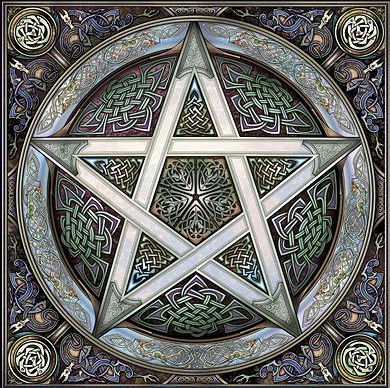


 Learning Wicca and the Tradition of the Craft