

History
Tarot cards were first noticed in Europe around 1375. They are believed to have come from Islamic communities where they had been used for centuries beforehand. At this time they were not considered Tarot cards and did not serve the same purpose they serve today.
In 1440, the cards were referred to as “Triumph Cards” and were defined as a game, though different from regular playing cards. The original decks consisted of four suits with cards in each numbered one to ten and a king, queen, knight and page card per suit much like normal playing cards. There were also an additional 22 cards with symbolic pictures that were not apart of any of the suits.
The game “Triumph” bore a similarity to the game of bridge. However, all but one of the special picture cards were trump cards. As it spread through Europe, it became known as Tarocchi, an Italian word for Tarot first used in 1530.
Occult followers in 1781 England and France saw the special picture cards and determined that they had more meaning behind them than their classically used purpose. They began using the cards as a divination method and it quickly integrated into occult philosophy. One theory suggests that the cards originated in Egypt as a hieroglyphical key to life. They are thought to be the only book that survived the massive fires that destroyed the libraries of Egypt.
Tarot Today
Today’s tarot deck consists of 2 sections; 56 cards in what is known as the minor arcana and 22 cards in the major arcana. They are widely considered an occult tool now of pagans and mystics. They are not associated with any one religion or practice but are considered to be a major part in the “New Age Movement”.
How they work
Essentially, the cards are a physical manifestation of the power of the reader. There are rules and different methods used by every tarot reader. There are two types of readings:
- Question Readings where you address a specific question or concern. Tarot is not a method recommended for simple yes or no questions. This type of reading should never be used to make decisions but rather to help you make a decision. The way the question is stated is very important.
- Keep you options open. Try not to narrow the scope of the question before it is asked. For example: If you need guidance on tension in a relationship, rather than asking a straightforward “What’s wrong”, try a general, “What can I do to improve this relationship?”
- Measure the level of detail carefully. Focus on the issue at hand but do not focus on every little detail. Focusing on the little things could affect the way the big picture is seen and ultimately affect the outcome.
- If the reading is for yourself, focus on yourself. For example, if things at work seem to always be going wrong, rather than asking why, focus on your role at work to see if you may play a role in what the situation is.
- Stay Neutral. When asking questions that could come across one-sided (Why wont my employee work harder), try staying neutral and more open-minded (What can I do to assist my employee).
- Be positive. Instead of “Why hasn’t this happened yet?”, ask how you can help to make it happen.
- Open Readings where are usually performed when entering a new phase of life like getting married, starting a family or graduating from college, etc. There is wiggle room for more specificity such as career or health, But the reading will not get more specific than that.
The Tarot Deck
There are many styles of Tarot decks that vary in illustration only. The cards themselves and the meanings behind them remain constant. The most popular deck in the United States is the Rider-Waite deck created in 1909 by A.E. Waite, a member of The Hermetic Order of the Golden Dawn. The deck was published by Rider and Company, hence the name Rider-Waite. Pamela Colman Smith was the artist behind the illustrations of the deck which has now become considered as the definitive deck in the U.S. due to it’s ready availability.
The Minor Arcana
There are 78 cards in the Tarot deck, 56 of which belong to the minor arcana. There are four suits in the minor arcana known as wands, swords, cups, and circles/pentacles (the two names are often used interchangeably). Each suit has a card numbering one to ten, and court cards including a king, queen, knight and page. Each suit represents a specific approach to life.
- The Pentacle/circle suit- Generosity, Financial reward, success at work and craftsmanship. The reverse is meanness, covetousness, poverty, unemployment, isolation.
- One/Ace of Pentacles– On an everyday level, the start of a new project which is likely to be successful. A new job, a new business venture all which will seem to continuously grow with each achievement leading to the next step of the journey.
- Two of Pentacles– Indicates the need for constant change in life to prevent stagnation. A turning point-a new job, a shift of fortune, change of home. Demands a thorough reassessment of position and willingness to take chances.
- Three of Pentacles- Attainment through effort marks achievement. Keep the pressure on yourself to maintain momentum and better your attention to detail. All energies will be channeled into one project.
- Four of Pentacles- The time when we reach a stable level of material balance for the moment. Material bounty.
- Five of Pentacles- Worries; unexpected expenses, job concerns, family life, etc. Whatever the problem is more of a threat than a reality. Worrying may just make it worse.
- Six of Pentacles- Full promise of bounty. When a degree of inner confidence and self-belief has been achieved, new streams of reality are reached which release new energy. New ideas, new projects are fruitful. We are energized and enthusiastic with the project at hand
- Seven of Pentacles- Fear of failure. Be patient. Don’t rush, practice self-control. Believing negative things will only create negative things.
- Eight of Wands- Progress with caution. A card of starting over or starting something new, a period of expansion. A time of learning and mistakes, doubts and hard work.
- Nine of Pentacles- Profit, gain, lucky windfall, payment for work well done. Enough to buy what you desire.
- Ten of Pentacles- Abundance, wealth, gain. Pinnacle of prosperity. A business you can pass on, a home bought and paid for, etc.
- Page of Pentacles- Fresh opportunities. Advocation of tackling the tasks with confidence and not worrying about consequences. Adhering to this will yield a positive outcome.
- Knight of Pentacles- Firmest and least impetuous of the knights. Do not underestimate, do not take calm exterior for granted. Most trustworthy to get a job done quickly and comprehensively
- Queen of Pentacles- Nurturer but practical and down to earth. Encourages and promotes creativity. Also serious and introverted.
- King of Pentacles- Generous but worked hard for money and success. Expects those whom he has helped to help themselves. Grounded and humble.
- Sword/Staves Suit- Strength, Courage, Hope, peace amid strife, successful journey. Reverse means spiritual suffering, loneliness, sacrifice, loss, defeat.
- One/Ace of Swords- Ability to see things from a clear perspective. We are able to remove the confusion that clouds our judgement. We can see what is important and worth fighting for. Helps us identify “red herrings” that prevent us from clear thought.
- Two of Swords- A painful and difficult situation is being reconciled. It is important to incorporate the other cards into the reading for this situation as there is a possibility that the relationship with be different after the conflict is resolved.
- Three of Swords- Indicates some sort of disruption causing pain and uncertainty; loss of balance and disharmony.
- Four of Swords- A period of rest and recovery after a difficult time; after a trauma, a breakup, loss of a relationship, financial hardships, operation/illness, etc.
- Five of Swords- Future loss or disappointment. The reverse would indicate a lesser chance of defeat or an empty victory.
- Six of Swords- After a stormy time when we have reached a safe harbor to recuperate and consider the difficulties that have risen around us.
- Seven of Swords- A time in life where we’re feeling too overwhelmed and doubtful to make decisive decisions against problems or sudden situations. Things get worse by lack of action.
- Eight of Swords- Deliberate or accidental interference with the natural flow of energy. Signals problems with endurance, inability to make decisions, lack of concentration on important details and overall disturbance.
- Nine of Swords- Indicates hardness, unkindness, lack of consideration or compassion, harsh naturalness to the process of inflicting pain.
- Ten of Swords- Stands for the power of mind allowing us to achieve dreams, beliefs and aspirations. Positive thinking like this will attract joy, happiness and success into our lives.
- Page of Swords- The receiving of an important message with crucial information. A test to your reaction against drama and a warning against rash decisions. The subconscious genius leading you to moments of great clarity.
- Knight of Swords- Insecure, refuses to take another’s feelings into account. Goal-oriented, will take down anyone in their path.
- Queen of Swords- Cold and emotionally detached way of dealing with the world. Standing up to people, making demands and being clear about one’s needs.
- King of Swords- An aura of intimidation. Silent, serious. The king of swords is an expert on law, politics, society, or communication. Always exercising his power. Emotionally cold. Happiest with stimulating work and high ideals.
- Cups Suit- The suit of cups, or chalices, symbolizes romance, creativity, and sociability. The reverse of this suit means Jealousy, pain, rejection, excessive love of luxury, and preoccupation with one’s self. Remember this for any card in the suit that may be pulled.
- One/Ace of Cups- The beginning of great love, perhaps a pregnancy. Inner attunement and spirituality. Instinctive knowledge that comes from within and trust what your feelings are telling you.
- Two of Cups- Engagement, marriage. Union of two entities; people, groups, ideas, or talents
- Three of Cups- Friendship, community, community, network of support, all forms of support including formal aid like counselling and social services
- Four of Cups- positive period of self-reflection, renewal. By taking time to reflect, you restore emotional balance. Also represents kindness from other people.
- Five of Cups- Loss, regret, denial. Could be tangible (ex: a breakup) or intangible (ex: loss of an opportunity). Can warn you of future loss and help reduce the toll.
- Six of Cups- Happy feelings from the past and innocence (innocent meaning several things; legal problems for example). Meanings are endless depending on the situation.
- Seven of Cups- Illusions, deceptions. A hasty decision could be as bad as no decision. Think carefully about your options in situations.
- Eight of Cups- Separation, devorce, a move or trip. Stands for the moments when we realize the past is truly gone.
- Nine of Cups- The “wish” card. What you have a desire for, you will recieve. Could indicate loving and complete relationships, high creativity and good relationships with friends and emotions.
- Ten of Cups- Joy, love, friendship, family we can trust and rely on.
- Page of Cups- Romance and deep feelings, inner life. An opening may appear that stirs emotion, pulls at heart strings or brings great joy. When the chance comes, act on it.
- Knight of Cups- Balanced objectivity and outlook, sincerity, harmony and equilibrium.
- Queen of Cups- Represents someone in touch with their emotions who asks you to think about your own. Represents someone who is like her or an atmosphere of love, acceptance, and respect for feelings.
- King of Cups- Asks you to take the action of a king; responding calmly in a crisis, diplomacy rather than force, reaching out to help, accepting a different point of view, maintaining an atmosphere of caring and tolerance.
- Wands- Stand for creative integrity, security, positive relationships and inner development. Reversed means disrupted work, laziness, ignorance and romantic jealousy.
- One/Ace of Wands- The beginning of a new life, possibly a pregnancy, new phases in life. To confirm pregnancy other cards will indicate such as the page of cups or ace or three of cups.
- Two of Wands- We are in charge of the way our life unfolds. Doesnt rule out the occasional obsticle or pleasant surprise but allows us to fulfill our destiny
- Three of Wands- “The Lord of Virtue”. Our own trueness to inner needs and inspirations, inner balance, and self-reliance and happiness born from the clarity and confidence.
- Four of Wands- “The Lord of Completion”. A circle has been completed; a work project is done, personal situations resolved, phases of life completed. A lesser reflection of the world
- Five of Wands- “The Lord of Strife”. Quarrels, conflict, discord, often indicates argument simply for the sake of argument.
- Six of Wands- “The Lord of Victory”. Fight, competition, eventual victory
- Seven of Wands- Advises you to go forward and believe in yourself in a momentous happening in your life. Be true to your own desires, ambitions, and needs.
- Eight of Wands- Represents the type of cathartic conversation that ends in confusion. Brings a new surge of energy and freshness. Signals entry into new phase or project which has a good chance of success.
- Nine of Wands- “Lord of Strength”. Being true to ourselves releases energies we need to deal with inner conflict. Our inner strength will guide us to our goals.
- Ten of Wands- We are feeling trapped and unhappy in a prolonged situation. We may begin to lose faith in our ability to mold our lives. Advises you not to expend energy on an unwinnable situation. Sometimes we are better off walking away.
- Page of Wands- Represents a person who seizes every opportunity with childlike innocence. Inspired by but does not initiate challenge in the exchange of intense viewpoints. In love, symbolizes intense faithfulness.
- Knight of Wands- A departure from a challenge. Unsure of commitment and cannot confront his own feelings. Also indicates that one has escaped difficulties.
- Queen of Wands- A passionate female who wants to rouse people into action with her outspoken and critical nature. A true champion of anyone she supports though it appears she is fighting those who cross her.
- King of Wands- Supports creative efforts, motivates ambitions, upholds principles of integrity. Beware of reliance though as all efforts cannot go to one cause. The same intense capacity applied to romantic passion is also applied to creative work and can persevere in seeking the highest of unions.
The Major Arcana
The major arcana are all picture cards with individual names with no relation to the suits of the minor arcana. There are 22 cards in the major arcana but only 1-21 are numbered. The 22nd card, The Fool, is numbered as 0. The major arcana is used to represent strong, long-term energy and/or big events in some area of your life. Having a Major arcana and minor arcana in the same reading about the same subject matter indicates that this subject is becoming less important in your life.
0. The Fool

- Upright– Beginnings, innocence, spontaneity, a free spirit
- Reversed– Holding back, recklessness, risk-taking
- The Fool is numbered 0 – the number of unlimited potential – and so does not have a specific place in the sequence of the Tarot cards. The Fool can be placed either at the beginning of the Major Arcana or at the end. The Major Arcana is often considered the Fool’s journey through life and as such, he is ever present and therefore needs no number.
- On the Fool Tarot card, a young man stands on the edge of a cliff, without a care in the world, as he sets out on a new adventure. He is gazing upwards toward the sky (and the Universe) and is seemingly unaware that he is about to skip off a precipice into the unknown. Over his shoulder rests a modest knapsack containing everything he needs – which isn’t much (let’s say he’s a minimalist). The white rose in his left hand represents his purity and innocence. And at his feet is a small white dog, representing loyalty and protection, that encourages him to charge forward and learn the lessons he came to learn. The mountains behind the Fool symbolise the challenges yet to come. They are forever present, but the Fool doesn’t care about them right now; he’s more focused on starting his expedition.
- The Magician

- UPRIGHT: Manifestation, resourcefulness, power, inspired action
- REVERSED: Manipulation, poor planning, untapped talents
- The Magician card is numbered One – the number of new beginnings and opportunities – and associates with the planet of Mercury. He stands with one arm stretched upwards towards the Universe, and the other pointing down to the earth. His positioning represents his connection between the spiritual realms and the material realms. The Magician uses this relationship to create and manifest his goals in the physical realm. He is the conduit that converts energy into matter. The Magician’s robe is white, symbolising purity, and his cloak is red, representing worldly experience and knowledge.
- On the table in front of him are the four symbols of the Tarot suits – a cup, pentacle, sword and wand – each symbolising one of the four elements – water, earth, air and fire. It is also a sign that he has all the tools (and elements) he needs to manifest his intentions into being. Above his head is the infinity symbol, and around his waist is a snake biting its own tail – both of which signal that he has access to unlimited potential. And in the foreground is an array of foliage and flowers, symbolising the blossoming and fruition of his ideas and aspirations.
2. The High Priestess

- UPRIGHT: Intuition, sacred knowledge, divine feminine, the subconscious mind
- REVERSED: Secrets, disconnected from intuition, withdrawal and silence
- The High Priestess sits in front of a thin veil decorated with pomegranates. The veil represents the separate conscious and subconscious realms, the seen and the unseen, and serves to keep casual onlookers out. Only the initiated may enter. The pomegranates on the veil are a symbol of abundance, fertility and the divine feminine, and are sacred to Persephone who ate a pomegranate seed in the underworld and was forced to return every year.
- On either side of the High Priestess stand two pillars, marking the entrance to this sacred, mystical temple (also associated with the Temple of Solomon). One pillar is black with the letter B (Boaz, meaning ‘in his strength’) and the other is white with the letter J (Jachin, meaning ‘he will establish’). The black and white colours of the pillars symbolise duality – masculine and feminine, darkness and light – stating that knowledge and acceptance of duality are required to enter this sacred space.
- The High Priestess wears a blue robe with a cross on her chest and a horned diadem (or crown), both a symbol of her divine knowledge and her status as a divine ruler. In her lap, she holds a scroll with the letter TORA, signifying the Greater Law (according to A. E. Waite). It is partly covered, signifying that this sacred knowledge is both explicit and implicit, it will only be revealed when the student is ready to look beyond the material realm. The crescent moon at her feet symbolises her connection with the divine feminine, her intuition and subconscious mind, and the natural cycles of the moon.
3. The Empress

- UPRIGHT: Femininity, beauty, nature, nurturing, abundance
- REVERSED: Creative block, dependence on others
- The Empress is a beautiful, full-figured woman with blonde hair and a peaceful aura about her. On her head, she wears a crown of twelve stars, showing her connection with the mystical realm and the cycles of the natural world (the twelve months of the year and the twelve planets). Her robe is patterned with pomegranates, symbolic of fertility, and sits upon a luxurious array of cushions and flowing red velvet. One cushion features the symbol of Venus, the planet of love, creativity, fertility, beauty and grace – the essence of the Empress.
- A beautiful, lush forest and winding stream surround the Empress, signifying her connection with Mother Earth and life itself. She draws her sense of peace from the trees and the water and is rejuvenated by the energy of nature. In the foreground, golden wheat springs from the soil, reflecting abundance from a recent harvest.
4. The Emperor

- UPRIGHT: Authority, establishment, structure, a father figure
- REVERSED: Domination, excessive control, lack of discipline, inflexibility
- If the Empress is the Mother archetype of the Tarot deck, the Emperor is the Father. He sits upon a large stone throne, adorned with four rams’ heads (symbolic of his connection with Aries and the planet Mars). In his right hand, the Emperor holds an ankh, the Egyptian symbol of life, and in his left is an orb representing the world over which he rules.
- He wears a red robe, indicative of his power, passion and energy for life. Underneath it, he wears a suit of armour, suggesting that he is protected from any threat (and any emotional response or vulnerability). His long white beard is symbolic of his age-old wisdom and experience, and along with his gold crown, he is an authority figure who demands to be heard.
- Behind his throne looms a tall, impenetrable mountain range, signifying that he is backed by a solid foundation but resistant to making any changes unless he deems it necessary. Beneath the peaks flows a small river, giving some hope that despite his tough exterior, he is still an emotional being – it will just take a lot of digging and trust to open him up to his softer side.
5. The Hierophant

- UPRIGHT: Spiritual wisdom, religious beliefs, conformity, tradition,institutions
- REVERSED: Personal beliefs, freedom, challenging the status quo
- The Hierophant is the masculine counterpart to the High Priestess. He is also known as the Pope or the Teacher in other Tarot decks and is ruled by Taurus.
- The Hierophant is a religious figure sitting between two pillars of a sacred temple – though this temple differs from the one in which the High Priestess sits. He wears three robes – red, blue and white – and a three-tiered crown, both representing the three worlds over which he rules (the conscious, subconscious and superconscious). In his left hand, he holds the Papal Cross, a triple sceptre that signifies his religious status. He raises his right hand in a religious blessing, with two fingers pointing towards Heaven and two towards Earth.
- Before him kneel two followers. The Hierophant’s task is to pass down his spiritual wisdom and initiate the two into the church so they can take up their appointed roles. This imagery speaks to a shared group identity and a rite of passage to enter the next level. The crossed keys at the Hierophant’s feet represent the balance between the conscious and subconscious minds and the unlocking of mysteries, which only he can teach.
6. The Lovers

- UPRIGHT: Love, harmony, relationships, values alignment, choices
- REVERSED: Self-love, disharmony, imbalance, misalignment of values
- The Lovers card shows a naked man and woman standing beneath the angel, Raphael, whose name means ‘God heals’ and represents both physical and emotional healing. The angel blesses the man and woman and reminds them of their union with the Divine.
- The couple stands in a beautiful, fertile landscape, reminiscent of the Garden of Eden. Behind the woman stands a tall apple tree, with a snake winding its way up the trunk. The serpent and apple tree represent the temptation of sensual pleasures that may take one’s focus away from the Divine. Behind the man is a tree of flames, which represent passion, the primary concern of the man. The twelve flames suggest the twelve zodiac signs, the symbol of time and eternity. The man looks to the woman, who watches the angel, showing the path of the conscious to the subconscious to the super-conscious, or from physical desire to emotional needs to spiritual concerns.
- The volcanic mountain in the background is rather phallic and represents the eruption of passion that happens when a man and a woman meet in full frontal nudity.
7. The Chariot

- UPRIGHT: Control, willpower, success, action, determination
- REVERSED: Self-discipline, opposition, lack of direction
- The Chariot Tarot card shows a brave warrior standing inside a chariot. He wears armour decorated with crescent moons (representing what is coming into being), a tunic with a square (the strength of will) and other alchemical symbols (spiritual transformation). The laurel and star crown signals victory, success and spiritual evolution. Although he appears to be driving the chariot, the charioteer holds no reins – just a wand like the Magician’s – symbolising that he controls through the strength of his will and mind.
- The charioteer stands tall – there’s no sitting down for this guy, as he’s all about taking action and moving forward. Above his head is a canopy of six-pointed stars, suggesting his connection to the celestial world and the Divine will. In front of the vehicle sit a black and a white sphinx, representing duality, positive and negative and, at times, opposing forces. Note how the sphinxes are pulling in opposite directions, but the charioteer uses his willpower and sheer resolve to steer the chariot forward in the direction he wants.
- Behind the chariot flows a wide river, symbolic of the need to be ‘in flow’ with the rhythm of life while also charging ahead toward your goals and intentions.
8. Strength

- UPRIGHT: Strength, courage, persuasion, influence, compassion
- REVERSED: Inner strength, self-doubt, low energy, raw emotion
- In the Strength Tarot card, a woman gently strokes a lion on its forehead and jaw. Even though it is known for its ferociousness, the woman has tamed this wild beast with her calming, loving energy. The lion is a symbol of raw passions and desires, and in taming him, the woman shows that animal instinct and raw passion can be expressed in positive ways when inner strength and resilience are applied. She doesn’t use force or coercion; she channels her inner strength to subdue and subtly control the lion.
- The woman wears a white robe, showing her purity of spirit, and a belt and crown of flowers that represent the fullest, most beautiful expression of nature. Over her head is the symbol of infinity, representing her infinite potential and wisdom.
9. The Hermit

- UPRIGHT: Soul-searching, introspection, being alone, inner guidance
- REVERSED: Isolation, loneliness, withdrawal
- The Hermit stands alone on the top of a mountain. The snow-capped range symbolises his spiritual mastery, growth and accomplishment. He has chosen this path of self-discovery and, as a result, has reached a heightened state of awareness.
- In his right hand, he holds a lantern with a six-pointed star inside; it is the Seal of Solomon, a symbol of wisdom. As the Hermit walks his path, the lamp lights his way – but it only illuminates his next few steps rather than the full journey. He must step forward to see where to go next, knowing that not everything will be revealed at once. In his left hand, the side of the subconscious mind, the Hermit holds a long staff (a sign of his power and authority), which he uses to guide and balance him.
10. Wheel of Fortune

- UPRIGHT: Good luck, karma, life cycles, destiny, a turning point
- REVERSED: Bad luck, resistance to change, breaking cycles
- The Wheel of Fortune card shows a giant wheel, with three figures on the outer edges. Four Hebrew letters – YHVH (Yod Heh Vau Heh), the unpronounceable name of God – are inscribed on the wheel’s face. There are also the letters TORA, thought to be a version of the word Torah, meaning ‘law’, or TAROT, or even ROTA (Latin for ‘wheel’). The middle wheel has the alchemical symbols for mercury, sulphur, water and salt – the building blocks of life and the four elements – and represents formative power.
- On the outer circle is a snake, the Egyptian god Typhon (the god of evil), descending on the left side. The snake also represents the life force plunging into the material world. On the right side rises Anubis, the Egyptian God of the dead who welcomes souls to the underworld. And on top of the wheel sits the Sphinx, representing knowledge and strength.
- In the corners of the Wheel of Fortune card are four winged creatures, each associated with the four fixed signs of the Zodiac: the angel is Aquarius, the eagle is Scorpio, the lion is Leo, and the bull is Taurus. Their wings signify stability amidst movement and change, and each holds the Torah, representing wisdom.
11. Justice

- UPRIGHT: Justice, fairness, truth, cause and effect, law
- REVERSED: Unfairness, lack of accountability, dishonesty
- The figure of Justice sits in front of a loosely hung purple veil, signifying compassion, and between two pillars, similar to those framing the High Priestess and the Hierophant, which symbolizes balance, law and structure.
- She holds a sword in her right hand, showing the logical, well-ordered mindset necessary to dispense fair justice. The sword points upwards – expressing a firm and final decision – and the double-edged blade signifies that our actions always carry consequences. The scales in her left (intuitive) hand, show intuition must balance that logic and are a symbol of her impartiality. Justice wears a crown with a small square on it representing well-ordered thoughts, and a red robe with a green mantle. A little white shoe pops out from beneath her clothing as a reminder of the spiritual consequences of your actions.
12. The Hanged Man

- UPRIGHT: Pause, surrender, letting go, new perspectives
- REVERSED: Delays, resistance, stalling, indecision
- The Hanged Man shows a man suspended from a T-shaped cross made of living wood. He is hanging upside-down, viewing the world from a completely different perspective, and his facial expression is calm and serene, suggesting that he is in this hanging position by his own choice. He has a halo around his head, symbolising new insight, awareness and enlightenment. His right foot is bound to the tree, but his left foot remains free, bent at the knee and tucked in behind his right leg. His arms are bent, with hands held behind his back, forming an inverted triangle. The man is wearing red pants representing human passion and the physical body, and a blue vest for knowledge. The Hanged Man is the card of ultimate surrender, of being suspended in time and of martyrdom and sacrifice to the greater good.
13. Death

- UPRIGHT: Endings, change, transformation, transition
- REVERSED: Resistance to change, personal transformation, inner purging
- The Death card shows the Messenger of Death – a skeleton dressed in black armour, riding a white horse. The skeleton represents the part of the body which survives long after life has left it; the armour symbolises invincibility and that death will come no matter what. Its dark colour is that of mourning and the mysterious, while the horse is the colour of purity and acts as a symbol of strength and power. Death carries a black flag decorated with a white, five-petal rose, reflecting beauty, purification and immortality and the number five represents change. Together, these symbols reveal that death isn’t just about life ending. Death is about endings and beginnings, birth and rebirth, change and transformation. There is beauty in death, and it is an inherent part of being alive.
- A royal figure appears to be dead on the ground, while a young woman, child and bishop plead with the skeletal figure to spare them. But, as we all know, death spares no one.
- In the background, a boat floats down the river, akin to the mythological boats escorting the dead to the afterlife. On the horizon, the sun sets between two towers (which also appear in the Moon Tarot card), in a sense dying each night and being reborn every morning.
14. Temperance

- UPRIGHT: Balance, moderation, patience, purpose
- REVERSED: Imbalance, excess, self-healing, re-alignment
- The Temperance card shows a large, winged angel who is both masculine and feminine. She wears a light blue robe with a triangle enclosed in a square on the front, representing that humans (the triangle) are bound by the Earth and natural law (square). The angel balances between one foot on the rocks, expressing the need to stay grounded, and one foot in the water, showing the need to be in flow. She pours water between two cups, symbolic of the flow and alchemy of life.
- In the background, there is a winding path up to a mountain range, reflecting the journey through life. Above the mountains hovers a golden crown encased in a glowing light, a symbol of taking the Higher path and staying true to one’s life purpose and meaning.
15. The Devil

- UPRIGHT: Shadow self, attachment, addiction, restriction, sexuality
- REVERSED: Releasing limiting beliefs, exploring dark thoughts, detachment
- The Devil card shows Baphomet, or the Horned Goat of Mendes, a creature that is half man, half goat. Baphomet originally represented the balance between good and evil, male and female, and human and animal; however, more recently, this figure has been linked to the occult and has become a scapegoat for all things considered ‘evil’.
- The Devil has the wings of a vampire bat, an animal that sucks the lifeblood out of its prey, symbolic of what happens when you give in to your raw desires. He has a hypnotic stare which ‘magnetises’ and entrances those who come near him, bringing them under his power. Above him is an inverted pentagram – a sign of the darker side of magic and occultism. He raises his right hand in the Vulcan Salute – a Jewish blessing, later made famous by the film series, Star Trek. In his left hand, he holds a lit torch.
- At the foot of the Devil stand a man and a woman, both naked and chained to the podium on which the Devil sits. They appear to be held here against their will – but look closer, and you will notice that the chains around their necks are loose and could be easily removed. Each has small horns on their head, like the devil’s, a sign that they are becoming increasingly like him the longer they stay here. Both have tails, a further symbol of their animalistic tendencies and raw instincts, and the grapes and the fire on their respective tails signify pleasure and lust.
16. The Tower

- UPRIGHT: Sudden change, upheaval, chaos, revelation, awakening
- REVERSED: Personal transformation, fear of change, averting disaster
- The Tower shows a tall tower perched on the top of a rocky mountain. Lightning strikes set the building alight, and two people leap from the windows, head first and arms outstretched. It is a scene of chaos and destruction.
- The Tower itself is a solid structure, but because it has been built on shaky foundations, it only takes one bolt of lightning to bring it down. It represents ambitions and goals made on false premises.
- The lightning represents a sudden surge of energy and insight that leads to a break-through or revelation. It enters via the top of the building and knocks off the crown, symbolising energy flowing down from the Universe, through the crown chakra. The people are desperate to escape from the burning building, not knowing what awaits them as they fall. Around them are 22 flames, representing the 12 signs of the zodiac and 10 points of the Tree of Life, suggesting that even in times of disaster, there is always a divine intervention.
17. The Star

- UPRIGHT: Hope, faith, purpose, renewal, spirituality
- REVERSED: Lack of faith, despair, self-trust, disconnection
- The Star card shows a naked woman kneeling at the edge of a small pool. She holds two containers of water: one in her left hand (the subconscious) and one in her right (the conscious). She pours the water out to nourish the earth and to continue the cycle of fertility, represented by the lush greenery around her. The other container pours the water onto dry land in five rivulets, representing the five senses.
- The woman has one foot on the ground, representing her practical abilities and good common sense, and the other foot in the water, representing her intuition and inner resources and listening to her inner voice. She is naked, representing her vulnerability and purity under the vastness of the starry night sky. Behind her shines one large star, representing her core essences, and seven smaller stars, representing the chakras.
18. The Moon

- UPRIGHT: Illusion, fear, anxiety, subconscious, intuition
- REVERSED: Release of fear, repressed emotions, inner confusion
- The Moon card shows a full moon in the night’s sky, positioned between two large towers. The Moon is a symbol of intuition, dreams, and the unconscious. Its light is dim compared to the sun, and only slightly illuminates the path to higher consciousness winding between the two towers.
- In the foreground is a small pool, representing the watery, subconscious mind. A small crayfish crawls out of the pool, symbolising the early stages of consciousness unfolding. A dog and a wolf standing in the grassy field, howling at the moon, representing both the tamed and the wild aspects of our minds.
19. The Sun

- UPRIGHT: Positivity, fun, warmth, success, vitality
- REVERSED: Inner child, feeling down, overly optimistic
- The Sun Tarot card radiates with optimism and positivity. A large, bright sun shines in the sky, representing the source of all life on Earth. Underneath, four sunflowers grow tall above a brick wall, representing the four suits of the Minor Arcana and the four elements.
- In the foreground, a young, naked child is sitting on top of a calm white horse. The child represents the joy of being connected with your inner spirit, and his nakedness is a sign he has nothing to hide and has all the innocence and purity of childhood. The white horse is also a sign of purity and strength.
20. Judgement

- UPRIGHT: Judgement, rebirth, inner calling, absolution
- REVERSED: Self-doubt, inner critic, ignoring the call
- The Judgement card shows naked men, women, and children rising from their graves, arms outspread and looking up into the sky. Above, Archangel Gabriel – the Messenger of God – blows his trumpet. The people respond to his call, ready to be judged and to find out if they will be accepted into the heavens or not. In the background is an extensive mountain range, signifying the insurmountable obstacles and the impossibility of avoiding judgement.
21. The World

- UPRIGHT: Completion, integration, accomplishment, travel
- REVERSED: Seeking personal closure, short-cuts, delays
- The World card shows a naked woman wrapped in a purple cloth, dancing inside a large laurel wreath. She looks behind her to the past, while her body moves forward to the future. In her hands are two wands or batons, like the one the Magician holds. It is a symbol that what was manifested with the Magician has now come to completion with the World. The wreath is circular, symbolising a continual cycle of successful completion and new beginnings because, as the woman steps through the wreath, she is completing one phase but beginning another one almost straight away.
- Around the wreath are four figures (a lion, bull, cherub and eagle), similar to those in the Wheel of Fortune. Both the World and the Wheel of Fortune speak to the cyclical nature of your life and your progression through its cycles. The four figures represent the four fixed signs of the Zodiac—Leo, Taurus, Aquarius, and Scorpio. They are symbolic of the four elements, the four suits of the Tarot, four compass points, four seasons, and the four corners of the Universe. They are here to guide you from one phase to the next, bringing balance and harmony to your journey.
Tarot Card Spreads
Basic Three Card Layout

If you want to brush up on your Tarot skills, do a reading in a hurry, or just get an answer to a very basic issue, try using this simple and basic Three Card Layout for your Tarot cards. It’s the simplest of readings, and allows you to do a basic reading in just three steps. You can use this quick method to do readings for friends and family as you brush up on your skills, or you can use it for any Querent who needs an answer in a hurry. The three cards represent the past, the present and the future.
The Seven Card Horseshoe Spread

As you develop your Tarot reading skills, you may find that you prefer one particular spread over the others. One of the most popular spreads in use today is the Seven Card Horseshoe spread. Although it utilizes seven different cards, it’s actually a fairly basic spread. Each card is positioned in a way that connects to different aspects of the problem or situation at hand.
In this version of the Seven Card Horseshoe spread, in order, the cards represent the past, the present, hidden influences, the Querent, attitudes of others, what should the querent do about the situation and the likely outcome.
The Pentagram Spread

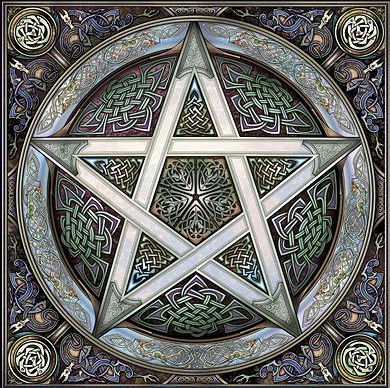
The pentagram is a five-pointed star sacred to many Pagans and Wiccans, and within this magical symbol you’ll find a number of different meanings. Think about the very concept of a star. It is a source of light, blazing in the darkness. It is something physically very far away from us, and yet how many of us have wished upon one when we saw it up in the sky? The star itself is magical. Within the pentagram, each of the five points has a meaning. They symbolize the four classical elements–Earth, Air, Fire and Water–as well as Spirit, which is sometimes referred to as the fifth element. Each of these aspects is incorporated into this Tarot card layout.
The Romany Spread

The Romany Tarot spread is a simple one, and yet it reveals a surprising amount of information. This is a good spread to use if you are just looking for a general overview of a situation, or if you have several different interconnected issues that you’re trying to resolve. This is a fairly free-form spread, which leaves a lot of room for flexibility in your interpretations.
Some people interpret the Romany spread as simply past, present, and future, using the cards together in each of the three rows. The more distant past is indicated in Row A; the second row of seven, Row B, indicates issues that are presently going on with the Querent. The bottom row, Row C, uses seven more cards to indicate what is likely to take place in the person’s life, if all continues along the present path. It’s easy to read the Romany spread by looking simply at the past, present and future. However, you can go into more depth and get a more complex understanding of the situation if you break it down into its different aspects.
The Celtic Cross Layout

The Tarot layout known as the Celtic Cross is one of the most detailed and complex spreads used. It’s a good one to use when you have a specific question that needs to be answered, because it takes you, step by step, through all the different aspects of the situation. Basically, it deals with one issue at a time, and by the end of the reading, when you reach that final card, you should have gotten through all the many facets of the problem at hand.
Helpful Advice
- Tarot, like any scrying art, opens a veil. It is crucial that you guard yourself with your circle and bless your space before a reading
- Remember that the person you are reading for carries energy. Make sure that their energy does not affect your own. Personally, I do not allow others to touch my cards or to speak during the reading. In fact, I do not allow them to give me anymore than the most basic information such as why they feel they need the reading. I personally prefer that there are no outside influences that may affect my connection with the reading.
- Trust your gut. When I do a reading, I always explain the basic meanings of the cards I have pulled. However, I do not always feel that that kind of straightforward answer fits a more convoluted story that the cards are trying to tell. You will feel the answer. Take your time in answering. When the meaning of the card becomes clear, it will physically feel right to you. Alternatively, there is nothing wrong with admitting that you aren’t sure what the cards are trying to convey with that message.
- Despite all of my personal advice, do not remember that ANY magical working must be your own. If my way is what you are most comfortable with, please let me know and I will be more than happy to work with you and teach you my methods. But experiment with what feels right to you.
SIDE NOTE: I am creating an email specifically for this blog. As I have several private students that connect with me personally, I would like to extend the invitation to connect with me personally through email as well. We also have a Facebook page under the name Witch School. Please leave your thoughts of expansion of lessons in the comments. I would love to hear them as well as any ideas or suggestions for the future 🙂
 Learning Wicca and the Tradition of the Craft