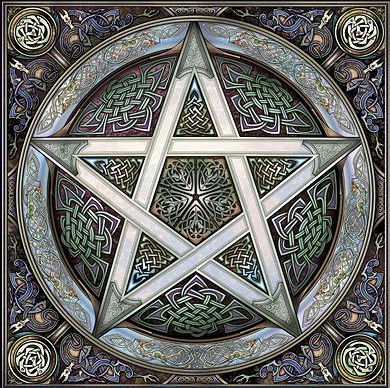

Imbolic
Imbolc, in the Celtic seasonal calendar marks the beginning of the lambing season and signals the beginning of Spring and the stirrings of new life. It is Feile Brighde, the ‘quickening of the year’. The original word Imbolg means ‘in the belly’. All is pregnant and expectant – and only just visible if at all, like the gentle curve of a ‘just-showing’ pregnancy. It is the promise of renewal, of hidden potential, of earth awakening and life-force stirring. Here is hope. We welcome the growth of the returning light and witness Life’s insatiable appetite for rebirth.
It is time to let go of the past and to look to the future, clearing out the old, making both outer and inner space for new beginnings. This can be done in numerous ways, from spring cleaning your home to clearing the mind and heart to allow inspiration to enter for the new cycle. (‘Spring cleaning was originally a nature ritual’ – Doreen Valiente). It’s a good time for wish-making or making a dedication.
Imbolc is traditionally the great festival and honouring of Brigid (Brighid, Bride, Brigit), so loved as a pagan Goddess that her worship was woven into the Christian church as St Bridget. She is a Goddess of healing, poetry and smithcraft. She is a Goddess of Fire, of the Sun and of the Hearth. She brings fertility to the land and its people and is closely connected to midwives and new-born babies. She is the Triple Goddess, but at Imbolc she is in her Maiden aspect.
Ideas for Your Altar
Decorate your altar with snowdrops, swan feathers, a Brigid Cross, a Bridey Doll, white and green candles.
Make A Brigid Cross
Brigid Crosses are traditionally made from reeds but can be made from several alternatives so long as they are pliable. Here in Glastonbury we have often used willow which grows plentifully on the Somerset Levels and also because of its symbolism. It needs a long soaking and is perhaps not the easiest to work with but makes a wonderful cross. Go for a walk, see what you can find in the hedgerows and on the river banks, use straws or even cut long strips of paper.

Begin by bending your reeds and hooking them into each other as in the first figure and follow the diagram. When it is the size you want it to be you will need to tie the four ends, the four quarters – with string, thread, ribbon etc. Decorate the completed cross with ribbons and swan feathers if you have them – whatever is meaningful for you.
Plant Seeds
Seeds are completely magical – pure potential! Plant each one as representing your hopes, ideas and dreams.
Bake A Cake
Or make a seed cake to share, seeds are full of possibilities. Tie it with silver, or white, or green, or any combination of ribbon.
Simple Seed Cake
You need:
- Flour 300gms/10oz
- A pinch of salt
- 1 teaspoon baking powder
- Butter 125gms/4oz
- caraway seeds 25gms/1oz
- sugar 175gms/6oz
- Two eggs, beaten
- Four tablespoons of water
- Set the oven to 400F/200C and grease and line a 6 inch cake tin.
- Sieve the flour, salt and baking powder into your cauldron or a large bowl and then rub in the butter.
- As you do this think of family and friends, think of the small personal things that you would have them benefit from as Spring flows into their lives.
- Visualise light flowing into the mixture, fire of truth and illumination, if you wish, use a rhyme.
- Stir in the seeds and sugar and then the eggs, mix with just enough water to give a mix that softly drops off your spoon.
- Stir in patience for the coming Spring, this is still a time of waiting.
- pour the mixture into the prepared tin and bake for one hour, then reduce the temperature to 375F/175C and cook for a further half to one hour until the cake is golden brown and well risen. leave this one to cool in its tin,
A simple stirring rhyme, using your wooden spoon, might go like this:
Continuous motion, May all things flow, Circles of magic, Let the power grow, Elements mixing, Accept my plea, As I wish, So mote it be.
Some of the symbols attributed to Brigid are:
- The Snowdrop. The first gift of Spring in the bleakness of Winter.
- The Swan. The swan mates for life and represents loyalty, fidelity and faithfulness. Swan feathers are a powerful amulet.
- The Flame. Imbolc is a Fire Festival and fire of all kinds is associated with Brigid – the fire of creativity, the protective hearth fire, and her fire wheel – the Brigid Cross, which heralds her as a Sun Goddess.
- Brigid’s Cross. This is a traditional fire wheel symbol – found at the hearths of homes throughout Ireland and beyond as a symbol of protection. A customer in the shop recounted finding a hearth in Ireland, in recent years, adorned with over 200 Brigid Crosses – 200 years in the life of a hearth and a family, overlit and protected by Brigid.
- Brigid Doll. A very old tradition involved the making of a Brigid doll which can be included in ceremony and/or placed in ‘Bride’s Bed’ to bring fertility and good fortune to the home.
- The Serpent. In Celtic mythology Brigid was associated with an awakening hibernating serpent which emerged from its lair at Imbolc. Traditionally serpents were associated with creativity and inspiration – the powerful Kundalini energy of the Eastern Mysteries. Paths of earth energy were called serpent paths and at Imbolc they are stirred from their slumber.
- Sheep. Brigid’s festival is at the beginning of lambing – eat ewe’s milk cheese!
Imbolc Colours: White and silver for purity, green for the fresh burst of life.
Herbs of Imbolc
- Blackberry: Sacred to Brigid, the leaves and berries are used to attract prosperity and healing. A Goddess plant, belonging to the planetary sphere of Venus.
- Coltsfoot: Coltsfoot or ‘sponnc’ (Gaelic) is a herb associated with Brigid. A herb of Venus, moves emotional and physical stagnation and is used magically to engender love and to bring peace.
- Ginger: revitalises and stimulates the ‘fire within’ – helps alignment with the rise of Kundalini serpent energy at this time of year!
Trees of Imbolc
- Rowan: Luis, or the Rowan, is the tree usually assigned to this time of year in the Celtic (Ogham) Tree Alphabet. It has long associations with the Maiden aspect of the Triple Goddess. It is also known as the ‘Quickening Tree’ and is associated with serpents. Traditionally it protects and wards of evil. A sprig of Rowan can be put near the door of your home (we have a whole tree), or a sprig worn for protection. Rowan berries have a tiny five-pointed star on the bottom reminiscent of the pentagram.
- Willow: The fourth tree in the Celtic Tree alphabet – S Saille, is also long associated with the Maiden aspect of the Triple Goddess. Willow is the great ‘shape shifter’ of consciousness and emotion and symbolises feminine energy and the lunar cycle. Its branches are flexible – expressing movement and change rather than resistance. It is a tree of enchantment and dreaming, enhancing the confidence to follow one’s intuition, and inspires leaps of imagination.
Lupercalia
Lupercalia was an ancient pagan festival held each year in Rome on February 15. Although Valentine’s Day shares its name with a martyred Christian saint, some historians believe the holiday is actually an offshoot of Lupercalia. Unlike Valentine’s Day, however, Lupercalia was a bloody, violent and sexually-charged celebration awash with animal sacrifice, random matchmaking and coupling in the hopes of warding off evil spirits and infertility.
Romulus and Remus
No one knows the exact origin of Lupercalia, but it has been traced back as far as the 6th century B.C.
According to Roman legend, the ancient King Amulius ordered Romulus and Remus—his twin nephews and founders of Rome—to be thrown into the Tiber River to drown in retribution for their mother’s broken vow of celibacy.
A servant took pity on them, however, and placed them inside a basket on the river instead. The river-god carried the basket and the brothers downriver to a wild fig tree where it became caught in the branches. The brothers were then rescued and cared for by a she-wolf in a den at the base of Palatine Hill where Rome was founded.
The twins were later adopted by a shepherd and his wife and learned their father’s trade. After killing the uncle who’d ordered their death, they found the cave den of the she-wolf who’d nurtured them and named it Lupercal.
It’s thought Lupercalia took place to honor the she-wolf and please the Roman fertility god Lupercus.
Ritual Sacrifice
Lupercalia rituals took place in a few places: Lupercal cave, on Palatine Hill and within the Roman open-air, public meeting place called the Comitium. The festival began at Lupercal cave with the sacrifice of one or more male goats—a representation of sexuality—and a dog.
The sacrifices were performed by Luperci, a group of Roman priests. Afterwards, the foreheads of two naked Luperci were smeared with the animals’ blood using the bloody, sacrificial knife. The blood was then removed with a piece of milk-soaked wool as the Luperci laughed.
Feast of Lupercal
In Ancient Rome, feasting began after the ritual sacrifice. When the feast of Lupercal was over, the Luperci cut strips, also called thongs or februa, of goat hide from the newly-sacrificed goats.
They then ran naked or nearly-naked around Palantine whipping any woman within striking distance with the thongs. Many women welcomed the lashes and even bared their skin to receive the fertility rite; it’s open to speculation what the lashes represented.
During Lupercalia, the men randomly chose a woman’s name from a jar to be coupled with them for the duration of the festival. Often, the couple stayed together until the following year’s festival. Many fell in love and married.
Over time, nakedness during Lupercalia lost popularity. The festival became more chaste, if still undignified, and women were whipped on their hands by fully-clothed men.
In Plutarch’s Life of Julius Caesar, Caesar famously refuses a golden crown presented to him by Mark Antony during the feast of Lupercalia.
Parentalia
The festival, which began at noon on February 13 and culminated on February 21, was essentially a private celebration of the rites of deceased family members. It was gradually extended, however, to incorporate the dead in general. During the days of the festival, all temples were closed and no weddings could be performed. On the last day a public ceremony, the Feralia, was held, during which offerings and gifts were placed at the graves and the anniversary of the funeral feast was celebrated.
 Learning Wicca and the Tradition of the Craft