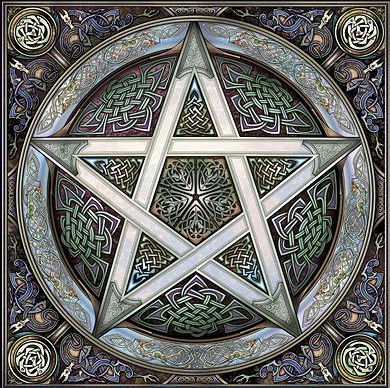


St. Patrick’s Day is celebrated annually on March 17, the anniversary of his death in the fifth century. The Irish have observed this day as a religious holiday for over 1,000 years. On St. Patrick’s Day, which falls during the Christian season of Lent, Irish families would traditionally attend church in the morning and celebrate in the afternoon. Lenten prohibitions against the consumption of meat were waived and people would dance, drink and feast–on the traditional meal of Irish bacon and cabbage.
Saint Patrick, who lived during the fifth century, is the patron saint of Ireland and its national apostle. Born in Roman Britain, he was kidnapped and brought to Ireland as a slave at the age of 16. He later escaped, but returned to Ireland and was credited with bringing Christianity to its people.
In the centuries following Patrick’s death (believed to have been on March 17, 461), the mythology surrounding his life became ever more ingrained in the Irish culture: Perhaps the most well-known legend of St. Patrick is that he explained the Holy Trinity (Father, Son and Holy Spirit) using the three leaves of a native Irish clover, the shamrock.

More than 100 St. Patrick’s Day parades are held across the United States; New York City and Boston are home to the largest celebrations.
Since around the ninth or 10th century, people in Ireland have been observing the Roman Catholic feast day of St. Patrick on March 17. The first St. Patrick’s Day parade took place not in Ireland but in the United States. On March 17, 1762, Irish soldiers serving in the English military marched through New York City. Along with their music, the parade helped the soldiers reconnect with their Irish roots, as well as with fellow Irishmen serving in the English army.
Over the next 35 years, Irish patriotism among American immigrants flourished, prompting the rise of so-called “Irish Aid” societies like the Friendly Sons of Saint Patrick and the Hibernian Society. Each group would hold annual parades featuring bagpipes (which actually first became popular in the Scottish and British armies) and drums.
In 1848, several New York Irish Aid societies decided to unite their parades to form one official New York City St. Patrick’s Day Parade. Today, that parade is the world ‘s oldest civilian parade and the largest in the United States, with over 150,000 participants. Each year, nearly 3 million people line the 1.5-mile parade route to watch the procession, which takes more than five hours. Boston, Chicago, Philadelphia and Savannah also celebrate the day with parades involving between 10,000 and 20,000 participants each.
Up until the mid-19th century, most Irish immigrants in America were members of the Protestant middle class. When the Great Potato Famine hit Ireland in 1845, close to 1 million poor and uneducated Irish Catholics began pouring into America to escape starvation.
Despised for their alien religious beliefs and unfamiliar accents by the American Protestant majority, the immigrants had trouble finding even menial jobs. When Irish Americans in the country’s cities took to the streets on St. Patrick’s Day to celebrate their heritage, newspapers portrayed them in cartoons as drunk, violent monkeys.
The American Irish soon began to realize, however, that their large and growing numbers endowed them with a political power that had yet to be exploited. They started to organize, and their voting block, known as the “green machine,” became an important swing vote for political hopefuls. Suddenly, annual St. Patrick’s Day parades became a show of strength for Irish Americans, as well as a must-attend event for a slew of political candidates.
In 1948, President Harry S. Truman attended New York City ‘s St. Patrick’s Day parade, a proud moment for the many Irish Americans whose ancestors had to fight stereotypes and racial prejudice to find acceptance in the New World.
As Irish immigrants spread out over the United States, other cities developed their own traditions. One of these is Chicago’s annual dyeing of the Chicago River green. The practice started in 1962, when city pollution-control workers used dyes to trace illegal sewage discharges and realized that the green dye might provide a unique way to celebrate the holiday. That year, they released 100 pounds of green vegetable dye into the river–enough to keep it green for a week. Today, in order to minimize environmental damage, only 40 pounds of dye are used, and the river turns green for only several hours.
Although Chicago historians claim their city’s idea for a river of green was original, some natives of Savannah, Georgia (whose St. Patrick’s Day parade, the oldest in the nation, dates back to 1813) believe the idea originated in their town. They point out that, in 1961, a hotel restaurant manager named Tom Woolley convinced city officials to dye Savannah’s river green. The experiment didn’t exactly work as planned, and the water only took on a slight greenish hue. Savannah never attempted to dye its river again, but Woolley maintains (though others refute the claim) that he personally suggested the idea to Chicago’s Mayor Richard J. Daley.
Today, people of all backgrounds celebrate St. Patrick’s Day, especially throughout the United States, Canada and Australia. Although North America is home to the largest productions, St. Patrick’s Day is celebrated around the world in locations far from Ireland, including Japan, Singapore and Russia. Popular St. Patrick’s Day recipes include Irish soda bread, corned beef and cabbage and champ. In the United States, people often wear green on St. Patrick’s Day.
In modern-day Ireland, St. Patrick’s Day was traditionally a religious occasion. In fact, up until the 1970s, Irish laws mandated that pubs be closed on March 17. Beginning in 1995, however, the Irish government began a national campaign to use interest in St. Patrick’s Day to drive tourism and showcase Ireland and Irish culture to the rest of the world. Approximately 1 million people annually take part in Ireland’s St. Patrick’s Festival in Dublin, a multi-day celebration featuring parades, concerts, outdoor theater productions and fireworks shows.
So how does St. Patricks’s Day relate to paganism?
The part where he becomes controversial in the Pagan and Druid communities is where he is credited with banishing the snakes from Ireland. Most people who read that legend would probably think he did a great thing. However, Ireland didn’t have snakes in the time of Saint Patrick. They did however have coins that represented Druids with the symbol of the snakes. I’ve read in other places that the snakes were a metaphor for the Pagans. So he is actually credited with converting Pagans to Christianity and driving the Druids from Ireland.
Being Wiccan we have a lot of Pagan traditions and some of us have Druid traditions as well. Now it might be a little clearer why you may not see the Wiccan community out wishing everyone a Happy Saint Patrick’s day. In fact you may see them wearing snake symbols on this day to honor their Pagan ancestors rather than the clovers, and other traditional Saint Patrick’s day symbols.
Saint Patrick is believed to have been born in about 370 C.E. in either Wales or Scotland. As a teenager he was captured during a raid and sold to an Irish landowner as a slave. It was during this time that he started having visions. One of these visions helped him to escape from Ireland. He found his freedom and joined the Priesthood in France at a monastery. He returned to France after his study to help with the conversion of Pagans to Christianity.
Something I think interesting to note is that one of the ways he promoted the conversion was demonstrated with a three leaf clover. He used it to explain the Holy Trinity to the Pagans. For those of you who are unfamiliar, that is the father, son and the holy spirit. Which if you notice is quite similar to Paganism’s Triple Goddess. During the conversion a lot of Pagan beliefs were adopted and converted into Christianity so those converting wouldn’t feel like they were leaving their beliefs behind.
HOWEVER; The idea that Patrick physically drove the Pagans from Ireland in inaccurate; what he did do was facilitate the spread of Christianity. The real St. Patrick was believed to have been born around 370 c.e., probably in Wales or Scotland, was probably the son of a Roman Briton named Calpurnius. Paganism was active and well in Ireland both before and after Patrick came along. Irish colonists in numerous areas around Cornwall and sub-Roman Britain had already come into encountered Christianity elsewhere, and brought bits and pieces of the religion back to their homelands.
And while it’s true that snakes are hard to find in Ireland, this may well be due to the fact that it’s an island, and so snakes aren’t exactly migrating there in packs.

 Learning Wicca and the Tradition of the Craft